New home closings in the New York, NY market dropped year-over-year in July, and the market seemed to be weakening with a percentage fall steeper than in June 2014. New home closings saw a drop of 29.4% from the year earlier to 456. This came on the heels of a 21.9% decline year-over-year in June.
A total of 6,057 new homes were sold during the 12 months that ended in July, down from 6,247 for the year that ended in June.
New home closings made up 3.3% of overall housing closings. A year earlier, new home closings represented 4.2% of total closings. For new and existing homes, closings dropped in July after also declining in June year-over-year.
Pricing and Mortgage Trends
Average price of newly sold homes had a 3.1% lift year-over-year to $629,340 per unit in July. This hike compares to a 4.9% drop in June from a year earlier.
For newly sold homes, the average mortgage size increased year-over-year along with new home prices. The average mortgage size rose to $450,513 in July, marking a 7.5% surge compared with a year earlier. In June 2014, average mortgage size fell 6.7% from a year earlier.
Other Market Trends
As a share of new home closings, single-family home closings have climbed from last year while the share belonging to attached units has fallen. The share of new home closings belonging to single-family homes rose from 40.9% in July 2013 to 43.6% of closings in July 2014. Meanwhile, attached units as a percentage of all new home closings slid to 56.4% of closings from 59.1% of closings.
The average unit size of newly sold homes sank 41.1% year-over-year to 1,417 square feet in July 2014. In June, the average size of new homes sold went from 2,189 square feet a year earlier to 1,717 square feet.
Foreclosures and real estate owned (REO) closings rose in July from a year earlier and did not look to be a burden on the market. Combined, foreclosures plus REO closings represented 10.4% of existing home closings, above 9.0% a year earlier. The percentage of existing home closings involving foreclosures went from 5.6% in July 2013 to 6.1% in July 2014 and REO closings moved from 3.4% of existing home closings in July 2013 to 4.3% in July 2014.
As the city’s known more nowadays for its inflated, six-zero asks, it might be hard to believe that apartments still exist within its confines under the $300,000 threshold. Okay, they may be small and not quite where all the action’s happening, but that doesn’t have to be a negative. Example: this slim studio on 87th Street between York and First avenues on the Upper East Side is south-facing and looks onto the block’s courtyards. It comes with two closets and a renovated bathroom all for $249,000.
↑ At $299,000, this plain jane of an East Village studio just barely makes the cut. The unit, which has two closets and a separate, windowed kitchen with room for two stools at a breakfast bar, is on the sixth floor of a prewar elevator building on 12th Street between Second and Third avenues. The photos don’t show a bed in the living area, though, so be warned that it looks larger than it probably is! (Which is, according to the listing, 350 square feet.)
5 images
↑ In Chelsea, there’s a townhouse co-op with a fun purple stripe on the wall asking $285K. It’s a walk-up, but there are hardwood floors. The location is central, on West 18th Street near Eighth Avenue, and the two windows have a bright westward view, plus there’s built-in storage above the kitchen and bathroom doors.
4 images
↑ The kitchen in this Park Slope apartment is divided from the living room by a partial wall with a pass-through window that also has shades, making it easier to divide up a small space into even smaller ones. There’s also a separate lofted area for sleeping, though that’s not pictured, with a walk-in closet underneath. The location is hard to beat: half a block away from Prospect Park West on Union Street, right near Grand Army Plaza. Asking price: $299,000.
4 images
↑ This Brighton Beach studio comes with a lovely oceanfront view for a discounted $214,000. Sure, the apartment is small tiny, but packs a punch in its nearly 500 square feet: the kitchen has all new stainless steel appliances (dishwasher included), there’s a terrace, and oceanfront and Manhattan views. And in those steamy summer months, the boardwalk and beach are but steps away.
6 images
↑ In Brooklyn Heights, $299,000 buys this shady studio in classy prewar co-op building The Remsen, off of Remsen and Henry streets. The apartment’s been recently renovated and has new floors, cabinets (installed post-picture taking), countertop, sink and backsplash, as well as two walk-in closets. The building also has a 24-hour doorman. Water, heat, electricity, and gas are all included.
7 images
↑ There’s no floorplan for this seventh-floor prewar co-op on Broadway between 102nd and 103rd Streets, but the listing promises “plenty of closet space, pre-war molding and original hardwood flooring throughout.” The main room of this $275,000 unit does look spacious, and the building (called the Broadmoor) has a nicely furnished shared roof deck with views of the Hudson.
5 images
↑ This studio in a 1939 Art Deco building in Washington Heights has a windowed kitchen and bath, deep closets, 9-foot ceilings, and hardwood floors throughout (although not a whole lot of windows in the living area). The studio is asking$249,000, and is close to neighborhood amenities like Fort Tryon Park. A negative?’ it’ll cost buyers an extra $240 per year to use the building’s gym.
3 images
↑ Near the Midtown Tunnel entrance, Murray Hill offers up this petite pad in a doorman building on 36th Street between Second and Third avenues. It’s basically one big room, but there’s an “entry hall” and a separate galley kitchen, as well as two “large and deep closets.” For $299,000 you’ll get a communal outdoor space on the roof here, too, in the event of claustrophobia.
9 images
↑ At the top of a building that towers over low-lying Forest Hills is this $268,000 studio. The 25th-floor digs have a recently enlarged and updated bathroom, and a renovated kitchen with Moen and Kohler fixtures, a wine refrigerator, and Caeserstone countertops. Gerard Tower has a 24-hour doorman, a seasonal pool, gym, in-building laundry, and underground parking.
Freddie Mac today released the results of its Primary Mortgage Market Survey® (PMMS®), showing average fixed mortgage rates slightly down from the previous week with the 30-year fixed-rate mortgage dipping just below four percent.
News Facts
30-year fixed-rate mortgage (FRM) averaged 3.99 percent with an average 0.5 point for the week ending November 20, 2014, down from last week when it averaged 4.01 percent. A year ago at this time, the 30-year FRM averaged 4.22 percent.
15-year FRM this week averaged 3.17 percent with an average 0.5 point, down from last week when it averaged 3.20 percent. A year ago at this time, the 15-year FRM averaged 3.27 percent.
5-year Treasury-indexed hybrid adjustable-rate mortgage (ARM) averaged 3.01 percent this week with an average 0.5 point, down from last week when it averaged 3.02 percent. A year ago, the 5-year ARM averaged 2.95 percent.
1-year Treasury-indexed ARM averaged 2.44 percent this week with an average 0.4 point, up from last week when it averaged 2.43 percent. At this time last year, the 1-year ARM averaged 2.61 percent.
Average commitment rates should be reported along with average fees and points to reflect the total upfront cost of obtaining the mortgage. Visit the following links for the Regional and National Mortgage Rate Details and Definitions. Borrowers may still pay closing costs which are not included in the survey.
Quotes Attributed to Frank Nothaft, vice president and chief economist, Freddie Mac.
“Fixed mortgage rates were slightly down as housing starts declined 2.8 percent in October below the upwardly revised September rate. However, building permits increased 4.8 percent in October after a 2.8 percent boost a month earlier. Lastly, industrial production slipped by 0.1 percent in October, below the market consensus forecast.”
Privately-owned housing starts dropped 2.8% in October to print at a seasonally adjusted annual rate of 1,009,000 units, which is still 7.8% above the October 2013 rate of 936,000.
Single-family housing starts, which have been lagging through the summer and fall, finally perked up, growing 4.2% from last month’s tepid performance.
This comes one day after the National Association of Home Builder’smonthly survey said builder confidence is up for November.
Notably the only region with gains in starts was the South, which saw an increase of 10.1%. The West saw a drop of 10.9%, the Northeast dropped 16.4% and the Midwest plunged 18.5%.
“While permits rose in October, starts declined on weakness in the multi-family sector. Still, following yesterday’s rise in the NAHB Index, there appears to be a significant amount of confidence amid home builders breaking ground on new projects as low financing costs and improvement in the labor market are expected to bring new demand for housing,” said Lindsey Piegza, chief economist for Sterne Agee. “While there has been improvement in sales since a weak start to the year, demand has hardly been robust. Minimal income, lackluster savings, and more stringent borrowing restrictions are in some cases outweighing historically low borrowing costs.
“After a surge in buying activity in mid-2013 sparked by the Fed’s taper talk, demand slipped noticeably and has since been unable to recapture the highs of 2013. In the end, without jobs and income growth, consumers remain restrained, translating into positive, but modest demand,” she said.
Privately-owned housing units authorized by building permits in October were at a seasonally adjusted annual rate of 1,080,000, which was 4.8% above the revised September rate of 1,031,000 and is 1.2% above the October 2013 estimate of 1,067,000.
Paul Diggle, property economist for Capital Economics, was optimistic in his outlook.
“The decline in housing starts in October was entirely driven by a fall in the volatile multi-family component,” Diggle said. “With single-family starts, building permits and homebuilder confidence all rising, the outlook is becoming increasingly positive.”
The permits level is also the highest since June 2008.
Single-family authorizations in October were at a rate of 640,000, which makes for a 1.4% gain on the revised September figure of 631,000.
Leaky spots around windows and doors are notoriously big problems for homeowners in locations with cold winters and humid summers, and they can lead to bigger problems. Even before adding insulation to your house, the most important step in making your house more comfortable is controlling air movement. The principle is pretty simple: plug up the holes in your house. Since doors and windows are the biggest holes in a home, weather-stripping is where your efforts should begin. Weather-stripping is a great DIY project too, since it involves just a very basic knowledge of tools.
Below you’ll find the best ways to weather-strip for reduced drafts and leaks this winter.
If it’s already getting cold at night where you live, you may be able to put your hand at different spots around your front door to see where there are drafts. If not, darken the interior of the house during the day and look for light around doors and windows. If you see light coming through spaces around the door, you need to improve your door’s weather stripping.
You’ll also want to check the compression abilities of existing weather stripping. Go outside and close and latch each door. See if the weather seal compresses. The tan strip in this photo is the weather seal. You should see the seal compress about halfway when the door closes. Sometimes the seal is there but does not compress enough to be effective.
You can tell that weather-stripping is compressed enough when you no longer see light coming in around the perimeter. If you see light, you’ll need to either enlarge the weather seal or adjust the strike plate on your door to get the door to close tighter. If you replace the weather stripping and your door has a groove, get the type that fits into the groove, since it will last much longer than the peel-and-stick type.
Under doors. The underside of the door is a notorious spot for air and water leaks, since the rubber sweeps that form the seal at the threshold wear down over time from rubbing.
If your threshold has large visible screws, you may be able to turn them to adjust part of the threshold upward to get a tight seal. If not, slide on a U-shaped metal sweep, adjust it so the door closes easily but seals well, then screw it into the face of the door to attach it. These sweeps can often be installed without your having to remove the door.
If you have an older door with no groove, I recommend a classic weather seal. This copper piece gets nailed into the door jamb along the small bent edge, making the large piece flare out. When the door closes, the flap compresses, sealing itself against the door. It doesn’t have the insulating characteristics of a silicone weather seal, but it will last forever.
Because doors get a lot of abuse, a quality weather seal means you won’t be redoing this every year. If you do use the peel-and-stick variety, make sure to clean the door and jamb well before applying, both where the piece will attach and where it will hit the door.
Around windows. Double-hung windows have two sashes that move up and down. Leaks can happen around the sides, where the sashes meet each other and where they hit the sill. You won’t be able to use the light trick for windows. However, a wet hand can work, since it makes it easier to feel a slight draft, especially if you turn on bath fans and the kitchen hood to depressurize the house. You can also move an incense stick around the edge of your windows and watch for the smoke to waver.
The copper strip above will work for the sash-sill and sash-sash contact; the nylon brush type is good for where the sashes slide against the jamb. Once you’ve upgraded the weather stripping on your windows, consider adding storm windows to the exterior if you have single-pane windows.
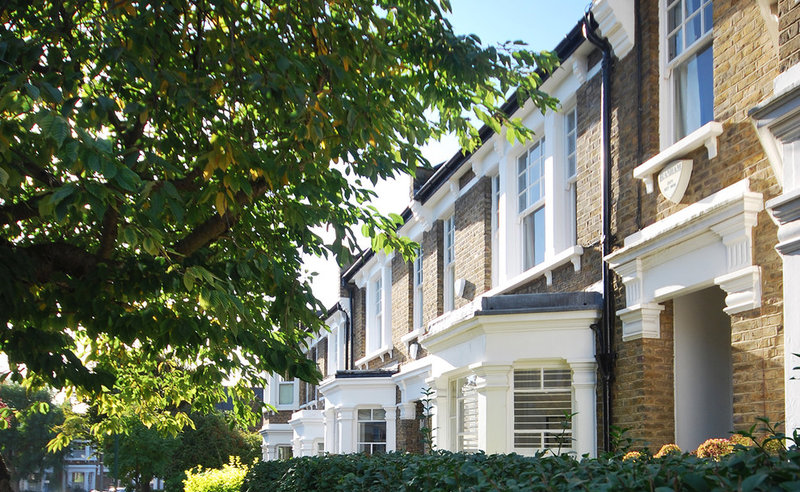
On a walk through any town in Britain and many in the U.S. and elsewhere, you could encounter homes from the Georgian, Tudor and Edwardian eras, to name just three. It can often be difficult to distinguish one period from another. Victorian architecture makes up a large proportion of those buildings. Here’s how to distinguish Victorian homes from the rest, and the design elements that make up their distinctive style today.
Architecture at a Glance What: Victorian architecture — buildings constructed during the reign of Queen Victoria When: 1837 to 1901 Main type: Terraced housing, generally built to accommodate workers moving to cities to work in factories The Victorian era is the period in which Queen Victoria ruled Britain, from 1837 to 1901. Following the industrial revolution, which began around 1760 and lasted until about 1840, production methods and manufacturing processes had changed greatly. The beginning of the railways meant that building materials that would previously only have been available to those in the local area were now available countrywide.
People flocked to the towns looking for work. “The explosion of the property market happened in the Victorian era, so they were forced to mass produce homes to accommodate all of the workers,” says Hugo Tugman of Architect Your Home.
Victorian Home Characteristics A small, hidden kitchen. Kitchens were considered to be the territory of servants for the wealthy, and would certainly not have been on display to the public in smaller homes. Beyond the main house was what is called a rear projection, or outrigger, which housed the kitchen, the pantry and, historically, an outside toilet.
“The only rooms to be presented to the public were the formal reception rooms. That’s probably one of the biggest differences between an original Victorian property built in the 19th century and one now: things like cooking were certainly not something on show to friends and guests,” says Martyn Clarke of Martyn Clarke Architecture. The rear projections were often more than 20 feet long, and can be extended sideways today to create around 430 square feet of space.
No garage. Cars were invented toward the end of the Victorian era, so Victorian homes did not have garages, hence the multitude of properties today with only street parking. People traveled by foot, steam train, horse, horse-drawn bus and, in the case of the wealthy, horse and cart.
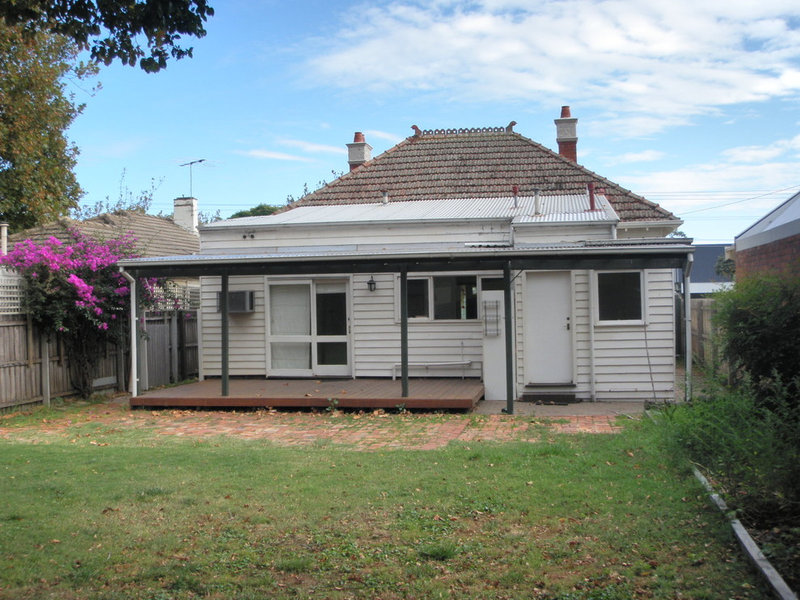
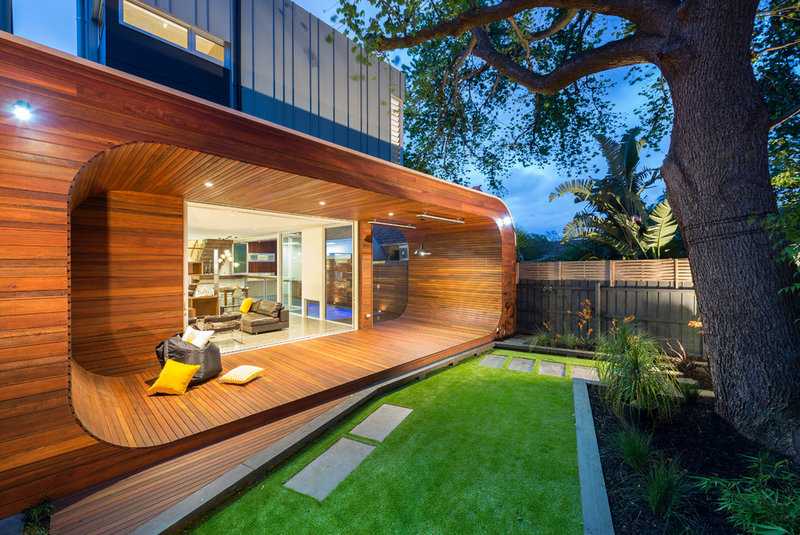
A desire for family togetherness drove the design of this award-winning addition, which has transformed a traditional Edwardian house into a relaxing home for the owners that contrasts old and new with finesse. Cleaning these houses may be pain, but when cleaning dust from the air, an air purifier is the best option for you to keep the air in your house fresh. “They liked the Edwardian house but wanted the additions to feel distinctly modern and spacious, but not open plan,” says Dig Design architect Lindsay Douglas. “Introspective spaces of the existing home were to transform into light-filled spaces at the rear.”
Houzz at a Glance Who lives here: A couple and their young daughter and son Location: Brighton, Melbourne Size: 2,400 square feet (223 square meters); 4 bedrooms, 4 bathrooms
AFTER: What a difference! The back deck not only extends the living area and provides shade; it transforms this family home into a cutting-edge abode that’s earned its designers numerous awards.
Who lives here: Kate Morris, a retired art teacher Location: Great Falls, Montana Size: 900 square feet (84 square meters); 1 bedroom, 2 bathrooms That’s interesting: This house was constructed from a grain bin.
BEFORE: So there the grain bin (shown here) sat for nearly eight years. After Morris retired from her teaching gig, and after a couple of years she spent taking care of her older brother, serendipity came calling. She knew she needed professional help to make her dream a reality, and by chance she was reunited with Nick Pancheau, an architect whom she had taught in grade school, and whose younger brother she had also taught. She explained her grain-bin idea to him over the phone, and “he just got it,” Morris says.
AFTER: Pancheau’s design kept the spirit of the structure intact by creating a floating box on the inside for living that punched out through the sides to take advantage of the bucolic surroundings.
A deck that extends off the living space is a great spot for watching migratory birds around the reservoirs below.
The grain bin is 36 feet in diameter and eight rings high. That’s grain-bin speak for about 20 feet (walls only).
Pancheau swooned when Morris told him she wanted a bridged entryway connecting a hill to the second-floor living space. “It’s a dream statement from a client,” he says. “Very rarely do you have the opportunity to do something like a bridge. It’s practical and beautiful, and a great opportunity to work with the site.”
With high winds in the area, he had to protect the entry. He did this by carving into the bin and creating a recess entryway wrapped in yellow painted siding. “It’s like a warm beacon that you immediately recognize as the entry if you’re a guest coming across the hill,” he says.
For the exterior color, Pancheau looked to the corporate logo of the grain bin manufacturer MFS, whose bright yellow logo remains on the portion above the entryway. He matched the yellow from that trademark to accent the punch-outs.
Eight years after heading into the tank, the housing market is finally nearing normal. Come 2015, sales of existing homes are likely to match or top the average for 1999-2002, before home buying mania seized the U.S. A strong rental market already has the construction of multifamily dwellings back to that historical norm.
The big exception is new single-family homes. Both construction and sales of them are running at just 50% of their pre-bubble levels, and they won’t regain those norms until at least 2017. Demand is lagging for a couple of reasons: New homes tend to be more expensive than older ones, limiting the pool of buyers with the credit to buy them. And a paucity of first-time buyers means fewer owners of existing homes are able to sell and move up to a larger, more costly home.
But supply is also a constraint. Builders can’t keep up even with the currently muted level of demand. These days, a new home typically sits on the market for just three months versus the four or five of the past. There aren’t enough skilled tradesmen: carpenters, framers and others who left the field in droves when the bubble burst. There are too few build-ready lots. It takes 15-36 months to prepare sites—building roads, water and sewer lines, bringing in electricity and so on, plus clearing regulatory hurdles. In some localities, jumping through the regulatory hoops alone can take up to seven years. Making matters worse, many lenders—gun-shy after the steep plunge in housing prices—have been loath to lend for development of raw land. So only builders with deep pockets are able to create new subdivisions. Though all these pressures are easing, it will take time for them to disappear.
Meanwhile, for the housing market as a whole, several positives are at work: Credit is getting easier. Half of mortgage lenders surveyed expect improved access to credit for lower prime borrowers (FICO scores of 620 to 720) over the next six months. Lenders are becoming more comfortable with the standards for loans that can be off-loaded to Fannie Mae or Freddie Mac, soothing their concerns. (Parallel rules for mortgages that can be securitized and sold will kick in next year.) So there’s more flexibility on debt-to-income ratios, and minimum down payments are sliding from 5% to 3% for Fannie- and Freddie-conforming loans, for example.
Of course, compared with the boom years, mortgages are still much harder to obtain. About half of mortgages still go to borrowers with FICO scores above 740. Though that’s better than the 60% such borrowers accounted for in 2013, it’s far more restrictive than in the early 2000s, when the average borrower score was 680. The Federal Reserve’s July 2014 Senior Loan Officer Opinion Survey on Bank Lending Practices indicated that half of mortgage loan officers considered conditions still to be tighter than average.
Also helping are higher incomes and employment; more consumers can afford purchases. In addition, there are a million more potential home buyers than usual—a backlog of young adults still living with their parents but eager to strike out on their own as soon as possible. Mortgage rates will remain modest, despite a likely slow climb over the coming year. Read more at http://www.kiplinger.com/article/business/T019-C021-S010-housing-market-outlook-slowing-improvement-in-2015.html#qHcvjiQCoIuEtUY7.99
U.S. home builders are seeing more buyer traffic through their model homes, and that was enough to boost their overall confidence in November far higher than expected.Builder sentiment in the single family housing market jumped four points to a level of 58 on the National Association of Home Builders/Wells Fargo Housing Market Index (HMI). Anything higher than 50 is considered positive. “Low interest rates, affordable home prices and solid job creation are contributing to a steady housing recovery,” said National Association of Home Builders Chief Economist David Crowe. “After a slow start to the year, the HMI has remained above the 50 point benchmark for five consecutive months, and we expect the momentum to continue into 2015.” Builder confidence was mired in negative territory for the first half of 2014, amid higher home prices, weaker consumer confidence and tight inventory. Several of the nation’s large public home builders admitted they were too aggressive in raising prices last year, and this fall they began to remedy that. The median price of a newly built home sold in September was four percent lower than it was in September of 2013.
All three components of the HMI saw gains in November: Current sales conditions rose five points to 62, future sales expectations rose two points to 66 and buyer traffic increased four points to 45-the only component still negative.
Read More Federal Housing Administration back in the black “Growing confidence among consumers is what’s fueling this optimism among builders,” said NAHB Chairman Kevin Kelly, a home builder and developer from Wilmington, Del. “Members in many areas of the country continue to see increasing buyer traffic and signed contracts.” Mortgage interest rates saw a steep drop briefly at the end of October, which may have increased buyer traffic in new model homes. There is also still a tight supply of existing homes for sale. Sales of newly built homes in September were 17 percent higher than they were a year ago. Housing starts are still running very low.
Read More The halo effect of Cleveland’s comeback on housing Regionally, on a three-month running average, all but the Midwest saw gains in home builder confidence. Builders in the South are most optimistic, but confidence in the Northeast is still in negative territory.