Illinois Worst Rated State | Bedford NY Real Estate
Leave a reply

The PSY Gangnam Style video: you watched it … but missed some key points about blogging.
That’s right, blogging. As bloggers, we can learn extremely useful lessons from things that are unrelated to our topic.
Yesterday, I listened to the song. Replayed it, and replayed it again. I kept listening to the song for around half an hour.
Why did I keep listening to the song? Was there a marketing trick hidden in it?
I did some research and discovered three aspects of Gangnam Style which can be applied to your blog.
1. Innovate
Innovation was a major reason for my addiction to the song.
I’d never seen anyone getting inspiration from horse-back riders, and turn it into a dance move. That move is completely new, and people love new.
Look at your blog. Look at your competition. Is there a difference between you? When you are the same as others, how can you stand out of the crowd?
Innovation takes effort, but it doesn’t need to be difficult. Focus on doing something extra that can be loved by your readers. Yes, you will have to think hard, but if your mind is caught by the right idea, you will be on fire like Gangnam style…
2. Never take anything as insignificant, even if it’s small
Another big cause of Gangnam Style’s popularity is Gangnam itself. Gangnam is a city in Korea which is not big. People never proclaim that they are from there. But now, everybody wants to be from Gangnam, and to have Gangnam Style. It’s a case of the small thing gone big.
Most of the bloggers follow the big trends that are mostly created by the top blogs in their niche. Yes, those topics might be trending, but there is problem: everyone is writing about the same topic, so it’s difficult to get attention by writing on it.
If you start writing about something else that is given little importance, you have the chance to create a new trend in your industry. This also leads back to innovation. The more innovative your idea is, the better your chances are that it will go viral.
3. Inspire the influencers
PSY was not a big pop star before. The thing that took him to that position was the fact that he inspired the influencers in the music world, who spread it all over social media.
You made an innovation. You’ve spent time thinking about it and developing it, but now you’re wasting that effort by keeping it limited to your blog only. Step outside your blog! Tell the big names in your niche. They might like it and tell their audience, too.
In a nutshell: you can learn a lot of things from the famous song Gangnam Style including the importance of innovation, never under-estimating the power of small things, and the potential to inspire the influencers in your niche.
Tell me now. Have you learned anything from Gangnam Style?
Shiller: Don’t Count on a New Housing Boom
Robert Shiller says caution is in order in housing markets:
A New Housing Boom? Don’t Count on It, by Robert Shiller, Commentary, NY Times: We’re beginning to hear noises that we’ve reached a major turning point in the housing market — and that, with interest rates so low, this is a rare opportunity to buy. But are such observations on target?
It would be comforting if they were. Yet the unfortunate truth is that the tea leaves don’t clearly suggest any particular path for prices, either up or down…, any short-run increase in inflation-adjusted home prices has been virtually worthless as an indicator of where home prices will be going over the next five or more years. …
The bottom line for potential home buyers or sellers is probably this: Don’t do anything dramatic or difficult. There is too much uncertainty… If you have personal reasons for getting into or out of the housing market, go ahead. Otherwise, don’t stay up worrying about home prices any more than you do about stock prices. …
Facebook seems simple. After all, even your mom is using it, right? But there are a lot of reasons your Facebook page isn’t getting the rabid fan-base you think it deserves. With Graph Search rolling out it’s going to be even more important to fine-tune your page to get those fans engaged. Here are the top 6 reasons for lackluster fan pages we see on a regular basis.
Having an inexperienced manager
A successful Facebook page takes someone who knows how to activate a community to attract, engage and keep your fans, and encourage them to share with their friends so they become fans, too. While it may seem some community managers spend an inordinate amount of time coming up with cute e-cards and photos, if you look carefully, and study when and what they post, you will see a method to the madness. Posts aren’t really random at all. They’re carefully timed and balanced between posts that make people laugh, think and engage. They take into consideration the times the community responds best to posts. All together it tells a story.Posting too much about YOU and not enough about your FANS
In general, only 20% of the posts you put on your page should be about you and your brand. I know, that’s hard to swallow, but are you advertising? Get a billboard.A good community manager is always on the lookout for ways to nurture the community and support them as well as your brand. Managing the content so you spread the love brings fans back again and again and makes them feel part of a community instead of a target to market at.
Being oblivious to who your fans are
This is very common. When was the last time you looked at the profile of a fan? What are their interests? What kinds of post do they share? Do they have a blog you could share with your community? Knowing your community takes time and research, but it pays off big in loyal fans.Not responding to requests, questions, posts
If you aren’t talking back to us, we just figure you’ve checked out. Respond to questions as quickly as possible. Resist the urge to delete a negative comment. Instead look at it as an opportunity to engage the user, make them happy and turn them into evangelists. When someone compliments you, say thank you. Then go see how you can return the favor.Posting too much
Flooding your fan’s news feeds with content makes them tune you out. It also causes Facebook to wonder if anybody cares about you but you. If you don’t get great engagement in the first place, and most of the posts are from you you will likely lose page rank and stop showing up in the news feeds of your fans. Basically, you’re dead to them. We recommend a post a day until you get good engagement and then, depending on how many fans you have and how engaged they are, you can step it up to 2 or even 3 posts per day. Don’t forget to spread those posts out over the day, not dump them all in your timeline at once.Not posting enough
Did you forget you have a Facebook page? Post like mad at first, then decide nobody cared so you quit posting? Nobody is going to care about what you have to say if you clearly don’t care about your page. Try for once a day, but twice a week is a bare minimum.You forgot to tell people
How are you letting people know you have a Facebook page? Is it in your emails, on your website, in your brochures? Don’t forget to add the address, too: it’s not as intuitive as you might think for people to search for you. They just might find a similar product and quit looking for you altogether.
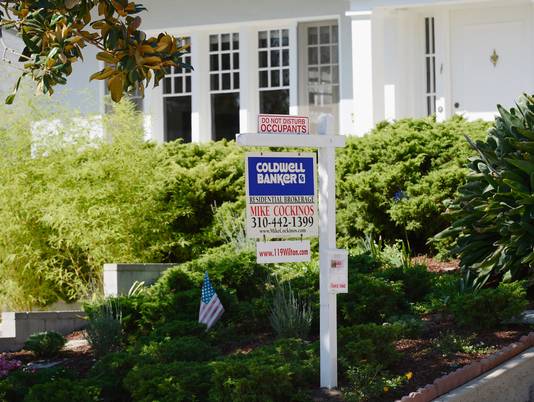
Nationwide, the supply of existing homes for sale fell to 4.4 months in December.(Photo: Kevork Djansezian, Getty Images)
Story Highlights
- New listings are down 14% in first half of January
- Supply of homes on market is lowest in 7 years
- Will spring bring out more home sellers?
The supply of homes for sale has been shrinking for six months and shows no improvement so far in January — a bad sign for buyers.
New listings of existing homes for sale were down 14% year-over-year in the first two weeks of January, according to Realtor.com, which tracks 143 markets nationwide.
In Phoenix, where prices were up 24% in November from a year earlier, new listings through the first three weeks of January hit their lowest level in 13 years, says Mike Orr, real estate expert at the W.P. Carey School of Business at Arizona State University.
That’s bad news for buyers, and it means “prices need to go up more” to bring more sellers to market, Orr says.
Nationwide, the supply of existing homes for sale fell to 4.4 months in December, based on the current monthly sales pace, says the National Association of Realtors. That’s the lowest level in more than seven years. A six-month supply is generally considered balanced between buyers and sellers.
Home prices in November were 7.4% higher on average than a year earlier, according to CoreLogic. Real estate experts had expected that rising prices would spur more sellers trapped by years of falling prices.
Instead, January’s listing data “is the same sad story,” says Glenn Kelman, CEO of online brokerage Redfin. If sellers don’t have to sell, “they’re holding on, thinking they’ll wait for prices to go up even more.”
Redfin’s data, covering 19 major markets mostly in the West, shows new listings down 29% the first two weeks of January vs. last year.
Scarce sellers aren’t the only driver of shrinking supplies. There are fewer distressed properties for sale. Foreclosure sales were down 7% through the first nine months of last year from the same period in 2011, RealtyTrac says.
Meanwhile, demand is up. Existing home sales were up 9.2% last year, NAR’s preliminary data show. New-home sales rose almost 20% in 2012, the government reported Friday, while supply fell to 4.9 months in December from 5.4 months a year before.
New home construction is still weak. In each of the past three years, builders completed fewer than 500,000 single-family homes. That’s less than half the number built annually between 1993 and 2007, according to the Census Bureau.
Home builders would need to double production this year to alleviate the tight supply, estimates Lawrence Yun, NAR’s chief economist. That’s not expected.
Home supplies nationally will stay at about the five-month level much of the year, Yun predicts.
Some markets are far below that.
California’s supply of existing single-family homes for sale stood at 2.6 months in December, the California Association of Realtors says.
“Nobody is selling because no one has anywhere to go,” says Barbara Hendrickson, of Red Oak Realty in Berkeley, in the San Francisco Bay Area, which had a 1.8-month supply in December.
The low supply is feeding bidding wars. One of Hendrickson’s clients recently lost a bid despite offering $130,000 above the home’s $775,000 asking price, Hendrickson says.
Whether the supply of homes for sale will expand to meet rising demand is a “big question for the market” in 2013, says Jed Kolko, economist with real estate website Trulia.
This year is also the first since the housing bust began that falling inventories are not necessarily a good thing, he says.
Listings may still swell in time for the busy spring selling season, says Stan Humphries, Zillow economist.
He says listing activity next month will be key. If it doesn’t pick up by then, the spring season is likely to bring a lot of price increases, he says.
Seller shortage
Months’ supply of existing homes, based on the annual sales rate for each December:
Home prices in Pasadena rose last month, reflecting an ongoing trend in which a dwindling number of homes on the market has sparked bidding wars that drive up prices, according to the latest real estate figures.Despite the trend, median prices in surrounding communities did not fare so well.
The median price of a single-family home in Pasadena was $599,000 last month, an 11% climb from $538,000 in December 2011, according to statistics compiled by Realtor Keith Sorem with Keller Williams Realty in Glendale.
The median price of a condominium also increased slightly, from $400,000 in December 2011 to $404,000 last month.
Meanwhile, the number of single-family homes on the market continued to slide. There were 115 homes on the market last month, a 54% tumble from the 249 homes a year ago.
Condos saw a similar decline, from 174 in December 2011 to 99 last month — a 43% drop.
But in San Marino, the median price of a single-family home fell nearly 17%, from $1.81 million in December 2011 to $1.51 million last month.
Only eight homes were for sale in San Marino last month, a roughly 58% drop from the 19 on the market the year prior.
Median prices also slid in South Pasadena, with the median price for a single-family residence falling from $915,000 in December 2011 to $894,000 last month. The median price of a condo fell by 23%, from $530,000 to $405,000.
There were 15 homes for sale in South Pasadena last month, a 28% decrease from 21 a year ago. And only one condo was on the market last month, down from 11 in December 2011.
—
Follow Daniel Siegal on Google+ and on Twitter: @Daniel_Siegal


It would be comforting if they were. Yet the unfortunate truth is that the tea leaves don’t clearly suggest any particular path for prices, either up or down.
On the one hand, there were sharp price increases in 2012, with the S.&P./Case-Shiller 20-City Index, which I helped devise, up a total of 9 percent over the six months from March to September. That comes after what was generally a decline in prices for five consecutive years. And while prices dropped very slightly in October, the trend was quite encouraging for the market. (Our November data come out on Tuesday.)
But some of these changes were seasonal. Home prices have tended to rise every midyear and to fall slightly every fall and winter. And for some unknown reason, seasonal effects have become more pronounced since the financial crisis.
After screening out these effects, a number of indicators are up, including data for housing starts and permits as well as the National Association of Home Builders/Wells Fargo Index of traffic of prospective homebuyers, which has made a spectacular rebound since last spring.
What might explain this picture? It’s hard to pin down, because nothing drastically different occurred in the economy from March to September. Yes, there was economic improvement: the unemployment rate, for example, dropped to 7.8 percent from 8.2 percent. But that extended a trend in place since 2009. There was also a decline in foreclosure activity, but for the most part that is also a continuing trend, as reported by RealtyTrac.
And, last spring, along with Karl Case of Wellesley College and Anne Thompson of McGraw-Hill Construction, I conducted a detailed survey of the attitudes of recent home buyers in four American cities, as I discussed here in October. We did not see any evidence of increased optimism.
In short, it is hard to find an exact cause for the rebound in home prices. But that isn’t unusual — we hardly ever know the real causes of major changes in speculative prices. Yet we do know that any short-run increase in inflation-adjusted home prices has been virtually worthless as an indicator of where home prices will be going over the next five or more years.
THERE is a good deal of short-run momentum in home prices — they tend to keep going in the same direction for a year or maybe more. But those prices have generally reverted to the mean fairly quickly, in inflation-corrected terms. The upswing in home prices from 1997 to 2006 — up 86 percent, in real terms — was an anomaly. And that upswing was almost completely reversed by 2012. We certainly can’t rule out another boom. It’s possible that the 20th-century pattern of real home prices, which typically hugged the historical mean, has disappeared. Perhaps people are more speculative in their thinking, after the recent roller-coaster ride, and more prepared psychologically to buy into a bubble. But I wouldn’t put any money on that.
History doesn’t suggest that another big bubble will come so fast. In fact, before the most recent one, the United States had had only one major national home price boom in the last century, when real prices rose a total of 68 percent from 1942 to 1953.
After the traumatic collapse of the last price bubble, Americans seem less sanguine about owning versus renting. According to the Census Bureau, the homeownership rate has been falling, from 69.0 percent in the third quarter of 2006 to 65.5 percent in the third quarter last year.
A study of the causes of these rate movements, by Stuart Gabriel of the University of California, Los Angeles, and Stuart Rosenthal of Syracuse University, concluded that further declines seem likely, but that a forecast would depend “on uncertain forecasts of attitudes toward investing in homeownership as well as changes in credit market and other economic conditions.” (The study was presented at the January meetings of the American Real Estate and Urban Economics Association/American Economic Association.) If the trend continues, it would suggest long-term declines in prices of existing detached single-family homes, because they are costly to manage as rentals.
The housing market has also been subject to new oversight, including that of the Consumer Financial Protection Bureau, which just this month announced new ability-to-repay standards for mortgage lenders. Those standards will make wild lending harder to do.
So it seems that since 2006, our society — including both buyers and lenders — hasn’t become more speculative in its attitudes toward housing. Instead, it has become more wary, and more regulated.
And, of course, economic clouds are still hovering. Slow overall growth continues in the United States, and European financial markets remain vulnerable.Much of our economy, notably housing, is still supported by taxpayer bailouts, which are clearly not a long-term solution. There are also lingering uncertainties about emerging-market economies, as well as the risk that a disturbance in the Middle East could cause an energy crisis.
Most experts are not predicting any big change in home prices. As of December, the Zillow-Pulsenomics Home Price Expectations Survey, which involves more than 100 forecasters, and the S.& P. Case/Shiller Composite Index Futures were both forecasting modest increases for the next half-decade, implying inflation-adjusted price growth of 1 to 2 percent a year.
The bottom line for potential home buyers or sellers is probably this: Don’t do anything dramatic or difficult. There is too much uncertainty to justify any aggressive speculative moves right now. If you have personal reasons for getting into or out of the housing market, go ahead. Otherwise, don’t stay up worrying about home prices any more than you do about stock prices.
I can’t offer any clearer picture, and I don’t see a solid basis for anyone else to do so, either.
Robert J. Shiller is professor of economics and finance at Yale.


