About three weeks ago, I ran an ad campaign on Facebook for a fanpage that resulted in an increase of Likes from 100 to around 900. Success!
…or so I thought. After a week of posting content designed to engage the new audience and attract more new followers, the individual post Likes were averaging the same totals as prior to the campaign.
This was frustrating. My initial reaction was, “Hmm, maybe these ad-generated “Likes” that I’m getting are fake,” but all I had to go on was a few weeks’ worth of data and a hunch. That’s when I brought it up to Brent Csutoras of Kairay Media over a cup of coffee.
We came to the conclusion that there’s no way Facebook would stoop to generating fake Likes because of the enormous liabilities that would ensue. We blew it off and didn’t talk much about it again.
Then a bunch of articles came out last week covering a BBC investigation that alleges Facebook ad-generated Likes are not real: see money.msn.com, dailydot.com, and techcrunch.com.
After a second conversation with Brent this past weekend, together we decided to take a closer look at a number of Facebook ad campaigns which had low enough Like numbers to spot anomalies.
At first glance, the followers seem to be genuine. Most of them have profile pictures, cover photos, history, and activity levels. Then we found some interesting profiles like “Hilton,” who shows no activity except answering hundreds of Facebook polls and surveys.
Yet other profiles hadn’t had updates in more than a month, and a handful actually had no profile info at all, but these same accounts were extremely active, on a daily basis in some cases, at Liking Facebook pages. A pervasive red flag was that these profiles did not seem to have any discernible connection or affinity for the Facebook pages being advertised.
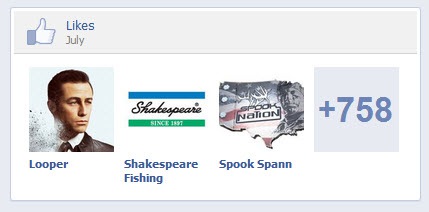
When we got into the actual Likes of these profiles, we started to see where the potential fraud was happening. These particular accounts all seemed to have an enormous number of Likes, with many totaling more than 10,000 and at a “Liking” rate of more than 500 a month.
In the first two weeks of July 2012, the profile below had accumulated more than 750 Likes:
These users seem to hit just about every Facebook page in existence, with sometimes five or more Likes in a single minute.
We found lots of profiles with the same pattern:
http://www.facebook.com/linda.meyer.940/favorites
http://www.facebook.com/rtspina/favorites
http://www.facebook.com/jasonxcraig/favorites?ref=pb
http://www.facebook.com/flaquis.carrillocamacho/favorites
http://www.facebook.com/nc4x4babe/favorites
http://www.facebook.com/RaivenStudios/favorites
http://www.facebook.com/carmen.l.carter2/favorites
http://www.facebook.com/linda.s.crawford1/favorites
http://www.facebook.com/teri.templeman/favorites
http://www.facebook.com/totto.tekno/favoritesWith this additional data from above compared against the BBC study, we are much more confident that something is going on with Facebook ads. But what exactly is it?
Here are a few theories we tossed around:
#1 Facebook is generating fake Likes through their ad network.
This obviously would have major negative backlash for Facebook, which just two months ago had the third largest IPO in history. There’s a lot for them to lose if this was discovered, but advertising viability is commonly listed as the number one concern for both the company and for shareholders.
#2 “Like” generating networks, similar to what you would find on fiverr.com, are using bots or compromised accounts in order to diversify their activity history and avoid getting banned.
It is a known tactic for spammers and bot writers to imitate behavior that makes the profile look more diversified and natural-looking in order to avoid detection and mass removal or account bans.
#3 Someone is using 3rd-party apps or compromised accounts to abuse the Facebook ads system in order to hurt Facebook, the company.
Hacker organizations like Anonymous have been rumored to be looking for ways to hurt Facebook, even though they deny it. It’s not unreasonable to believe a group might be out there working together to damage the credibility of Facebook’s only source of revenue.
Our Conclusion
We believe it is #2: someone or a group of someones is utilizing bot networks and compromised accounts to sell actions in Facebook, and the voluminous Liking is a byproduct of attempting to randomize any patterns that would identify their core network or their customers.
Last week’s Gizmodo article on bought Twitter followers adds some related credence to this theory. The Twitter followers are added through bot networks and compromised accounts.
It doesn’t help that Facebook doesn’t appear to be taking the allegations seriously. So far they have only responded that “We’ve not seen evidence of a significant problem. Neither has it been raised by the many advertisers who are enjoying positive results from using Facebook.”
In Facebook’s defense on the issue, the BBC study indicated only $10 was spent to garner 1,600 Likes in 24 hours, which would be less than $.01 per Like. Anyone running Facebook ads knows that you are never getting clicks that cheap and in that volume for that price.
The same is evident in one of our campaigns, although the initial one mentioned above was much worse. For example, when a fanpage received ~100 new Likes during a Facebook ad campaign, only 18 were a direct result of the ad itself.
So is Facebook aware that this is going on, but is turning a blind eye because these fraudulent, bot-created Likes are not being procured via the Facebook ad network?
Have you seen any trends like this lately with your ad campaigns? If so, please comment below. I’d love to hear about them and any additional theories that might be out there.
Daily Archives: July 17, 2012
KnowledgeVision Turns YouTube Videos into Interactive Presentations | North Salem NY Real Estate
Tomorrow, KnowledgeVision Systems, a venture-backed company based in Lincoln, MA, will be announcing the capability to enhance any YouTube video with advanced interactive features, including synchronized presentation slides, clickable reference links, navigation, searchable transcripts, and social media widgets. This will enable KnowledgeVision subscribers to turn their YouTube videos into complete multimedia experiences for content marketing, eLearning, and corporate communications.
Last week, KnowledgeVision CEO and Founder Michael Kolowich gave me a “sneak preview” of the KnowledgeVision-YouTube integration (preview below). And he said it was okay for ReelSEO to publish this “exclusive” story the day before the official announcement.
“Many companies and organizations have invested in huge collections of YouTube videos, many of which are talks that are designed to be supplemented by presentation slides such as Microsoft PowerPoint,” observed Kolowich. “With KnowledgeVision, an ordinary, one-dimensional YouTube video can be turned into a stunningly effective interactive presentation within minutes. And with KnowledgeVision’s advanced analytics, these interactive experiences can be tracked and analyzed right down to the individual viewer.”
Kolowich demonstrated the new features by showing how KnowledgeVision is able to add interactivity and visual enhancements to a YouTube-based talk distributed by the TED Conferences. Within an hour, a non-programmer was able to create a fully interactive version of an April 2012 TEDx talk, complete with navigation, reference footnotes, high-resolution presentation slides, and a searchable transcript, by embedding the original YouTube video in a KnowledgeVision player.
To see the demonstration for yourself, visit “TED Talk on KnowledgeVision: How to Air Condition Outdoor Spaces.“
“The combination of KnowledgeVision and YouTube represents a genuine breakthrough in rapid multimedia content creation,” said Kolowich. “In a world where producers are being asked to produce much more video material under time and cost constraints, KnowledgeVision not only helps address that need, but it does so with an interactive result that is demonstrably superior to plain, one-dimensional video.”
What’s my take on the significance of all this? Here are some initial thoughts:
- For all the progress in online video distribution, video remains largely a linear, one-dimensional experience…based on the old-fashioned TV model: watch it from beginning to end. When it comes to video, we’re still couch potatoes, by and large.
- It’s about time that we start thinking more about how to turn video into a more interactive, user-driven experience. This demands that we start “thinking outside the frame,” as Kolowich puts it. That is, that we let video interact with other elements that surround it…to make it a richer, more customized experience.
- That’s what KnowledgeVision is all about — using video to control other visual and contextual events on the page (e.g. slides, footnotes, etc.)…and encouraging the viewer to click on things on the page that affect what’s being viewed at that moment (e.g. navigation chapters).
- Up until now, KnowledgeVision has used captive video sources — videos that users upload into KnowledgeVision or grab from their Brightcove, Ooyala, or Kaltura accounts.
- The big deal here is that you can now do this with YouTube videos as a source…and add value to them, too. That’s significant because many companies and organizations have put hundreds and sometimes even thousands of videos online. This is a way of leveraging that investment to add interactivity to them.
- The REALLY cool thing is that KnowledgeVision’s measurement tools allow you to analyze the clickstream of how individual viewers interact with your video – providing what Kolowich calls “Engagement Scoring” of those interactions. This helps identify hot prospects, for example, in content marketing programs.
A wide variety of clients use KnowledgeVision’s tools — KVStudio and Knovio. This includes: Alcatel Lucent, Bain and Company, Brightcove, Boston’s Museum of Science, Genzyme, Harvard University, Marketo, and Oxfam America.
With tomorrow’s announcement, I suspect that a number of YouTube Partners and content creators will want to consider joining this list. I know that I plan to mention this new online video presentation technology to a couple of my clients.
Real Estate Lead Generation Myths & Tips | Real Estate in Waccabuc New York
Are you struggling to generate business from your real estate website? Before you can change this you must understand the realities of generating quality leads and how to actually turn those leads into clients.
In this article we are going to debunk some common myths about real estate lead generation on the web and provide you with some actionable tips to improve your real estate website lead generation and management strategies.
Real Estate Web Leads: Top 4 Myths & Tips
Imagine you’re a young professional who just landed a new job and are searching for an apartment in the DC area. What’s your first step? If you guessed searching for “DC apartments” on Google…you were right! Now you, as the real estate professional, are picturing your webpage at the top of both the organic and paid search results. Voilà, instant prospects! Well, not so fast. While visibility is one step closer to your desired sales conversions, there are many more pieces to the puzzle than simply good search results. Below, we debunk some popular myths about real estate lead generation.
MYTH #1: It’s easy to get to the top of search engine results.
Everyone begins with that ideal image in their mind of their website listed beautifully at the top of the Google search results, sometimes both in the organic AND paid results. “I just need to include some quality content, provide some links, and choose the correct keywords, right?” Unfortunately, it’s not that easy. Getting your page to the top of the results is far from being quick or easy; however it’s better to understand this before diving in head-first. Without the proper preparations and knowledge of your target market, this could be a detrimental mistake to both your time and your wallet.TIP: Implement a comprehensive online marketing strategy…and stick with it.
If you want to dominate the search engines for your most relevant key phrases, or even just want to take market share away from your competitors, then you must employ a comprehensive strategy. This strategy should be centered around creating unique, quality content on your website or blog. Promote this content through your social networks, PR, email marketing and good old word of mouth.MYTH #2: It’s nearly impossible to get to the top of the search engine results.
As previously mentioned, it is certainly not easy, but it is definitely not impossible either. If you take the time to care for your website and provide your visitors with exactly what they are seeking, you will get good results.TIP: Know your target audience and market your services directly to them.
Detailed client personas are a great way to provide visitors with exactly what they’re looking for. Depending on the size of your business, identify several target clients who would be using your services. Don’t be afraid to have fun with this. Find a picture to represent them and give them a name. Where are they from? Do they have pets? Are they tech savvy? How did they hear about your company? Provide as much information as you can about your target clients, then build your website to cater to their needs.MYTH #3: Visitors are most interested in who you are.
Wrong. Well, yes, they do care, but not right away. Real estate prospects who come to your website from a search engine generally want to see what they searched for. If they like what they see, then they will check out your profile. However, if you don’t have the information, resources or tools they are looking for to find or sell their home, then you can bet that they will be moving on before even looking at that pretty face of yours.TIP: Don’t make your website primarily about YOU.
Include your personal information and qualifications in the “About” section of your website, but don’t clog up your homepage with it. Including a picture of yourself is important and will help your visitors feel more welcome and connected to you and your webpage, but your face should not be the most prominent thing on your website. Focus your website around resourceful content, user-friendly home search tools and strong calls to action to create a winning formula for quality web lead generation.MYTH #4: Lead generation trumps lead management.
We have found that this is a very common disbelief among not just real estate agents, but many business owners who lack experience with online marketing. You might have 500 leads, but if only 10 convert, that’s only a 0.02% conversion rate, and this is not enough to support your business. Conversion rates this low usually lead to a poor lead management system – one that can waste all of your hard work and money spent on marketing.TIP: Guide each visitor all the way through the conversion funnel.
Once you get visitors to your website and are able to get them to provide their contact information, your creativity and hard work must continue. Segment your web leads by any and all information you have collected about them (source, location, interest, stage, etc). Once your lists are segmented then create communications to these lists that specifically target each of these segments. Lastly, don’t give up on a lead or disregard it just because it is “cold”. Cold leads become “hot” leads at some point….IF you spend the time and effort necessary to properly nurture it.Generating Quality Real Estate Website Leads Starts Here
There you have it, common myths have been debunked and specific tips have been provided. Remember, there are many pieces to the puzzle of mastering your leads generation efforts. Successful real estate web lead generation and management comes from ongoing processes and hard work….not one off projects that have no follow through.
Lead Generation & Management Takeaways
Two things we would like for you to take away from this article are centered around two main questions to ask yourself:
1) Why would anyone want to visit, and more importantly, remain on my website?
Create personas and develop your website to cater to them. This will guarantee your visitors will like what they see and increase the chance of conversion.
2) Do I really have an effective lead management / nurturing system in place?
Don’t use automatic response emails to follow up with leads. Your customers will really appreciate a personal email from you and this will develop stronger relationships. Demonstrate patience and interest and follow up with the needs of each customer.
Follow these two things, at the very least, and you will begin to see results. If you’d like to ask us about any of the information provided above then please feel free to do so in the comments below or by pinging us on Twitter @REMarketingTips.
Cross River Real Estate | Consumers Are Concerned About Privacy, Tracking, Advertising
How much do social and mobile service providers know about you? What are they doing with your personal information? If you’re worried, you’re not alone. A Harris Interactive survey commmissioned by TRUSTe, which helps its clients manage customer privacy, shows that 60% of adults surveyed are more concerned about their online privacy now than they were a year ago.
The study, conducted between May 31 and June 6, 2012, included 1,033 adults and 554 smartphone users in the United States aged 18 or older.
Ninety-four percent of respondants said that privacy was an important issue, and 58% said they ‘do not like’ online behavioral advertising.
Consumers are realizing that the first line of protection when it comes to privacy online is the individual. Services, websites and applications are increasingly viewed with skepticism when it comes to protecting user data, and consumers are taking it upon themselves to hide their information online. Near 69% of respondants said they trusted themselves the most to protect their personally identifiable information (PII) online. Of those surveyed, 76% said that they did not allow companies to share their personal information (up from 67% in 2011) and 90% said they used browser controls to protect privacy by deleting cookies, opting into “Do Not Track” options or using the “incognito” mode.
Users are wise to take their privacy into their own hands. Even the most well-intentioned services online can have privacy leaks or breaches, including stolen passwords or information that could lead to identity fraud. Companies may not follow industry-standard practices that protect user information, resulting in mishaps such as LinkedIn’s password breach earlier this year, or they may lack the knowledge needed to protect users online. It is a good general rule: Do not entrust important information about yourself to another person or organization without knowing exactly how they will protect it. Blind faith can lead to ruin.
Consumers are not just concerned about protecting their personal information and passwords. Advertising plays a major role in how the Web operates, and during the the past several years there has been a significant increase in behavioral targeting. Internet ad providers track user behavior through browser cookies or unique identifiers in smartphones. This allows them to deliver ads based on the user’s location or websites the user has visited recently. Forty percent of respondents to TRUSTe’s survay said a targeted ad made them feel uncomfortable and 50% said they would opt out of behavioral advertising given the chance (up from 27% in 2011).
When it comes to mobile, 85% of respondents said they would not download an app if they did not trust it. That is a logical response by consumers and something that application developers should be aware of. About 62% of respondents said they were aware that advertisers tracked mobile activity, but only 1% said they liked it. Less than 10% of smartphone owners expressed willingness to share specific information about their activities such as location, Web behavior or list of contacts.
See the infographic below for a quick look at TRUSTe’s results.
Is This Blogging? : @ProBlogger | South Salem NY Real Estate
Pinup Style comments:
“I was wondering what your position is re: another blog post I found on your site stating “As Michael Stelzner said at Blogworld, “You’re not a blogger, you’re a publisher!”
Call me old fashioned, but if one has a blog, why pretend it is something else? I can understand that ‘marketing’ etc., is a driving factor for that decision…
I have also been reading a few articles around the web with people saying that it is better to ‘not’ call a given site a blog at all (even if it actually is in fact a blog).
This might also be a factor (at the very outset) in a blog’s (aka ‘not’ a blog’s) chosen business model to make money?”
This is a very interesting question, and as Pinup Style suggests, different bloggers will have different opinions on this.
Kevin Cullis, who also participated in the blog business model series, responded to the comment with the words “You’re a blogger, you’re a publisher”, for example.
I think the descriptions of “blogger” and “publisher” and “media outlet” are probably a bit arbitrary within this space. As Pinup Style says, in the self-made world of blogging, any of us can call ourselves whatever we like. But Kevin’s point is that the way you perceive what you’re doing here—as reflected in the way you describe yourself—may have quite an impact on the way you operate.
Blogging has well and truly moved into the mainstream—not only are blogs publications in their own right, but the format is also being co-opted by major news media and other publications that need a format that presents readers with a lasting chronological representation of events.
Now, you might say that next to the BBC, your blog covering events in your local art scene doesn’t look much like a “media outlet.” That’s fine. But what if you lined it up next to a business blog?
I’m talking here about the kind of blog that represents merely one part of a corporate or business website, and serves a certain purpose—perhaps taking prospects or customers inside the business with posts by various staff members. This kind of blog might merge thought leadership with corporate games snaps and videos from an industry convention or meetup.
How’s your local art blog looking now? Is it looking at all like a “publication”? Are you looking like a “blogger”? A “publisher”? A “reporter”? A “writer”? A “hyperlocal journalist”?
You might consider what you publish to your blog to be “blog posts”—a definition encompassing what others might call opinion pieces, editorial, reportage, practical guidance, and features.
There are obvious boundaries that bloggers need to consider as they blog—no matter whether they’re doing it from inside an organization or out on their own. But the fact is that at the end of the day, we’re really just people connecting with others through content that we produce or have produced for us.
Beyond that, you can call it whatever you like!
Earth Gauge Tip of the Week — UV Safety | Katonah Real Estate
The sun emits radiation in the form of ultraviolet (UV) radiation. UV radiation is at its highest when and where the sun’s rays are the strongest. This means that UV levels will be highest around noon on a clear sunny day, as well as during the summer months. UV levels will also be highest near surfaces that reflect sunlight, such as water, snow and sand. Exposure to UV can cause sunburn, skin aging, skin cancer and eye damage. While skin cancer is largely preventable, it is the most common form of cancer in the United States – over 3.5 million new cases of skin cancer are diagnosed each year.
Viewer Tip: July is UV Safety Month. Stay safe in the sun with these tips:
![]()
- Wear sunscreen: Sunscreens with SPF (Sun Protection Factor) 15 and above provide protection by preventing UV radiation from reaching your skin.
- Wear sunglasses: Protect your eyes with sunglasses that have 100 percent UV protection. Check the label for the protection level.
- Work and play in the shade: When you are outside, wear tightly woven clothing and a wide brimmed hat to reduce the amount of UV radiation coming into contact with your skin. Remember that pets need shade, too.
Before you head outside, check the UV index at www.epa.gov/sunwise/uvindex.html.
Wildfire Lessons From Colorado | Bedford Hills Real Estate
In part one of this topic I mentioned that we live in a community in the mountains of southern Colorado. Our community is 15 miles long and half a dozen miles wide with one way in and one way out. Should a wildfire occur between us and our escape route we would have to remain and try to protect ourselves. We are surrounded by the San Isabel National Forest on one side and a large tract of land that is privately owned on the other side. Very little wildfire mitigation has been done outside our community borders. Our community is known as a landowner association and therefore has a board, officers and various committees that run the association. Living in a mountainous area which is heavily wooded makes wildfire one of our chief concerns. I suspect our community is similar to many other areas that are governed by homeowner associations, and our problems are not much different than they experience.
Our community has accomplished some wildfire mitigation over the past few years. Since the U.S. Forest Service is not going to properly mitigate many square miles of the forest that abuts our properties we can only do what we can within our own lots and the common land we all share. The association is making some very smart decisions as well as some that perhaps have not been thoroughly thought out or fully completed
They have established dry hydrants where they can pump water from lakes and streams to a water truck that has been recently purchased. They also purchased a wood chipper that will mulch limbs and small trees, therefore reducing the fuel source. These are very good decisions and will be useful to preventing and fighting a wildfire. There presently are no trained personnel to man the truck or contingency personnel to support the existing equipment. We have summer residents and a small contingent of full time residents like myself. The shortcoming of this program is that older folks like myself are neither trained nor physically able to fight 200 foot flames closing in on you. There is talk of training some people; however to slow or stop a wildfire takes able qualified men who can work together and not be distracted by protecting their own homes or property. The plan is a good plan but lacks completeness.
Our community has an alternative escape route through the National Forest. Many visit our community in large motor homes that would get stuck on the four wheel drive alternative road. The road is one lane wide and other vehicles behind a stalled or blocked vehicle would be stuck in the open with no safe place to go. Any plan should be fully complete and include as many of the members of the community as can be engaged. There is a gate across the alternative road and no one knows who has the key to the gate; any delay there could be fatal. Having a plan that is not complete or sufficiently detailed can be an invitation to disaster. Sometimes no plan may be better than a faulty plan that puts people in danger. Those who live in an HOA or similar association should engage all the members of the community and develop a plan formulated with as many opinions as possible and not take it upon the shoulders of a few to devise a plan based upon limited input.
It is a good idea is to have a wood fest that eliminates wildfire fuel from the community and provides firewood for those who need it. Having those come into a community and remove fuel is a valuable benefit to the entire community. Our community is a gated community and the implementation of a wood fest seems to be a good idea. Having volunteers personally escort woodcutters into the community, staying with them, then escorting them out seems a waste of volunteer manpower. By providing wood cutters a map to a specified area, having signs along the way to keep them on route,, having a volunteer present at the cutting location to monitor cutting seems to make better sense. That way those wishing to cut firewood could be directed to seperate locations and fewer volunteers, and more firewood could be cut. Charging for the firewood per load also makes little sense as it is the community that benefits mostly from the removal of the firewood and further limits cutting to those who can afford to pay for the privilege of cutting. A very good idea and faulty implementation.
One of the excellent ideas our community has put into place is having a location for members to dump brush when they clear their lots. It is then burned in the winter when there is adequate snow on the ground. Having areas for members to dump brush also encourages people to reduce fuel on private lots and acts to slow down a wildfire or try to stop it. Educating members on clearing their lots and being responsible wood lot owners is also a good idea that can expedite lot clearing.
Wildfire mitigation is important and necessary for survival but it needs to be carried out in a well thought out and proper manner and carried to completion. Associations need to invite and involve members in such procedures. Wildfire safety effects everyone and everyone should be involved in formulating a good plan. Plans are more complete when as many members as possible are able to contribute ideas and suggestions.
Our association bases many of its decisions on a local forester. Not all foresters are right all the time and additional input should be sought. For example a forester told us years ago that spruce bud worm had no natural enemies and we would have to spray toxic herbicides to eliminate the infestation. A residual of the spray is that it also kill birds. I have observed over the years how devastating the bird population has been on the spruce bud worm. Diverse opinions are worth more than one single opinion.If you live in an HOA or similar association I encourage you to get as many opinions as possible and formulate complete and workable plans. Sometimes HOA’s don’t welcome diverse opinions, but they should if they want the best plan possible. Personal feelings and egos need to be set aside and all members of a community need to work together on certain projects like wildfire mitigation Some people are not comfortable in a group setting or speaking in public. If the HOA leadership has to go door to door for ideas and suggestions they should do so. Protecting yourself and your community should be a community effort that everyone will benefit from.
Our association has made many very good moves toward wildfire mitigation. I therefore believe we can all learn from each other if we just make the effort to engage all members of a community. Some ideas will be good ones and others maybe not so good but all contain value if a person pays close attention. None of this has been written to diminish the good works that our community or any other community has put in place. Sometimes if we fail to all work together, fractured and incomplete plans are put into place that could have been improved if more opinions were sought. I hope my observations will help others to formulate that perfect wildfire mitigation plan and when your do, please share it with the rest of us. The plans for our community is still a work in progress and hopefully it will reach completion prior to a wildfire
Bits and Pieces: Pesticides, Fresh Water, Vegetable Gardening and More | Bedford NY Real Estate
Aerial spraying of the pesticide Endrin against cutworms in south-central Kansas has resulted in illness among some local residents, and the deaths of cattle, horses, dogs, and more than two million fish in area lakes, ponds, and streams. Failure to turn spray machines off at critical times—and “drift” of the compound due to application on windy days—were cited as “probable causes”. One dairy farmer in the region was forced to dump his herd’s milk production for five consecutive days due to contamination, and others are now concerned that pasture and forage may be tainted by the man-made poison,
Did you know that a nationwide returnable-bottle system would save 115,000 barrels of oil a day … that 73% of the people in this country favor such a plan … and that as much as 56% of what you pay when you buy a beer or soft drink is for the container? These facts and more on energy, solid waste, materials, litter, employment, and consumer issues related to the throwaway-bottle controversy are presented in Bottles and Sense, a 20-page publication by the Environmental Action Foundation. Copies are available from EAF (724 Dupont Circle Building, Washington, D.C. 20036) for $1.00 each.
The U.S. government has hidden four billion dollars in new currency in a vault inside Pony Mountain near Culpeper, Virginia, The seven-million-dollar facility—which is also designed to accommodate 400 people, and costs approximately $1.8 million a year to guard and maintain—holds the “cache of cash” as a hedge against any nuclear attack that might wipe out the nation’s money supply. But, as Senator William Proxmire has wryly pointed out, a more probable end to the doomsday plan might be that “we would have money and no people except for a few lonely radioactive government officials”.
Federal Trade Commission administrative judge Lewis Parker has ruled that Seattle-area manufacturers do not have to label the “native” Alaskan curios they sell as “machine made in Seattle”. According to that city’s Post-Intelligencer , the judge commented that “many products which the consumer purchases are not what they appear to be” and that ‘revealing the whole truth would do away with unfounded assumptions which consumers might have”.
Fragrant English Lavender as a Garden Border | Pound Ridge Real Estate
History of Lavender
If there’s a single, pervasive reason why you should make lavender a part of your landscape, it is of course the plant’s famous fragrance.
This ancient and aromatic herb once adorned the sacrificial altars of early Egyptians, Greeks and Romans. Virgil praised the honey of bees that fed on its sweetness, and the Romans were so fond of using its flowers in their perfumes, soaps and baths that the name “lavender” was derived from the Latin verb lavare, meaning “to wash.”
Years later, France’s Charles VI reclined on lavender-filled satin cushions, Queen Elizabeth I was particularly fond of “lavender conserves,” and in 1895 it was reported that Queen Victoria’s royal residences “are thoroughly impregnated with the refreshing odour of this old fashioned flower, and there is no perfume that the Queen likes better.”
English Lavender and Everything in Between
There are 28 different species of lavender, and many separate varieties among these. The hardiest and sweetest-smelling type is Lavandula vera, better known as “English” or “true” lavender. Also very popular is Lavandula spica, or “spike” lavender, a plant that has broader leaves that contain more oil than do those of L. vera, although its flowers are somewhat less fragrant. Both varieties are frequently grouped under the more general name of Lavandula officinalis.
Though you can grow this herb from seed, its slow germination and low survival rate will try the patience of average gardeners, so it’s generally best to start with nursery plants or take cuttings from a friend’s garden.
Skype Confirms Bug Sends Messages to Wrong Recipients | Bedford Corners Homes
kype confirmed on Monday that a system bug is sending private instant messages to the wrong recipients, according to a tweet sent from the company’s account.
Following a series of reports from Skype users that their accounts were misdirecting messages to others on their contact list, the video-chat company said it is looking into the issue.
“We’re aware of a bug that in very rare cases sends IMs to unintended recipients,” Skype tweeted. “Most users are unaffected. We are working on a fix.”
We’re aware of a bug that in very rare cases sends IMs to unintended recipients. Most users are unaffected. We are working on a fix.
SEE ALSO: 7 Alternatives to Airtime Video Chat
A handful of Skype members recently wrote on the site’s forum that they experiencing issues with messaging.
“Messages sent by one contact (2 lines out of a hundred or so) were sent to another contact of mine,” wrote Skype member bla84. “These 2 contacts are not connected on Skype. The 2 IMs appeared to be sent by me, so the other contact asked me if I sent them by mistake. That is the only reason I know it happened.”
Others chimed in: “I have the same problem. Messages from one of my contacts went to another, as being sent by me. Very awkward and slightly embarassing. I hope this issue gets fixed asap,” wrote Skype member victrix.
The company reportedly told Engadget that it is working to correct the issue in the next few days and plans to roll out an updated version of the software once it is ready.


“Many companies and organizations have invested in huge collections of YouTube videos, many of which are talks that are designed to be supplemented by presentation slides such as Microsoft PowerPoint,” observed Kolowich. “With KnowledgeVision, an ordinary, one-dimensional YouTube video can be turned into a stunningly effective interactive presentation within minutes. And with KnowledgeVision’s advanced analytics, these interactive experiences can be tracked and analyzed right down to the individual viewer.”![Demo TED YouTube KnowledgeVision 606x512 KnowledgeVision Turns YouTube Videos into Powerful Presentations [Exclusive] KnowledgeVision Turns YouTube Videos into Powerful Presentations [Exclusive]](http://cdn4.reelstatic.com/wp-content/uploads/2012/07/Demo-TED-YouTube-KnowledgeVision-606x512.jpg)