Tag Archives: Waccabuc NY Real Estate

A Beginner’s Guide to LinkedIn Showcase Pages | Waccabuc Realtor


Having more than one buyer persona is a balancing act. If they’re very different, you may feel like you’re constantly in danger of not giving one enough attention, or confusing your personas with untargeted content. Add the problem of keeping all your content grouped together on one social media page, and you’re really lost. Continue reading

How to Convince Buyers Your Listing is a Bargain | Waccabuc Real Estate


When you’re trying to understand or influence human behavior—as you might do when, say, listing and marketing a home for sale—it’s important to respect the distinction between what people should do and what they actually do do.

This is the difference between economics and behavioral economics. Classical economics theory is based on the belief that people will behave rationally and that we can use reason and logic to predict the movements of the market. But the fields of behavioral economics and behavioral finance were created in the hopes of gaining a better understanding of how real people actually make real financial decisions in real life.

Here are a handful behavioral finance must-knows for listing agents, to help manage your clients’ mindsets and help them understand why and how you’re marketing your home to buyers.

1. Don’t let overconfidence lead to overpricing.

Real estate agents are the only commissioned salespeople I know of who spend much of their time trying to talk their clients down in pricing their product. Why? Because we know that listing a home at too high a price causes unnecessary woe, drama and failure. Set the listing price too high and a home will lag on the market, attracting lowball offers. The end result is often a price reduction or can even keep a hope from selling at all.

Overpricing can result from the same overconfidence and overoptimism that causes buyers to make lowball offers on great homes in a hot market. It’s the same overconfidence and overoptimism that inspires investors to day trade, erroneously thinking they have superhuman stock picking skills. In fact, when you study up on successful amateur day traders, it becomes clear that what they have is less innate skill and more the willingness to voraciously, constantly research the companies and the markets—many, for hours every single day. Many have also placed rules on themselves and their trades specifically to counter their own human emotions and irrational tendencies.

That’s precisely how home sellers can and should deactivate overconfidence when it comes to pricing.  Urge them to commit to sitting down with you and pore over local market data, recently sold homes in the area, average days on market, and the local price-to-sale price ratios. While you’re looking through the comps together, take pains to point out the potential rewards of a disciplined, data-driven approach to pricing.


http://www.trulia.com/pro/buyers/how-to-convince-buyers-your-listing-is-a-bargain/?ecampaign=tnews&eurl=trulia.com%252Fpro%252Fbuyers%252Fhow-to-convince-buyers-your-listing-is-a-bargain%252F

Which housing regions sailed and which failed so far in 2014? | Waccabuc Real Estate


Economic growth is modest and moderate but steady, according to the latest and somewhat sunny-side Beige Book, the comprehensive economic report published by the Federal Reserve that covers all 12 Fed districts — but housing markets across the 12 districts varied from poor to hopeful.

Economic conditions continued to expand from January to early February, according to the Beige Book researchers.

Fully eight districts reported modestly improved levels of activity. New York and Philadelphia experienced a decline in economic activity, which was mostly blamed on cold weather.

Growth slowed in Chicago, and Kansas City reported that conditions remained stable during the reporting period.

Nationally, residential real estate markets continued to improve in several areas but as the Fed was quick to underscore – modestly.

Boston and New York saw mixed home sales, and Philadelphia, Cleveland, Minneapolis, and Kansas City reported a definite decline in sales.  Several of the 12 fed districts cited low inventories of housing and continued home price appreciation.

Residential housing markets among the 12 districts were mixed, and the regional reports didn’t even list real estate activity as a notable industry in the Beige Book.


http://www.housingwire.com/articles/29197-which-housing-regions-sailed-and-which-failed-so-far-in-2014

With NAR’s blessing, realtor.com is on the hunt for its first chief economist | Waccabuc NY Homes


Realtor.com, the official consumer website of the National Association of Realtors, is on the hunt for what will be the first chief economist in its 18-year history.

NAR had previously barred Move Inc., which operates realtor.com under an exclusive license with NAR that dates back to 1996, from hiring a chief economist to interpret housing market trends.

The trade group employs a stable of analysts, including NAR Chief Economist Lawrence Yun, who help Realtors interpret housing trends for their clients.

“As the real estate industry and our relationship with realtor.com continue to evolve, both organizations agreed that two voices are stronger than one,” NAR spokeswoman Sara Wiskerchen told Inman News.

The hire will give the portal a seat at the real estate media table now occupied by Zillow and Trulia, who have had chief economists since 2009 and 2011, respectively.

Zillow Chief Economist Stan Humphries and Trulia’s Jed Kolko have become high-profile sources in media stories and housing forums, which gives their firms added exposure and credibility with consumers.

– See more at: http://www.inman.com/2014/02/28/with-nars-blessing-realtor-com-is-on-the-hunt-for-its-first-chief-economist/#sthash.e8YafuNp.dpuf

Yolanda Foster Selling “Dream Home” Due to Battle With Lyme Disease | Waccabuc NY Homes


Yolanda Foster explains to Us Weekly why she’s decided to sell her Malibu mansion. “This is our dream home, but due to my battle with Lyme disease for the past two years I just don’t have the strength to run this almost 5-acre property anymore and should really focus on my recovery with as little stress as possible,” she tells Us. “My daughter Gigi moved to New York last July and my Bella will move this July, so it will be just the two of us with my 14-year-old son, Anwar.”

ORIGINAL STORY:

Yolanda Foster is saying goodbye to her lemon trees. The Real Housewives of Beverly Hills star and her husband, Grammy-winning musician David Foster, have listed their Malibu, Calif. mansion for $27.5 million, real estate site Trulia reports.

On Bravo’s Real Housewives of Beverly Hills, Yolanda, 50, and David, 64, have frequently been filmed hosting extravagant dinner parties in their stunning 11,622 square feet custom-built home. The estate has a jaw-dropping ocean view and a gorgeous infinity pool.


The property also features orchards of citrus and avocado trees. On her reality show, Yolanda has been seen picking lemons from her trees for her Master Cleanse diet. The Dutch model also showed off her glass refrigerator in her gourmet kitchen.


http://celebrity.yahoo.com/news/yolanda-foster-husband-david-foster-list-malibu-mansion-005000267-us-weekly.html

Surprise! The Gain on the Sale of Your Home May Be Taxable | Waccabuc Real Estate


Since 1998, most people haven’t had to worry about owing taxes when they sell their home, even if they clear a hefty profit when they do so. There’s no longer any need to buy another house to roll over any gain, and in many cases the taxpayers don’t even have to report the sale of their homes on their tax returns.

You can still owe tax on some or all of the gain from the sale of your home, however. Tax will be due if one or more of the following are true.

1. You didn’t own and live in the house for two of the last five years If you sell your home at a gain before two years are up and you don’t qualify for any of the exceptions, you pay tax on the gain.

Exceptions: If you have to move because of health, a job transfer, or other unforeseen circumstances, you may still be able to exclude your gain. The maximum amount you can exclude will be prorated.

For example, let’s say you were single and you owned and lived in a house for one year before you were transferred by your employer to another state. You met the requirements for 50% of the two-year time period. You can exclude up to $125,000 of gain from the sale ($250,000 times 50%.)

2. The house appreciated in value when you were not living in it Prior to 2008, you could have a vacation or investment home for years — decades, even — and watch it go up in value. So long as you moved into it for two years before you sold it, you could exclude up to the maximum amount of gain. That loophole has been closed. You cannot exclude gain from while you were not living in the house. For this purpose, the house is assumed to have gone up in value the same amount every year while you owned it.

3. The house went up in value more than the exclusion amount It’s not far-fetched, especially in some parts of the country. The amount of gain you can exclude from the sale of a home is $250,000 ($500,000 if filing jointly). A home can go up in value more than $250,000, or $500,000 if you are filing jointly. You’ll pay tax on the gain over that amount.


http://www.fool.com/investing/general/2014/02/09/surprise-the-gain-on-the-sale-of-your-home-may-be.aspx

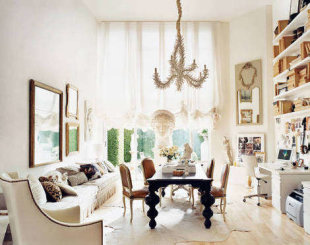
The Most Common Home Decor Mistake You’re Probably Making | Waccabuc NY Real Estate


1. IF YOU’RE A QUIET TYPE

A quiet retreat


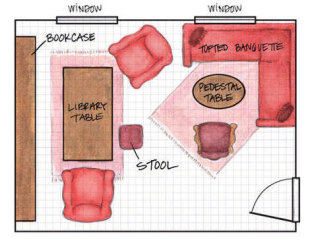
Bracketed by a dining-height banquette and a comfy seat, a 3′ oval pedestal table creates an eating spot for four-or five when the stool is pulled alongside. Across the room, a narrow 4 1/2′ library table flanked by armchairs is a serene reading area that can be used for dining when friends stop by.

If you find yourself not using your dining room that often, try rethinking its function. This scheme is great for casual dinners and lazy weekends over coffee and the paper.


A room for the quiet typeA room for the quiet type


2. IF YOU’RE A PARTY THROWER

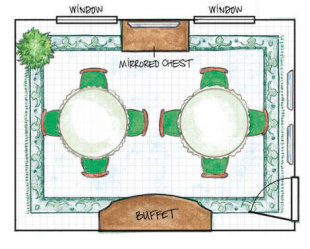
A room fit for endless parties The pair of 42″ round drop-leaf tables allows two small groups to sit facing each other. A mirrored chest and a large buffet store linens and tableware; during meals, they hold food and drink, or can be laid with platters so guests can self-serve. When you’re not entertaining, fold one table in half and move it against the wall, to avoid the feel of an underpopulated restaurant.

Round tables facilitate conversation-and lively dinner parties. (Plus, they make it easy to squeeze in extra guests)


Optimized for endless parties


3. IF YOU’RE A SERIOUS COOK

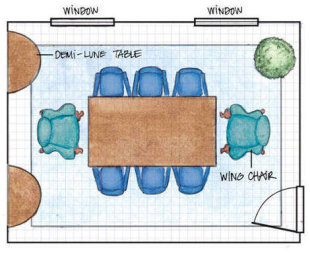
Maximize for entertaining spaceMaximize for entertaining space

A wide 3′ x 7′ table means there’s room for two generous wing chairs to anchor each end; a set of six side chairs fits neatly along the length. A pair of demi-lune accent tables topped with mirrors provides depth and a calming symmetry that’s pleasingly offset by a potted topiary tree in the corner.

This formal yet comfortable arrangement practically demands long, leisurely meals that linger well past dessert.


http://shine.yahoo.com/at-home/most-common-home-decor-mistake-39-probably-making-141300635.html


Swiss Housing Market Bubble Looms Closer | Waccabuc NY Real Estate


Switzerland’s property market is at greater risk of overheating, raising the question as to whether authorities have done enough to curtail the boom.

The UBS Swiss Real Estate Bubble Index rose to 1.23 points in the fourth quarter from 1.2 points in the third, according to a statement from UBS AG (UBSN) today.  A reading above 2 indicates a bubble.

“The potential for correction has increased further,”Matthias Holzhey and Claudio Saputelli at UBS in Zurich said.

The Swiss National Bank (SNBN)’s policy of zero rates, in place since August 2011, has kept down the cost of taking out a mortgage. Coupled with high immigration from neighboring European countries that has fueled a strong increase in real estate prices in Switzerland.

Growth in mortgages has exceeded that of economic output since 2009, and last year price gains of homes and apartments outstripped advances in incomes, according to the central bank.

Concerned Switzerland could fall victim to a real estate crisis similar to that of the 1990s, the government last year forced banks to build up a countercyclical buffer of 1 percent of mortgage-related assets. After that failed to prevent a further deterioration of the mortgage market, it last month doubled the requirement to 2 percent. Even so, it refrained from raising it to the maximum 2.5 percent. Banks have until June 30 to comply.


http://www.bloomberg.com/news/2014-02-05/swiss-housing-market-bubble-looms-closer-ubs-says.html