
Tag Archives: pound ridge homes

pound ridge homes

California foreclosure starts fall to second-lowest level in 7 years | Pound Ridge Homes

Foreclosure starts in California rose 38.7% from the first to second quarter, but still hover at their second-lowest level in seven years, DataQuick reported.


Homeowners in the state have rising prices and new legislation to thank for the dramatic slowdown in default notices.


The La Jolla, Calif.-based real estate data firm said 25,747 notices of default were filed in the April-to-June period, up 38.7% from 18,568 filings in the prior quarter and down 52.9% from 54,615 filings a year earlier.


The notices of default filed in the first quarter of 2013 marked the lowest quarterly total since 2005, making the most recent report the second lowest quarterly total in seven years.


It’s possible new foreclosure legislation in the state is the cause of the slowdown.


The Homeowner Bill of Rights took effect in California on Jan. 1, creating a private right of action for foreclosure plaintiffs to sue financial firms for violating one of the law’s many provisions.


“In California and other states in recent years foreclosure activity has sometimes plunged temporarily after a new law kicks in and the industry takes time to adjust,” DataQuick explained.


On the other hand, home prices are rising, and as they go up, homeowners have more leverage to save their properties.


The median price for a California home hit $344,000 in the second quarter, up 14.7% from $300,000 in the first quarter and a 27.4% jump from $270,000 in the second quarter of 2012.


The state’s median home price during the market bubble reached $485,500 in 2007.


Mortgage defaults in California continue to hit more affordable neighborhoods first, with zip codes featuring homes in the $200,000-price range reporting 4.2 notices of default for every 1,000 homes.


That compares to 2.8 notices per every 1,000 homes when analyzing the $200,000-to-$800,000 price range. And, in the above-$800,000-range, 1.1 notices are filed per every 1,000 homes.


California foreclosure starts fall to second-lowest level in 7 years | HousingWire.
Homebuilders build momentum as existing home sales fall | Pound Ridge Real Estate


Disappointment seemed to flood the housing industry upon Monday’s existing-home sales report for June, which revealed total existing-home sales fell from May. Many analysts saw this as a smaller piece of a bigger picture that rising interest rates are deterring potential homebuyers from entering into the market.

However, homebuilders should have slept easy last night, as the drop in existing-home sales actually supports a positive housing outlook for them.

The primary competitor to public homebuilders is existing-homes for sale, Sterne Agee analyst Jay McCanless told HousingWire.

The lack of existing home supply is forcing Realtors to bring buyers who may not have been interested in a new home into new home neighborhoods, said McCanless.

“Assuming that the inventory situation either stays where it is or gets tighter from here, I think that’s a positive for homebuilders,” he added.

With inventory low and demand high, the median days to sell a home dropped 47.1% year-over-year in June, falling from 70 days to 37 days.

According to the analyst, it’s basic supply and demand. Builders can create the supply and the demand for housing is still abundant, despite higher rates. If you have such a high demand level, it implies that group of buyers have access to financing and creates a very positive market, McCanless noted.

According to McCanless, the backdrop remains positive for four homebuilders that he hand selected as his top picks. Meritage Homes Corp. ($45.03 0%)D.R. Horton, Inc. ($21.20 0%),Ryland Group ($39.74 0%) and PulteGroup, Inc. ($18.45 0%)have the potential to increase their pricing power in 2013 as competitive supply comes off the market. 

In a conference call on Tuesday, Fitch Ratings Managing Director and lead homebuilding analyst Robert Curran addressed the existing-home sales report as well as the current state of the housing recovery. 

Curran said it’s necessary that employment continues growing at a reasonable pace for housing to do well. Last month, 195,000 jobs were created, pushing the unemployment rate down to 7.6%. 

Fitch’s economic forecast is hesitant, considering the drag tax increases have had on the economy since the start of the year. However, the growth momentum in the private sector is well supported by the recovery in the housing market. 

Fitch’s housing forecast for 2013 predicts inventory remaining near low levels, while affordability remains high. 

“The housing recovery shall be maintained this year,” said Curran. Fitch anticipates single-family starts to rise 18% in 2013, while existing-home sales will only increase 7.5%.

Broken down, it is anticipated that total home sales will equal one million this year. Existing-home sales are expected to dominate new home sales significantly.


Homebuilders build momentum as existing home sales fall | HousingWire.

Real estate market in China picks up in June | Pound Ridge NY Homes

Real estate climate edges lower in May

In June 2013, China’s real estate climate edged up slightly from 97.29 in May to 97.29. The composite index was developed by China’s National Bureau of Statistics, and it measures the aggregate business activity for land, capital, and sales of real estate, which is useful in showing the trend of the Chinese real estate market. Figures above 100 show prosperity or economic growth, whereas figures below 100 mark depression.

Lower figures have followed the implementation of property tightening measures, as the government raised concerns regarding rising property prices in February. These measures include restricting loans to real estate developers and individual buyers, as well as imposing taxes on home sales. As a result, the real estate climate index has been falling for the past few months.

Short-term negative in a long-term up trend

The rebound, whether temporary or not, is encouraging news for dry bulk shipping companies such as DryShips Inc. (DRYS), Diana Shipping Inc. (DSX), Knightsbridge Tankers Ltd. (VLCCF), Navios Maritime Partners LP (NMM), and Eagle Bulk Shipping Inc. (EGLE). While activity has fallen over the past few months, which was a negative, the light weakness (marked by slight declines rather than large drops) suggests the government doesn’t plan to hurt the real estate market. As current levels are below the post-2000 average of 102, long-term fundamentals remain favorable. The fact that the real estate climate isn’t falling sharply suggests the long-term trend remains intact.


Real estate investment turnaround

Furthermore, investments in real estate development during the first five months of 2013 remain solid. Perhaps more interestingly, the growth rate of land purchased by real estate enterprises jumped significantly from -22.8% during January to March 2013 to -8.6% during January to April compared to the same periods in 2012. January to June’s data is also encouraging.

While several industries tied to the real estate sector, such as iron ore and coal, have fallen due to current weakness in China’s real estate sector, it’s unlikely that the government will enforce a much tighter policy that will hurt the broader economy. Current data also shows the government isn’t willing to do so. This would be positive for investors who are seeking long-term investments in shipping companies, as demand for dry bulk imports—such as iron ore and coal—should continue to grow over the long run.


Real estate market in China picks up in June, good sign for dry bulk shippers – Yahoo! Finance.

House-flipping is back, flourishing again | Pound Ridge Real Estate

For the past several years single-family housing investors have been playing the buy and hold game. Strong rental demand and soft home prices made that the best bet. Now, with home prices up more than 12 percent from a year ago, the strategy is suddenly changing.

“It’s a perfect storm for flipping right now in many parts of the country because home prices are bouncing off the bottom,” said Daren Blomquist, vice president at RealtyTrac. “That is something that flippers can catch on the coattails of and ride that wave as long as it lasts.”

Home-flipping, defined as buying and selling the same home within six months, came roaring back in the first half of this year. There were 136,184 homes flipped, an increase of 19 percent from a year ago and 74 percent from the first half of 2011, according to a new report to be released Friday by RealtyTrac.

Play Video
Housing, the best investment?

Those increases, however, are nothing compared with the profit jump. Investors made an average gross profit of $18,391 per home, or a 9 percent gross return. That is up 246 percent from a year ago.

“Home-flipping business has keyed up quite a bit in the last 6 months,” said Steve Jones, founder of Los Angeles-based Better Shelter. Jones, who has been flipping homes for five years, said the competition is really heating up.

“There’s not a lot of inventory, and every time a listing comes up it’s like piranha in the water,” he said.


House-flipping is back, flourishing again.

Why This May Not Be the Best Time to Buy a Home … For You | Pound Ridge Real Estate

We’re at the beginning of a housing recovery. Everyone is sprinting out of the gates to get into the real estate market. Mortgage loan rates are low. Credit is becoming easier to get. The economy, despite dips here and there, continues on a gradual, upward incline. People are feeling more secure in their jobs. Home sales are up in some areas, but prices are still down from where they were before the 2008 market bust.

All these trends tell the same story: It’s a good time to buy a home. But is it a good time for you to buy a home? The timing may seem right, but everything else needs to be right, too.

Here are some things to consider before jumping into the market.

The perfect home might not be out there right now

Buying a home isn’t like buying a high-definition TV. It’s not an impulse purchase, either. It’s likely the biggest purchase you’ll ever make. Your home is your solace. It’s the place you’ll return to after a long day, where you can escape from the stress of the outside world, where you’ll make memories with your family. It’s important to make the right choice.

Meanwhile, in many markets the housing inventory is tight. With fewer homes to choose from right now, you might not find the right place that will feel like home to you. If that’s the case, wait! More inventory will eventually come. If you settle for a smaller house now because you want to “time” the market, you will be stuck selling and then buying a larger house in just a few years.

Wait for the home you’ll be happy living in for at least five years, if not 10-20 years. And if you don’t feel like you’re going to live in your home for at least five years, you may be better off renting anyway.

Buying a home is a journey

The home buying process is an evolution. It can take twists and turns, and you may end up in a type of home or a location that you least expected. Most buyers spend up to one year on the home search from the time they engage their real estate agent until they close on the home. Learning and getting comfortable with your local market takes time and experience. Buyers spend months looking at listings and doing online research before they even contact an agent. Feeling competitive with your co-worker or friend who just bought? Don’t. For all you know, they were looking for many months before you even thought about buying.


Why This May Not Be the Best Time to Buy a Home … For You | Zillow Blog.

Will 2015 be the year ‘normal’ returns? | Pound Ridge Real Estate


As the housing industry makes a slow climb back to pre-boom character, household formation trends, rising home values and low interest rates make 2015 a candidate for the year “normal” will happen, according to Patrick Stone, president and CEO of the title and real estate services firm Williston Financial Group.

In the boom period from 2001 to 2006, Stone said, housing vacancy in the U.S. rocketed up to 2.9 percent from a historical equilibrium of 1.7 percent as builders put up 2.3 million more homes (single-family homes and multifamily units) than households were created.

That oversupply led to falling home prices, a great slowdown in new-home construction and a bunch of underwater homeowners, he said.

Patrick Stone

Patrick Stone

In the last five years, household formation outpaced housing construction by 1.1 million, Stone said, but housing, now at 2.1 percent vacancy in the U.S., won’t reach a supply-and-demand “equilibrium,” given current trends, for two or three more years.

“I don’t think new-home construction will catch up to household formation before then,” Stone said.

In the last 12 months, Stone said, equity in U.S. homes rose $2 trillion, to $9.1 trillion, which still falls short of 2007′s equity level of $10 trillion. Rising home values will continue to bring more homes on the market, he said.

– See more at: http://www.inman.com/2013/07/19/will-2015-be-the-year-normal-returns/#sthash.vkbvAc81.dpuf


Will 2015 be the year ‘normal’ returns? | Inman News.

Housing: Should you stay or should you go? | Pound Ridge Real Estate

If you listed a home for sale in the last few months, you may have been pleasantly surprised.


Demand has been robust, and stories abound of houses selling for well above their asking price. In states like Florida that were especially hard hit by the housing collapse, prices in some markets are up double digits from a year earlier.


And when mortgage rates began their sharp rise several weeks ago, demand initially rose as buyers—apparently worried about locking in rates before they moved higher—rushed to sign deals.


But logic suggests that that particular party can’t last. In fact, mortgage applications slipped for the week ended July 12, the Mortgage Bankers Association said.


Meanwhile, a recent survey by Trulia found a of consumers said they would be discouraged from buying a home if interest rates rose above 5 percent.


All of which raises some tough questions for many homeowners: Should you rush to sell your house now, even as the summer doldrums approach? Or with the economy and the job market apparently on the mend, is it better to wait for the moderate pickup in activity that usually surfaces in the fall?


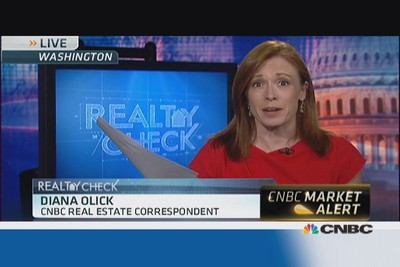
Housing starts are down. How worried should we be? CNBC’s Diana Olick has a realty check.

It depends partly on what kind of home you’re selling.


If you have a house that would appeal to a family, it makes much more sense to act now, says Lawrence Yun, the National Association of Realtors’ chief economist. “If someone has a large house that would be a good fit for a family with kids, they would have a harder time in the fall months,” he said. “Even though some say there’s a second revival, it’s not as strong as the spring.”


Even if you’re not selling a potential family home, Yun says waiting may be risky. “Even if there are slightly more people with jobs, from the seller’s strategic point of view, I think they will see more potential buyers at a lower interest rate.”


There is also the matter of inventories. The number of homes on the market in June was about 7 percent below the level a year earlier, according to Realtor.com. In some markets, it is almost impossible to find a home in certain price ranges.


But the overall supply of homes for sale has been building, and home builders are gaining confidence, both of which suggest more competition awaits potential sellers.


Still, even with these clouds on the horizon, experts like Frank Nothaft, chief economist at Freddie Mac, says sellers don’t need to panic.


The market is strong right now, he said, but “I don’t mean to say it’s going to be bad in a couple of months.” While buyers may be experiencing some sticker shock from the rapid rise in mortgage rates, he does not expect much more in the way of rate hikes. In any case, he added, in most markets, homes tend to still be “very affordable” at a 4.5 percent mortgage rate.


Housing: Should you stay or should you go?.

7 Marketing Trends You Should Not Ignore | Pound Ridge Realtor

The capability to use marketing tools and technology without having to beg or  pay for attention is unprecedented. It’s a time where you can now build your own  crowd to market and sell to without paying the mass media gate keepers.7 Marketing trends you should not ignore

That’s social media.

The social media networks are at your disposal and with the right tactics and software you can create brand awareness and access to  influencers and decision makers in boardrooms across the world.

This freedom to take control of your own marketing comes at a cost. The cost  is complexity and time. To be effective it requires using multiple networks,  constant content creation and monitoring and managing.

It’s not just multiple networks and multimedia to think of, it is also about  adapting to new hardware platforms where consumers receive their messaging. This  is no longer restricted to just print, TV and radio but has proliferated to  laptops, smart phones and tablets. They all have their own limitations and  parameters to be optimal.

Within this technology and  media explosion there are many marketing trends that have been emerging that we  should be paying attention to.

7 Marketing Trends

Here are seven trends that all marketers need to consider in their toolbox of  tactics to remain effective and current.

1. Content marketing

The importance and role of content marketing and how it works across social  media, search, multimedia and mobile is becoming a key focus for many brands.  Many companies don’t understand the importance of this trend and how it  underlies almost all digital marketing. Brands such as Coca Cola have recognised this and changed their strategies  to meet the web realities.

Brands have been blinded by the shiny new toy of social media eg Facebook and  think that Facebook marketing is all they should be doing beyond their day to  day habitual marketing that they have been doing for decades.

Read more at http://www.jeffbullas.com/2013/07/16/marketing-trends-you-should-not-ignore/#wzBZl28kebw6bU9g.99

China’s Real-Estate Sector Sees Solid Housing Demand | Pound Ridge Real Estate

China’s real-estate sector showed strength in the first half of the year amid solid housing demand, despite government controls on the market and slowing economic growth.

While the buoyancy in the housing market could lead to tighter market curbs in the months ahead, analysts said that for now, growth levels were within tolerable levels.

Reuters

Workers welding a steel frame at a construction site in Hefei, Anhui province.

Total property investment in China in the first half of the year rose 20.3% compared with a year earlier to 3.68 trillion yuan ($599.3 billion), according to data released Monday by the National Bureau of Statistics. That is marginally slower than the 20.6% growth in the first five months of the year.

The statistics bureau doesn’t give data for individual months.

Residential and commercial property sales totaled 3.34 trillion yuan in the January-June period, up 43.2% over a year earlier. Sales totaled 2.59 trillion yuan in the five months ended May, up 52.8%.

“Inventory levels in major cities are leveling off, so we’re positive on construction starts and expect growth in this portion of the market to reach 5% to 7% this year,” said Johnson Hu, an analyst at CIMB Securities.

Construction starts by area in the first half rose 3.8% from a year earlier to 959.01 million square meters. They were up 1% at 736.13 million square meters in the January-May period.

The increase comes despite a more than three-year government campaign to keep real-estate prices in check amid fears that higher housing costs could lead to social unrest. Efforts include limiting home purchases, squeezing credit to developers and tightening down-payment requirements.

Larger developers have been buying land in what are known as tier one and tier two cities—China’s most affluent and developed cities—because of expectations of continued housing demand from migrants as the government pushes ahead with its plans to speed up urbanization. Developers typically purchase land and keep it in what they call a land bank for later use.

“Despite uncertainties in the macro environment and credit conditions, most of the developers we talked to last week still have aggressive plans for land banking” in the second half of this year, said Credit Suisse analyst Jinsong Du.


China’s Real-Estate Sector Sees Solid Housing Demand – WSJ.com.

Heated housing market gets bit tighter for first-time buyers | Pound Ridge Real Estate

No one has to tell Brandon and Holli Hadwin of Rockledge how fortunate they were to pull the trigger on purchasing their first home in March.

The couple locked in at a 3.75 interest rate for a 30-year mortgage and were able to move into a four-bedroom, two-bathroom home in the Levitt Park subdivision.

Interest rates have crawled to well beyond 4 percent now, and that has Brandon Hadwin breathing a sigh of relief.

“I’m definitely glad we jumped at it when we did,” said the 24-year-old member of the Honor Guard at Patrick Air Force Base. “It could have meant us not getting this house.”

There’s little question in many U.S. markets, including Brevard County’s, that housing is making a solid turnaround.

U.S. home prices have risen 14 straight months, but evidence suggests that first-time buyers have been increasingly on the sidelines because of rising prices and tight inventories.

In May, first-time buyers accounted for 28 percent of existing-home purchases, down from 34 percent a year before and 36 percent two years ago, according to the National Association of Realtors.

The declining share of first-timers means many have missed out on low interest rates — which recently moved up from near-record lows — and home prices, which have risen sharply from their bottom.

“The people buying homes today are participating in home price growth. Younger people, they are being left out,” says Lawrence Yun, chief economist of the NAR. “It remains to be seen when the first-time buyer can return.”

Why they matter

First-time buyers are critical to a housing recovery, because they help existing-homeowners sell and move up to larger or more expensive homes. But their presence is being reduced by:

• Competition. Cash buyers accounted for 33 percent of existing home sales in May. Investors, who are often all-cash buyers, accounted for 18 percent of purchases, the NAR data says.

Cash buyers are tough competitors, especially in markets with limited inventory and for first-time buyers who often use low-downpayment loans to finance purchases.


Heated housing market gets bit tighter for first-time buyers | FLORIDA TODAY | floridatoday.com.