Tag Archives: pound ridge homes

pound ridge homes

Greenwich Real Estate Sales Stay Strong In 3rd Quarter | Pound Ridge Real Estate

Real estate sales in Fairfield County continued their strong growth in the third quarter, with closed sales improving 28 percent from the same quarter in 2012 and under contract sales jumping 59 percent, according to a report published by William Pitt Sotheby’s International Realty.

“There’s nothing startling in the report,’’ said Brad Kimmelman, brokerage manager for William Pitt Sotheby’s International Realty in Southport. “We are absolutely moving in the right direction. We saw a huge improvement over last year. Overall, we are enjoying a revitalization of the real estate market in Fairfield County, and across the country.”

The William Pitt Sotheby’s International report showed strength across the board, with closed sales running 68 percent higher for the third quarter in Ridgefield, 50 percent higher in Redding, 45 percent higher in the town of Fairfield and 40 percent higher in Danbury.

The closed dollar volume rose 31 percent in the quarter over the same time frame last year, with Weston (up 57 percent), Ridgefield (up 56 percent) and Westport (up 39 percent) among the top communities in the county.

Median sales price rose 6 percent for single-family homes in Fairfield County for the third quarter, to $500,000, according to the report from William Pitt Sotheby’s. In Wilton and Ridgefield, median single family home prices rose 17 percent, while Westport prices jumped 12 percent. In the past year, the median price for single family homes in Fairfield County has jumped 7 percent.

“The 7 percent increase in the average sales price is great,’’ said Molly Lane, who works for William Raveis Homes in Westport. “The rest of the country is down about a half a percent, another indicator that the market is strong.”

Lane said the historically low interest rates continue to help the real estate market. “For someone who is putting 20 percent down with a good credit rating, they could get a 30-year fixed mortgage for about 4.125 percent. That’s even lower than it was a few months ago,’’ Lane said. “If the rates continue to remain at historic lows, that would be great. It’s a good harbinger for the spring market.”

Kimmelman said one of the most encouraging aspects of the market growth is the steady increase. “Consumer confidence is up, and I think we’re going to see the market hold steady but not increase dramatically,’’ he said. “We don’t want double-digit growth year after year. We want to see a nice, healthy progression.”

Typically, there is some seasonality in real estate and summer tends to be slower. That was not the case this year. “Closings are up in the third quarter for single-family homes in both Connecticut and Rhode Island, which is significant due to the fact that we have not experienced the seasonality in the market for the third quarter which generally tends to decline,” said Terence Beaty, director of new homes and land for Berkshire Hathaway Home Services New England Properties.

High-end homes are also beginning to move a little more quickly in Fairfield County, Kimmelman said, and inventory levels continue to decline. The condominium market is also contributing to the gains.

Berkshire Hathaway Home Services New England Properties Third Quarter 2013 Market Report indicates that the luxury market, identified as those properties worth $2 million or more has been growing throughout the year. Sales of high-end single family homes rose 13.2 percent to 378 in Connecticut. Fairfield County closed most of the business. The strongest sales growth in this category was in Greenwich, Westport and Darien.

“This has been another upbeat quarter as far as real estate goes,” said Diane M. Ramirez, Chief Executive Officer of Halstead Property. “Though prices only increased modestly, it is still a positive trend overall.  We were pleased to see the huge upswing in sales in some of the markets and in the decline in days on the market in many of the towns that reported.”

“We are optimistic that the market has balanced.  Although pending sales went down slightly in September, interest rates remain historically low and prices remain stable,’’ said Candace Adams, president and CEO of Berkshire Hathaway Home Services New England Properties. “We anticipate there will be a balanced market through the end of the year.”

The Berkshire Hathaway Home Services New England Properties Report is attached as a PDF. The William Pitt Sotheby’s report and the Halstead Property report are online.

Attached: (bhhsnep-2013-q3-marketreport.pdf)


http://greenwich.dailyvoice.com/real-estate/fairfield-county-real-estate-stays-strong-3rd-quarter

How to Finally Tackle Your Closet’s Critical Mess | Pound Ridge Real Estate

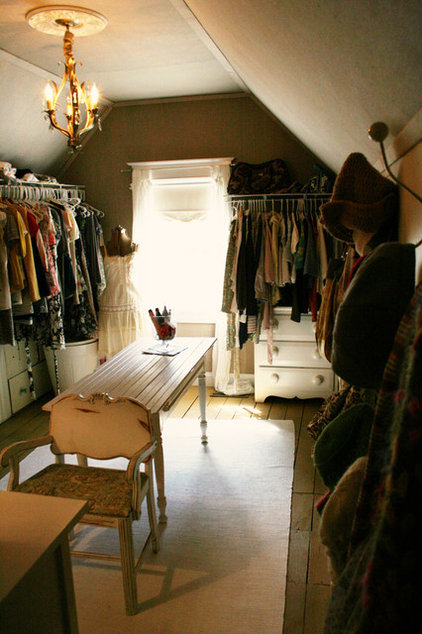
Ever the organizer, I was extolling the virtues of closet purging to a friend. She was feeling a little overwhelmed. Her possessions had been slowly encroaching due to nothing more insidious than the steady march of time and life. Honestly, my friend is an organized person. Things have their place. But lately, there are fewer and fewer places for things. Yet she remained staunchly purge-resistant, especially when it came to her clothes. Sound familiar? Keep reading to learn more about how making a little room in your closet can be an exercise in self-discovery.

Reaching “critical mess.” “I don’t have a problem getting my closet organized,” my friend said. “My problem is keeping it organized.” And this brings us to the crux of a problem shared by the organized and maybe-not-so-organized alike.
“As long as I have room for it,” the thinking goes, “I might as well keep it.” And that’s all fine until you have to dislodge a carefully constructed pile to fish for that pair of shorts. Or you pull out a blouse and three other things slip off their hangers with it in a wrinkled, crumpled mess. That’s when all of your efforts at tidying up go out the window. You’ve reached “critical mess,” and there’s no room for even one more thing. And yet folks still insist on holding on.
Editing boldly. While people often toss a few token items, they rarely edit boldly. Cleaning out your closet is a very personal thing and can highlight some complexities in our psyche. Sound dramatic? Maybe, but it’s true. We identify our possessions with ourselves — our accomplishments, joys and sorrows. Being told to let go of old or even not-so-old clothing can feel like we’re being told to get rid of parts of ourselves. And, in fact, that would be correct.
What no one tells you (but I will). When your closet (or your house) is full of things from your past, things that only remind you of who you were, you very literally have no room for who you are now and who you are becoming.
Granted, lots of people simply will not go down the philosophical road with me here: “Seriously? My closet is a mirror for what I think about myself? Yeah, right.”
So look at it this way: What is the point of spending money on new clothes if you lose them in a sea of stuff you don’t even wear? At least think of it as making room for all the new things you’re going to buy this season.
Does your closet make you feel bad about yourself? Now let’s take a clear-eyed look at items in your closet that may have unpleasant feelings associated with them. For example, do you have professional clothing from a job where you felt unappreciated? Are you keeping your “skinny clothes” as inspiration to lose weight?
Be honest about whether seeing them each day inspires you or just makes you feel bad about yourself again and again. Put them away. Or better yet, get rid of them. Because when you do lose that 20 pounds (or get a new job), chances are you’ll want a whole new wardrobe to celebrate your new self!
Put it in perspective. Having a hard time deciding what to get rid of? Try this simple exercise I did with one of my clients. Her closet was packed wall to wall, floor to ceiling, with old clothes she couldn’t let go of. However, it was clear to me that the old, boring, outdated clothes definitely didn’t reflect the style and personality of the woman who stood before me and, most likely, no longer fit her properly.
So, I tore a page from her favorite clothing catalog of a kicky little jacket that she wanted to buy — something that definitely expressed the stylish and confident person she is today. I taped it to the door. Then I pulled each item out of her closet, held it up to the picture and asked, “If you had to make room for one of these things, which would it be?” The juxtaposition was illuminating! Given the choice between a paisley corduroy pinafore dress (not kidding) and this little gem of a jacket, she finally saw what she’d been doing to herself. In the end, she donated about a quarter of her closet.
Feeling overwhelmed at the prospect of dredging through your past — I mean, your closet? Start with these baby steps.
Look at each item. Do you wear it? If not, ask yourself why you’re keeping it and listen to your answer.
Try things on. Have a trusted friend with you and honestly (honestly being the operative word) see if it fits and suits you — your body, personality, style and lifestyle. If it doesn’t, put it in a bag.
Do one drawer, one shelf, one row at a time, once a week. Put what you remove into a bag. Then find a charity, like a women’s shelter or a veterans’ job training program where you know those clothes will be appreciated, or the nondescript thrift store you pass on the way to work, and drop those bags off. You will feel good and get a tax deduction to boot.
Store the keepakes. Finally, if you really want to keep something you don’t currently wear, like your favorite boyfriend jeans from college, it doesn’t mean you have to keep it in your closet competing for space with stuff you wear frequently. Pack it up and store it elsewhere.
Do this and you’ll gain yourself a little breathing room. Your wardrobe will have plenty of room to grow, and maybe sprout a kicky little jacket or two.
More: Your Total Home Organizing and Decluttering Guide

Get Your Projects Into Clients’ Hands | Pound Ridge Homes

So you want to get your projects published. Why?

It’s great for exposure and marketing. You can use print articles as an extension of your showroom for clients to get ideas, to learn design terminology, and to help you learn what clients do and don’t like; you can use it to show architects.

But take advantage of the longevity of print publications, which often sit on coffee tables in homes but also in doctor’s waiting rooms, salons, and fitness studios. Buy a bunch of issues and slap a banner on them with your logo and some text that reads: “Check out the local home remodeled by YOUR COMPANY featured on page X”

And, of course, most print publications have a web presence, where your work—and links to your company’s website—will live forever.

RESEARCH YOUR OPTIONS There are local and national publications that are always looking for content. Head to your local bookstore and buy a bunch of magazines and study them. Ask yourself if your project might be a good fit. You wouldn’t contact Dog Fancy with your latest kitchen remodel—unless it has a fantastic dog bowl area and they actually publish stories about such things.

Think about who the reader is going to be and who your ideal client is. Where do those two intersect?

You’d be surprised how many local publications there are in your market—from newspapers to business journals, women’s weeklies, and food-focused magazines. And don’t discount association publications from NARI and NAHB, but also those for related industries: doors and windows, concrete, metal fabricators.

Then read the articles themselves and determine how they’re put together and what they focus on. Are written about the lifestyle of the owner? Do it Yourself carpentry? The biggest, the best, the first of its kind, only a particular room?

You ultimately want to make things easy for an editor to see that, yes, your project/story is going to be something their readers will be interested in.

THINK LIKE AN EDITOR Have an idea about what makes a good story. Come up with a hook. “We had to design and build a kitchen for a homeowner who is in a wheel chair.” “Our client’s daughter was going to be married in two months and they wanted a quick kitchen pick-me-up so we did cabinet refacing.” Think about packages: “5 storage options” “kitchens with fireplaces,” “poolside outdoor kitchens.”

Pay attention to lead times. If you built a special Christmas tree closet for a client, don’t pitch that story to a monthly magazine on December 1. Even newspapers might budget time for a story like that a few months in advance. Pitch an outdoor living story in January, a winter holiday story in September.

BUILD A RELATIONSHIP Look on the publication’s masthead to find the appropriate editor—and it’s not the editor-in-chief. You most likely want to contact a senior editor, writer, or contributing writers or editors. There might be a specific editor for the type of material you want to have published. In a national publication, get the name of the regional editor near you.

Call or email and establish a relationship with that person. In many cases, they are hungry for material. Offer to take that person to coffee and show them photos of your projects, help them understand the scope and scale and level of design involved; take them on a tour of your most recent project.

Even if it doesn’t turn into something right away, keep up the relationship. The publication might not need anything right now, but your new editor friend will have your name and might call on you as a source for another story. Or, he or she might know that in a few weeks the publication needs 10 contemporary baths. It’s good for them to have contacts in the architecture and design community.


http://www.remodeling.hw.net/marketing/get-your-projects-into-clients-hands1.aspx

Smart Shopper: How to Choose a Sofa Bed | Pound Ridge Real Estate

Anyone who has spent a restless night on a friend’s fold-out couch will appreciate the importance of a good sleep sofa. Yes, there are comfortable models on the market — you just need to know what to look for when you shop. Here’s a rundown of some of the most important things to consider.

Do you need a sleep sofa? If you’ve never needed a sleep sofa before but are thinking about buying one “just in case,” you might want to think again. A sofa bed is more expensive than a conventional sofa, so unless you’re going to use it for sleeping, you’re better off buying a conventional sofa and stashing an air mattress in the closet. Due to their construction, sleep sofas have firmer seats than conventional sofas. While seniors often like the extra support (it’s easier to get up), others may find sleepers less comfortable.
What size? Measure the spot where you want to place the sofa bed, and figure out the ideal sofa width for that space. Sleepers come in four standard widths:
Chair: 51 to 58 inches Twin (like the model shown): 56 to 65 inches Full: 68 to 92 inches Queen: 79 to 101 inches
Will it fit through the door? Measure the height of the room’s ceiling and the width of the doorway (and any preceding doorways, stairs or elevators). Bring those figures to the store, so you’ll know whether you can get the piece into the room. Legs can usually be unscrewed.
Most bed frames are the same. Most sleep sofa mechanisms are made the same way (and by the same manufacturer), so there’s little difference from one brand to another: You’ll find a metal frame with coils around the edges holding canvas decking. (Although sofa beds still have that bar underneath the mattress, it now curves away from the body, preventing painful surprises in the morning.)

Susan Sarandon hands over Clinton Hill pad to rocker son | Pound Ridge Real Estate

Famed actress Susan Sarandon has unloaded one of her three New York City apartments to her musician son, by way of a trust overseen by the ex-wife of television personality Geraldo Rivera and a veteran Hollywood actress.

Sarandon transferred the apartment at 334 Grand Avenue in Clinton Hill for $900,000 — the same price she paid for it in January 2012 — to a trust named after Miles Robbins, her son with long-time partner, the actor Tim Robbins, property records filed with the city today show.

The trustees of the Lancaster, Pa.-based trust are Edith Vonnegut, the daughter of noted novelist Kurt Vonnegut and Rivera’s former wife, and actress Lynn Cohen, who has appeared on the television show “Sex and the City” and is part of the cast of the upcoming “Hunger Games” film.

Sarandon won an Academy Award in 1996 for her leading role in “Dead Man Walking” and is a four-time Oscar nominee. Her more memorable film roles include “Thelma & Louise” and “The Rocky Horror Picture Show.”

Miles Robbins, 21, is a musician and has appeared in a few of his mom’s films, including “The Greatest” and “Dead Man Walking.”

The two-bedroom, two-bathroom, 2,500-square-foot apartment includes 17-foot ceilings, a vaulted skylight, a working fireplace and 25-foot long rooms, according to the most recent listing.

Artist Danny Simmons, the older brother of music maven Russell Simmons, was the apartment’s previous owner. He put it on and off the market over the course of six years, beginning in May 2006, when it was priced at $1.25 million, StreetEasy and city property records show. Russell’s name was on the deed of the apartment until 2005, records show.

Toni Martin of the Corcoran Group had the listing when Sarandon purchased the home. She could not immediately be reached for comment.


http://therealdeal.com/blog/2013/10/03/susan-sarandon-hands-over-clinton-hill-pad-to-rocker-son/


NYC luxury broker partners with site devoted to Manhattan’s side streets | Pound Ridge Real Estate

New York City-based luxury real estate brokerage Warburg Realty has joined forces with a website dedicated to exploring the “hidden gems” of Manhattan’s side streets.

The site, Manhattan Sideways, says it introduces people — through photography, video and narrative — to all that makes up a neighborhood, especially places inaccessible via newspapers, magazines and the Internet. These include boutiques, bars, restaurants, galleries, gardens and historic sites, among other places.

In a statement, Betsy Bober Polivy, creator of Manhattan Sideways, noted that the Avenues — the major north to south thoroughfares of the island — are well-covered by the media and well-traversed by shoppers and travelers.

“I wanted to get off the beaten path and explore the side streets. In fact, the development of Manhattan’s iconic grid, starting at 1st Street and continuing up to 155th Street, envisioned the side streets as being of greater importance than the avenues,” she said.

“I am literally walking side to side, east to west, beginning on 1st Street and winding my way north. My goal is to walk the numbered side streets and comprehensively document every commercial establishment, and other places of interest, with special feature write-ups along the way.”

Warburg Realty, which has 125 brokers throughout Manhattan, will now feature Manhattan Sideways’ Side Picks neighborhoods — which highlight “must see” destinations — on its website and social media channels, the brokerage said.


– See more at: http://www.inman.com/2013/09/11/nyc-luxury-broker-partners-with-site-devoted-to-manhattans-side-streets/#sthash.kPZ5WCkf.dpuf

Brooklyn home prices hit 10-year record high | Pound Ridge Realtor

Brooklyn is no longer the place to buy a home when you can’t afford Manhattan.

Homes in the Borough of Kings are selling at record-high prices, thanks to surging demand and low-but-rising mortgage rates, according to new real-estate figures.

Before the economic meltdown, the average price of a Brooklyn home hit $603,428 in 2007 — then sank to $494,720 in 2009 — but has rebounded to a stunning $694,777, according to the Elliman Report.

“It isn’t a discount neighborhood anymore,” said Pam Liebman, CEO of The Corcoran Group.

Pricey Manhattan homes are helping to drive buyers across the Brooklyn Bridge, but many are attracted to the hipster borough because it’s become an attractive place to live.

“Brooklyn is commanding record sales because it is truly a destination. People no longer view it as an alternative to living in Manhattan,” said Dottie Herman, president and CEO of Douglas Elliman Real Estate.

Liebman concurs.

“People are choosing to go to Brooklyn for the lifestyle. It’s not your father’s Brooklyn anymore,” she said.

“It’s percolating in every neighborhood,” Herman said. But some percolate more than others.

For example, in Carroll Gardens/Boerum Hill/Red Hook, co-op sales average $937,000, up 41 percent from the same quarter last year.

Condos in Williamsburg/Greenpoint now average $914,000, up 21 percent over the year, according to Cor­coran.

Upper-end luxury homes jumped to a median sales price of $1.7 million borough-wide, an increase of 18 percent.

Brooklyn is “hot because of all the restaurant openings, Barclays Center,” said Frank Percesepe, regional senior vice president, Brooklyn for Corcoran. “So many commercial neighborhoods are getting new buildings, and they are getting turned around into beautiful neighborhoods.”

Meanwhile, even if you can afford a Brooklyn home, it’s harder to find one. Inventory is at its lowest third-quarter level in five years. And what’s available is relatively new.


http://nypost.com/2013/10/10/brooklyn-home-prices-hit-10-year-record-high/

9 Strategies for Self-Sufficient Living | Pound Ridge NY Homes


When you grow your own food, generate your own energy, and work from a home  office or farm for your livelihood, the so-called “costs of living” largely  disappear. You become untethered to the work-earn-spend consumer economy and  thrive, instead, in a more locally centered, self-sufficient economy in which  monetary income is less essential for a rich life. Making this self-sufficiency  dream a reality has been our goal since my wife, Lisa Kivirist, and I moved to  our 5 1/2-acre farmstead in southwestern Wisconsin in 1996.

Self-reliant living can take many forms. You can provide your own food and  energy and be your own barber, repair person, home-school teacher, house  cleaner, painter, and child care provider. By running a home-based business, you  can generate the money needed to obtain essential products or services you’re  unable to produce for yourself.

Transitioning to self-sufficient living requires research and planning. But  have no fear: You can get started today, wherever you live and with whatever  resources and skills you already have.

The Journey to Self-Reliance Begins

Today, our one-third-acre garden meets about 70 percent of our food needs. A  wind turbine and a photovoltaic system generate a surplus of electricity  annually. Our home-based enterprises include running a bed-and-breakfast named  Inn Serendipity, consulting for various nonprofit organizations, and writing  books about sustainable living. A modest farmhouse houses both our family and  our businesses. But it didn’t start out this way.

We moved to our farm from Chicago, newly married and eager to begin our quest  to reclaim the skills and services that we had been buying from others for so  long. We wanted to break free from our fossil fuel addiction and sequester more  carbon dioxide than we emit each year. We knew these goals would take years to  achieve. Here are the strategies we have followed to make our vision a  reality.

1. Be Frugal

Practice financial discipline by making a commitment to frugality. Forgoing  luxuries, such as satellite TV and smartphone service, allows us to live below  our means. We’ve never owned a new car or carried a balance on our credit  card.

Why rent a movie when you can get it free from the library? “Shop” at  clothing swaps, where you drop off the clothes your children have outgrown while  picking up something new for yourself. We chop cords of firewood with neighbors  and enjoy cooking with our Sun Oven solar cooker. The combined savings from  these creative ways to share and use free resources, along with our food and  energy production, allowed us to pay off our mortgage.

With our mortgage retired, we can live on about $10,000 a year. When we do  purchase items, they’re high-quality and durable — many with warranties for a  decade or more — and are bought from cooperatives when possible. As for  retirement, why would we want to stop what we love doing?

2. Think Long-Term and Stay Put

Commit to a permanent location and develop a long-term vision. You will want  to have a practical plan that you can achieve over a time period appropriate to  your current stage of life. Taking on a project in your 50s that would require  years to see through is not the same as doing so in your 20s. Be reasonable and  honest with yourself regarding your abilities and project time frames.

We plotted our journey to self-reliance by the decade, leaving ample time to  figure out projects big and small, from how to plant potatoes to how to take  advantage of renewable energy incentives that made our home energy systems  possible. We also factored in time to persevere when setbacks occurred — which  they did, such as when a severe windstorm damaged all three blades on our wind  turbine. We typically only take on one or two major self-sufficiency projects a  year.

3. Get Back to Basics

Deciding where to start your journey can feel overwhelming. If you’re like we  were — strung out on lattes, hunkered down in cubicles at stressful big-city  jobs, living off biweekly paychecks — simply finding the time to think through  the how, where and when is challenging. Raising kids  and paying a mortgage or student loans can add to the stress.


Read more: http://www.motherearthnews.com/print.aspx?id={2A393461-2F16-4817-B2C4-914EB682EA48}#ixzz2hQ4dgvr0

Enjoy Cider Saturday At New Canaan Nature Center | Pound Ridge Homes

The New Canaan Nature Center is celebrating cider season with a series of autumn-themed events on Saturday from 11 a.m. to 3 p.m.

Cider press demonstrations will be held 15 and 45 minutes after every hour, and the apple sling shot will be fired at the top of every hour.

There will also be a pumpkin scavenger hunt and seasonal crafts activities for children.

Fresh local cider will be available for purchase by the cup, half gallon and gallon.

Admission is $5 for nature center members and $8 for nonmembers. Children under age 2 are free.

The Nature Center is located at 144 Oenoke Ridge in New Canaan.

For more information, contact the nature center at 203-966-9577 or online at http://www.newcanaannature.org.


http://newcanaan.dailyvoice.com/neighbors/enjoy-cider-saturday-new-canaan-nature-center

Mortgage Bankers Association reveals new branding | Pound Ridge Real Estate

The Mortgage Bankers Association revealed its latest rebranding strategy Wednesday, which includes a new logo, revamped corporate messaging and updated web and email domains. The trade group’s signature MBA logo will now be shown with a lower case ‘a’ to emphasize the group’s work in mortgage banking.

“This new brand reflects MBa’s forward looking approach, and brings us fully in step with who we are now, and where we will lead our industry into the future,” said MBAs President and CEO David H. Stevens.  “Our message behind the brand is simple: We put our members first. We are constantly evolving to better support and serve our members. We pull strength from the broad diversity of our membership – by bringing them together – in one voice with one vision – on behalf of a vibrant and sustainable real estate finance system.”


http://www.housingwire.com/articles/26897-mortgage-bankers-association-reveals-new-branding