On the afternoon of Aug. 20, President Barack Obama stepped up to a podium in the White House briefing room for the first time in two months. He had taken criticism from reporters and Republican political operatives for not holding a press conference while his GOP presidential opponent, former Massachusetts Gov. Mitt Romney, took questions from his traveling press corps.
About nine minutes into the 22-minute conference, Obama received this question from Jake Tapper, ABC News senior White House correspondent:
“With the economy and unemployment still the focus of so many Americans, what can they expect in the next couple months out of Washington — if anything — when it comes to any attempt to bring some more economic growth to the country?”
Citing historically low interest rates and a “housing market that is beginning to tick back up, but is still not a all where it needs to be,” Obama, in response, urged Congress to pass a home refinancing plan he proposed eight months earlier.
“There are a lot of Americans still underwater because housing values dropped so precipitously and they’re having trouble refinancing,” Obama told Tapper at the press conference. “We’re going to be pushing Congress to see if they can pass a refinancing bill that puts $3,000 into the pockets of the average family. That’s a big deal. That can be used to strengthen the equity in that person’s home, which would raise home values. Alternatively, that’s $3,000 they can spend on a new computer or clothes for their kid going back to school.”
Two days later the administration dispatched Housing and Urban Development Secretary Shaun Donovan on a multistate trip to promote three Democratic Senate bills the secretary said would complete Obama’s refinancing initiative. (Back in May, Donovan predicted the bills would gain quick bipartisan support.)
Perhaps Tapper should have extended the timeline of his question and asked what homeowners should expect in not just the next two months, but the first year of a possible Obama second term — considering the chances of his home refinancing initiative gaining passage-worthy bipartisan support in an election year are dubious at best.
HOUSING STRATEGY
Obama campaign spokesman Adam Fetcher tells HousingWire the president has a cogent housing strategy.
“The administration has put forward a plan to help more responsible borrowers refinance their mortgages while taking concrete steps to help families stay in their homes, revitalize the communities hardest-hit by the housing crisis, and reform the mortgage lending market to better protect both consumers and taxpayers,” Fetcher says.
Obama’s amalgamation of housing programs — Home Affordable Modification Program, Home Affordable Refinance Program, second-lien write-downs, forbearance, hardest-hit funds, Federal Housing Administration short refinance and loss-mitigation efforts — is a multipronged attack on the mortgage crisis. Although programs such as HAMP have not met expectations, the president’s overall game plan has fared better.
“The reality is collectively all of them had a very significant impact,” says David Stevens, chief executive of the Mortgage Bankers Association. “I think we have to look at the broad set of solutions that were provided and recognize that many millions of Americans have been helped. The housing market by most experts’ views stabilized, but we still have pockets of significant concern, particularly in those hardest-hit locations.”
The housing affliction is one of President Obama’s most difficult economic obstacles, represented by the $689 billion in second-quarter negative equity that has buried itself into the nation’s economic foundation.
The sickness, however, is contained. In its latest housing scorecard, the Obama administration touted an improving market, citing CoreLogic figures that show the number of underwater borrowers fell 11% from 12.1 million, or 25.2% of all homes with a mortgage, at the beginning of the year to 10.8 million in the second quarter, or 22.3% of homes.
The sideways trajectory of home starts, prices and sales since mid-2009 after free-falling for nearly three years is “attributable to the administration’s aggressive response and also the Federal Reserve’s quantitative easing, which has brought down mortgage rates,” Mark Zandi, Moody’s chief economist, tells HousingWire. “But it’s also fair to say the administration’s policies have fallen short of even their expectations.”
The Obama campaign points out that its push to expand access to refinancing is an idea with aisle-transcending support. In October 2011, shortly before the expansion of HARP, Republican Senators Johnny Isakson, R-Ga., Richard Burr, R-N.C., Scott Brown, R-Mass., and Saxby Chambliss, R-Ga., signed on to a letter in which Sens. Barbara Boxer, D-Calif., and Robert Menendez, D-N.J., urged federal regulators to eliminate loan-to-value limits and loan-level price adjustments. Even top Romney economic adviser Glenn Hubbard put forward a plan in March that is broadly similar to the ones Senate Democrats introduced.
SECOND-TERM PLANS
President Obama’s legislative housing plan heading into a potential second term builds on the HARP expansion, which led to nearly 423,000 Fannie and Freddie mortgages refinanced in the first six months of 2012, more than all of last year, according to the Federal Housing Finance Agency.
The administration was slow to embrace refinancing as a solution to the problem, eventually overcoming its reticence in late 2011. Zandi suspects a concern about mortgage rates rising because of frightened investors suffering from refinancing gave birth to the hesitation. That, he said, would defeat the purpose of a mass refinancing program.
Stevens sees an evolved and learned administration. “HARP 2.0, which has had extraordinary success, is a lesson that I hope the administration takes into the next term if they’re reelected,” he says. “The recognition that programs also need to be made in a participative way, collaboratively with industry. HARP 2.0 clearly reflected that collaboration.”
The president is working to transition foreclosed properties sitting on government books into rental housing, the Obama campaign says, to revitalize communities hit hard by the foreclosure crisis and meet the pressing need for affordable rental housing.
The FHFA launched a pilot program to sell about 2,500 Fannie Mae properties to qualified investors. “This marks the first of a series of steps that the FHFA and the administration will take to develop a smart national program to help manage REO properties,” the White House said in February when the program launched. Real estate investment firm Pacifica Companies is the program’s first winning bidder, purchasing 699 Fannie Mae properties in Florida. The FHFA will announce the winning investors for properties in other areas upon closing of the transactions throughout the rest of the year.
John Taylor, chief executive of the National Community Reinvestment Coalition, says the president needs to focus more on foreclosures going into a second term. “Foreclosures that are waiting in the wing are going to continue to haunt our economy,” Taylor says. About 1.3 million homes, or 3.2% of all homes with a mortgage, were in the national foreclosure inventory in July, down from 1.5 million a year earlier. “It wasn’t his fault, and yes, he made several efforts to address it, but I think he needs to get much more aggressive at keeping people who are still working in their homes.”
For homebuyers, Obama proposes a mortgage lending standard to curtail the likelihood of future foreclosure, transforming into reality his Homeowner Bill of Rights, a set of criteria he says will ensure borrowers and lenders play by the same rules. Topping the list is the Consumer Financial Protection Bureau’s crusade to create clear, straightforward disclosure forms that will be used in all mortgage applications to replace overlapping and confusing forms that contain hidden clauses and opaque terms. The bureau is accepting comments from the public until election day on “easier-to-use” forms scheduled to be released in January.
The bill of rights also requires lenders to disclose mortgage fees and penalties. The CFPB will release final rules in January. The administration, Obama’s campaign says, will “make sure that all those with government-insured loans have these protections and is working with regulators to expand them to all borrowers.
GSE REFORM
President Obama must address a variety of policy issues surrounding the future state of the mortgage finance behemoths Fannie Mae and Freddie Mac, who back 90% of mortgages. The key is ensuring regulations are implemented in such way that allow the expansive inter-related network of domestic and international financial institutions to manage the new rules without impeding the steady flow of mortgage credit and capital to the nation’s housing system.
“The administration is working on the future of the GSEs,” Stevens notes. “Availability of credit for qualified Americans is going to be the greatest challenge on a go-forward basis if we don’t address this layering of risk on the financial intermediaries that we depend on to extend credit.”
The difference between Obama and Romney lies not so much with near-term housing policy, but with how they approach mortgage finance reform, specifically with what portion of the market would receive a government backstop. Under an Obama administration, Zandi says, about two-thirds of a normalized mortgage market would draw government backing, which is the average since the Great Depression.
“In a Romney administration, if you told me it was about one-third, I’d say that’s about right, maybe even lower than that.” And in that case, the mortgage market ultimately looks different as the 30-year fixed-rate mortgage becomes less common in the future.
The Treasury’s February 2011 white paper that describes three scenarios to replace Fannie Mae and Freddie Mac sits in neutral. The first option is a completely privatized system of housing finance, with government insurance limited to the Federal Housing Administration, the U.S. Department of Agriculture and the Department of Veterans’ Affairs. An Obama presidency would likely support the second option, which offers a plan similar to the first. In that plan, a backstop mechanism is in place to give homeowners access to credit during a crisis. In the third scenario, the government continues to leave the mortgage market to private players outside of the FHA and other programs, but offers reinsurance for certain mortgage-backed securities.
“We’ll get some clarity with respect to the future of the mortgage finance system in the next four years,” Zandi says. “That’s a key policy decision for the next president that has a high probability of getting done.”
However, absent a near-term requirement for more Treasury capital contributions to Fannie and Freddie, improved second-quarter financial results at the GSEs could ease pressure on Congress and the next administration to pursue far-reaching GSE reform in 2013.
Julia Gordon, director of housing finance and policy at the Center for American Progress, says continued inaction means decisions could be made by exigencies instead of with a coherent plan on how to deploy the government guarantee — including whether to deploy it.
“How will GSE reform look? Who will be advantaged by it? And how do we ensure access and affordability for a broad spectrum of potential homeowners?” Gordon asks. “To me, either administration needs to grapple with that immediately at the start of the new term.”
PROMISES KEPT AND BROKEN
President Obama followed through on many housing-related promises he made during his campaign.
He expanded the housing vouchers program for homeless veterans, provided homebuyers with clearer standards for understanding mortgages and increased the supply of affordable housing.
And under his presidency, 49 states agreed to a mortgage servicing settlement brokered with Bank of America, JPMorgan Chase, Wells Fargo, Ally Financial and Citigroup that the banks pay $25 billion for allegedly signing foreclosure documents en masse without a proper review of the loan file and evicting homeowners while in the modification process. The Obama administration, specifically Donovan, coaxed California Attorney General Kamala Harris, who was not satisfied with the original dollar amount, back to the negotiations committee. Without her, the total would have been closer to $20 million, says Iowa Attorney General Tom Miller, who led the negotiation talks on behalf of the AGs.
However, other campaign promises remain unfulfilled. Obama never implemented a mortgage interest tax credit for nonitemizers and never repealed provisions of the Chapter 13 bankruptcy code that prohibits bankruptcy judges from modifying the original terms of home mortgages, known as cramdown and something that Zandi said homeowners can forget about at this point.
Fetcher, from the Obama campaign, contends that Romney “has zero proposals to help responsible families refinance or stay in their homes. The president believes that responsible homeowners should not have to sit and wait for the market to hit bottom to get relief when there are measures at hand that can make a meaningful difference.”
Fetcher is referring to the Republican presidential candidate’s October 2011 statement to the Las Vegas Review-Journal that the national foreclosure process should be allowed to “run its course and hit the bottom.”
Analysts agree that the industry is now a tailwind for a weaker, broader economy. Housing economists from Joseph LaVorgna at Deutsch Bank to Michelle Meyer at Bank of America cite a better alignment of supply and demand. Several years of extraordinarily slow construction, slow processing of foreclosures and reduced housing turnover is significantly reducing the inventory of homes for sale.
“Housing turnover has fallen to a historic low, particularly for voluntary turnover (not due to foreclosure),” Meyer says. “Of course, a reduction in turnover not only translates to less supply, it also curbs demand.”
The MBA’s Stevens says the president, if elected for a second term, will try to make certain that his legacy reflects a recovering national economy, an accomplishment that can’t happen without a thriving housing market.
“That’s fundamental,” Stevens says. “And it’s something everybody recognizes in a greater way today than they may have four years ago.”
Tag Archives: North Salem NY
The History of the Vice President’s Residence | North Salem NY Real Estate
As Paul Ryan and Joe Biden crisscross the country discussing health care, jobs and the economy, they’re campaigning for more than the vice presidency. They’re also entrenched in a battle for the right to reside at Number One Observatory Circle.
While tourists flock to 1600 Pennsylvania Ave. to check out public portions of the president’s abode, the vice president’s residence is not open for public tours. The 9,150-square-foot, three-story Victorian home was built in 1893 for the superintendent of the United States Naval Observatory. The home was so impressive that, in 1929, the chief of naval operations booted the superintendent so he could live there himself.
New addition
A dedicated home for the vice president is actually a rather new phenomenon. In 1789, John Adams became the nation’s first vice president; for the next 185 years, VPs and their families lived in their own homes or, on occasion, lavish hotel suites. The associated costs and security logistics made this custom increasingly impractical.
Finally, in 1974, Congress voted to make the house at the Naval Observatory the official vice president’s residence.
President Ronald Reagan and First Lady Nancy Reagan visit Vice President George H. W. Bush and Second Lady Barbara Bush in the VP residence. Source: Wikipedia
It took another three years before a vice president actually moved into the home. Vice President Gerald Ford became President Ford before he could use it; his vice president, Nelson Rockefeller, already had a lavish Washington, DC home and never used the house as his residence, although he did host several parties there. Rockefeller’s enormous wealth enabled him to donate millions of dollars worth of furnishings to the home.
Walter Mondale was the first vice president to move into the home. It has since housed the families of Vice Presidents Bush, Quayle, Gore, Cheney and Biden. Each new resident of the White House is offered a $100,000 decorating stipend, and additional funds are raised privately. There’s no such allowance for vice presidents; donations to the nonprofit Vice President’s Residence Foundation pay for decorating expenses.
Personal touches
During the Dan and Marilyn Quayle years, foundation funds were used to add a swimming pool and carry out renovations that made the property wheelchair accessible.
Al and Tipper Gore moved into the mansion with four children — one in college and three still at home — and three dogs.
The Gores worked with two well-known designers to update the home: Albert Hadley for the interiors and Ben Page for the gardens. The Gores gravitated toward warm yellows and reds. They used the house to showcase an eclectic collection of antiques, some they brought with them, some borrowed from the State Department. Still other furniture belongs to the residence, including an Empire dining room table donated by Rockefeller and American crafts collected by Joan Mondale. The Gores also had hedges planted around the home so it wasn’t so visible from the street and worked to replace non-indigenous species on the 72-acre grounds with native plants.
The entry foyer at Number One Observatory Circle. Lynne Cheney gives a tour of the Naval Observatory. Source: Wikipedia
Dick and Lynne Cheney preferred a palette that was clean and light: pale celadon, taupe, off-white. Washington designer Frank Babb Randolph guided them through the process of reupholstering furniture, shopping for rugs and creating custom window treatments. Veeps and their families are allowed to borrow artwork from national galleries and museums; Lynne Cheney, in particular, relished this privilege and did most of her “shopping” at the Smithsonian’s Hirshhorn Museum.
As for the most recent resident of One Observatory Circle, Vice President Biden is said to be particularly fond of the home’s outdoor entertaining areas. Chatting with reporters prior to an April 2010 luncheon with foreign leaders, Biden quipped that he’d never have anything bad to say about Quayle, his often-mocked predecessor, because Quayle was responsible for having the pool installed at the vice presidential estate.
Rules of Thumb for Estimating Apartment Utility Costs | North Salem Realtor
Utilities are a hidden cost: You know you’ll need to plan for them, but when you’re looking for an apartment, they’re not at the top of your mind. So, before you sign that lease, make sure you can pay all your rental expenses, not just rent. It won’t be much fun to sit in a cold apartment, hunting for a neighbor’s unsecured Internet connection, because you forgot to budget for utilities.
Here are some rough rules of thumb for estimating how much you should expect to pay for various utilities:
Electricity
During winter months, or if you don’t use air conditioning, expect to pay $30-$50 a month for electricity. A lot of your bill will simply depend on how much you’re home, how much you watch television (tube TVs are big electricity drains), how efficient your refrigerator is and how careful you are about turning off lights.
Air conditioning
On average, expect to pay about $250-$300 per year for air conditioning. That said, air conditioning isn’t an evenly-distributed expense: Most people only use it about three to five months a year. And, in some places, like Minnesota or Maine, you may only use it a few times a summer, which makes it a much smaller expense.
If you live in a place with average weather, you’ll be running your A/C May-September and spending about $50-$80 a month extra on your electric bill. However, if you live in a really hot place, like Phoenix or Dallas, you’re going to be paying a lot more per month, for more months — $80-$90 a month (plus regular electricity costs), for eight months a year. So keep that in mind. Your silver lining is that you don’t have to worry much about heating costs.
Heat
If you are in a multi-unit building with radiators, there will almost certainly be no extra charge for heat. The landlord will pay the building’s heating bill in total and build that cost into the rent. However, if you and some friends team up and rent a house, you’ll be on the hook for keeping an oil burner going for heat and hot water, which could cost more than $300 a month. If you have gas or forced-air heating expect to pay at least $100 a month in the deep winter, though the cost can vary. One good way to find out what to expect is simply to ask the landlord or a previous tenant.
Cooking gas
In some buildings, if you have a gas range, you’ll have to pay for the natural gas that you use during cooking. (And in some buildings, the natural gas will also provide your heat.) With cooking, the cost is minimal — $15 a month at most, usually quite a lot less. It really all depends how much you cook at home.
Internet
Monthly, expect to pay about $45. Keep in mind that you can split the cost with as many other people as are using your connection, so if you have two roommates, that’s only $15 a person per month. The other thing to consider is bundling your Internet with your cable. You can often get a deal that way, if you decide you want cable.
Cable
This is an optional expense. With the new high-definition televisions, and their digital antennae, it’s easy to get great reception on network TV, and then you can use online streaming services for the rest of your needs. This will cost you about $20 a month, if you subscribe to two services.
If you want cable, look for a deal. They come along frequently and can save you some money. But be careful; companies often have add-ons like free premium channels for three months, which will then be charged to your account if you don’t cancel when the preliminary deal expires. So make sure to keep an eye on your account, so you know what you’re being charged for. While it’s nice to have cable, and you can usually find introductory deals that include cable and Internet for about $90 a month, it’s still a lot of money compared to using a streaming service or two for about $20 a month.
Renter’s insurance
Finally, always get renter’s insurance. You never know what may happen, and it’s very affordable, at only about $150 a year. If your apartment is burglarized, you’ll be very thankful you have it.
Total bill
If you skip the cable, your total utilities cost comes to roughly $200 a month. Keep in mind, though, that this is for the rental as a whole — if you have roommates, divide by the number of people living in the unit. Of course, if you have a very large apartment (say for four people or more) or you are renting a house, the heat, electricity and A/C will be higher, so add 20-30 percent to the estimate, and then divide.
As a rough rule of thumb, expect to spend on utilities an amount equal to about 20 percent of your monthly rent if you live alone, or about 10 percent of your monthly rent if you live with roommates.
via zillow.com
Twitter Launches User Directory | North Salem NY Real Estate
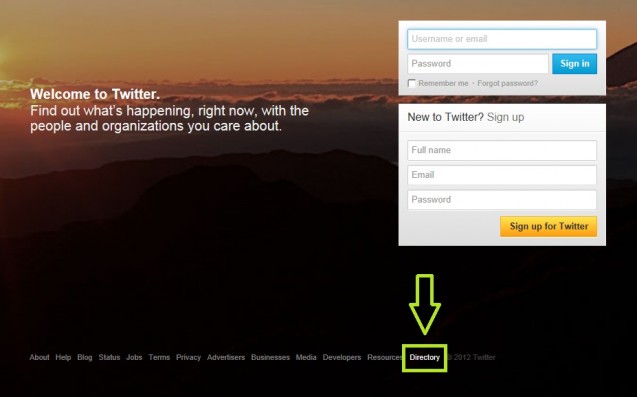
- In a world where altruistic social gathering doesn’t pay the bills, Twitter continues to make changes that it hopes will drive more traffic directly to the Twitter domain and bolster its value to advertisers. The most recent update comes in the form of an alphabetical user directory. The link to the directory was quietly added to the the default home page for visitors to Twitter not already logged into the service.
According to Matt McGee in his recent article for Marketing Land:
Twitter launched the user directory a few weeks ago, but hasn’t made a formal announcement about it. That’s likely because it exists more for search engines than for Twitter users.
Basically, Twitter is aiming to draw people who are searching Google, Bing, Yahoo, etc., for someone in particular. As the bots crawl their way through the new directory, more Twitter profiles should start showing up in search. That’s a step in the right direction, maybe.
Twitter is still struggling with the basic issue of no real reason to spend lots of time hanging out in the Twitter Web space. Users spend the most time on Twitter setting up their profile. Once it’s set, they either build up a personalized twitter stream that they keep track of on a mobile app or some other Twitter client application, or they never really get the point and let the profile languish, unused.
Even when a search result brings a user back to the Twitter domain, the realistic expectation is that they will skim the profile, make a decision to follow or not, and move on.
For those of you who love the news, information, and conversation constantly buzzing through your Twitter stream, what could Twitter do to make its space more appealing? What would it take for you to spend your time interacting with the twitterverse in the Twitter-owned domain?36
Mortgages – The High Price of ‘Forced’ Insurance | North Salem Real Estate
No Jobs Market Recovery Since Recession | North Salem NY Real Estate
The Most Dangerous Room in Your Home? The Bathroom | North Salem NY Real Estate
Shrinking inventory bolstering many housing markets | North Salem NY Real Estate
Shrinking inventory bolstering many housing markets
The number of homes for sale nationwide fell 18.68 percent from a year ago in August, to 1.84 million, Realtor.com reported today, continuing a trend that’s manifested itself every month so far this year.
Year-over-year trends in median list price and median age of inventory, particularly in California, also indicated many housing markets are beginning to stabilize.
The median age of inventory was down in August (11.65 percent) from a year ago to 91 days while the national median list price was up a slight 0.5 percent from last August to $190,000. For-sale inventories declined on a year-over-year basis in August in all but two of the 146 metros Realtor.com tracks.
Annual change in listings, inventory and median list price
Data point Percent changefrom year ago 2012 August 2012 Number of listings -18.68% 1.84 million Median age of inventory (days) -11.65% 91 Median list price +0.05% $190,000 Source: Realtor.com
“We’re beginning to see the earliest signs of recovery,” said James Gaines, a research economist with the Real Estate Center at Texas A&M University, pointing to an increasing number of sales. “The market’s beginning to overcome the psychological malaise that infected it, particularly in California.”
Source: Realtor.com
While shrinking inventory is a sign of a stronger housing market, the lack of supply doesn’t necessarily correlate with strong demand, Gaines said.
Gaines said important factors keeping supply low include:
- A low (but rising) number of housing starts.
- A continued backlog of homes in foreclosure.
- A reluctance or inability of would-be sellers — some of whom may be underwater on their mortgage — to list their homes because they’re anticipating home prices will rise.
- Sales of higher-priced homes that aren’t listed for sale.
Source: Realtor.com
California was home to eight of the top 10 metros for year-over-year inventory reductions and five of the top 10 metros for year-over-year list price increases in August were. But Gaines said large drops in inventory and increases in list prices, while indicating much healthier markets than a couple of years ago, can give a deceiving picture of the strength of the recovery in California, Gaines said. The market was so down, he said, that there was no place to go but up.
Top 10 markets for annual inventory declines, August 2012
Percent change -58.35% -45.03% -43.13% -42.24% -41.75% -41.36% -41.10% -41.07% -40.15% -37.02% Source: Realtor.com
Oakland, Calif., for the sixth month in a row, has the lowest for-sale inventory of any of the 146 metros Realtor.com tracks with 3,205 listings and a minuscule median age of inventory of 20.
Leah Tounger, a Coldwell Banker Real Estate based in Oakland, says she noticed the Oakland market switched from a buyer’s one to a seller’s one sometime in March or April this year. She no longer holds two open houses for her listings, she said. One is enough. Often, buyers try to pre-empt the sale by making offers before they’re officially accepted, she said.
Tounger has sold six homes so far this year, and the last few were scooped up within 10 days and went for from five to 15 percent over list price.
On the flip side, representing buyers has been a challenge, Tounger said. One home in the nearby Berkeley, Calif., hills that she put an offer on for a client had 17 offers and eventually sold for over $300,000 above list price.
The demand for “good” inventory is high in these nation-leading turnaround markets in California. Oakland ranks No. 6 for year-over-year median list price increase (13.56 percent to $385,000) in August. San Francisco Bay Area neighbors, San Francisco and San Jose rank No. 3 and No. 4, respectively. Santa Barbara-Santa Maria-Lompoc, Calif. tops the list with a 38.96 percent increase in year-over-year median list prices to $749,000.
Top 10 metros for annual list price increases
Percent change 38.96% 25.00% 16.97% 16.10% 13.71% 13.56% 12.63% 12.51% 12.51% 12.20% Source: Realtor.com
North Salem NY Real Estate | Staging Solutions: Shop by Budget
Staging Solutions: Shop by Budget
Whether you’re looking for a tool to help you declutter and clean or lift furniture or a computer program to show you the possibilities with your listings, there are a variety of products for home stagers to choose from.–>Shop for staging solutions by:
>Computer/Web-based programs (Starting at $14.95 per month)
>Cleaning and on-site tools (Starting at $2.90)
Mobile Apps
Turn your smartphone into your best staging ally. A variety of mobile design apps —many geared to the iPhone — can help you do everything from hang a photo straight to find the perfect paint color for your listing.
iHandy Level
Free
Turn your iPhone or Android phone into a level so you can hang photos and artwork straight. This level has calibration capability for getting more accurate readings. You can also use the app for measuring angles or furniture.
Photo Measures
Free lite version; Pro version: $4.99
Keep track of all those dimensions in a room. To use this app, just take a picture of a room with your iPhone or iPad and use the app’s arrows to note the room’s dimensions on the photo. You can save dimensions and angles and jot notes. The app also has a magnifier feature so you can zoom in to look at any details in a photo, like getting a closer look at those faucets and sinks. You can export the dimensions and notes to your e-mail or photo library.
ColorChange
$2.99
Can’t decide the right paint color for the walls? Snap a photo of a room using your iPhone, and you’ll then be able to use this app to try out different paint colors on the wall. You can also import photos from your photo library. You just select the area in the photo where you want to paint and choose a color. Save your images and compare the different options so you can choose the perfect color.
RESA Home Staging Calculator
Real Estate Staging Association Inc.
$4.99
Justify to clients why staging is important and its value. Using this app, you’ll have access to a home staging calculator that shows clients how much they will likely spend and save by staging their home. The app uses statistics from the Real Estate Staging Association for its calculations, revealing the cost of listing the home unstaged versus staged. The app also includes the Consumer’s Guide to Real Estate Staging, which includes statistics, explains home staging, and why it works. Available for iPhone and iPad, and coming soon to Android and BlackBerry.
Computer/Web-based Programs
You can access several computer or Web-based programs aimed at helping you in your staging business, from virtual staging and space-planning programs to software that helps you keep track of your staging inventory.
Darby Inventory
Plans starting at $19.95 per month
Keep track of your staging inventory with this Web-based inventory software program. You can attach photos of up to 100,000 inventory pieces, manage your customer lists and vendor information, and run quick searches to locate where your inventory is — in a warehouse or one of your client’s homes. You also can track what you paid for each inventory item and when you bought it, which can come in handy for tax purposes. You can add barcode scanning to automate inventory and barcode printing to identify what’s yours with your own specially designed barcode and logo. The program works on Windows and Mac desktops, netbooks, and laptops and requires no installation.
Home Designer Interiors 2012
$79 to download
Try out different styles and furniture layouts with this 3-D home design software. You can also create a virtual tour using the program to show your clients the possibilities. Using the program, you’ll be able to select items to dress up the interior — from sofas and chairs to various fabrics and accessories. Change the paint color or the colors of the countertops and cabinets. You can use the program for space planning, and even pull from more than 1,000 sample floor plans for inspiration.
Obeo StyleDesigner
$14.95 per photo (must have Obeo HomeSite to use)
With this tool, your home buyers will be able to personalize your listings online by doing some of their own “virtual decorating,” swapping out wall colors, trim, and even changing out the flooring type in your property photos. The design power can allow potential buyers to take “psychological ownership” of the home, Obeo points out. Every detail of uploaded photos is mapped and programmed to allow users to interact and change floors, walls, counters, cabinets, and even elements of the exterior. The program is MLS compatible. It’s an add-on product to the Obeo HomeSite program. Obeo also offers a SpaceDesigner add-on (starting at $49 per listing) with that program, which allows buyers to drag furniture items around an interactive floor plan of the home.
Virtual Staging Solutions
Starting at $197
Show the possibilities with your vacant listings. Using this program, you’ll be able to virtually stage any of your empty listings. Just upload or e-mail your property photos to the company’s Web site. Select the furniture style that you would like to place in the photos. The company will virtually stage the listings and e-mail digital photos back to you.
Cleaning and On-site Tools
Sprucing up properties often requires some elbow grease in making sure they shine and smell inviting. Stagers often rely on several handy tools to help them hang photos and move furniture.
Krud Kutter
Starting at $2.90
This non-toxic, biodegradable cleaning product is a stager’s favorite for eliminating hard-to-remove stains. The all-purpose cleaner says it can remove grease, grime, oil, tar, pet stains, and crayon stains. It has an eco-friendly formula that claims to remove dried latex paint and also can be used as a tile and grout cleaner. Different formulas are also available for removing red clay stains, rust, and mold and mildew.
Heavy Duty Wall Hanger
Starting at $5.95
You won’t need any extra tools to hang artwork with these wall hangers. Using these hooks, you’ll be able to hang heavy pictures, artwork, mirrors, and wall decor anywhere. You don’t even need to search around for a wall stud to drive a nail into; it can be mounted directly into the wall panel. The hanger’s heavy gauge metal can hold up to 150 pounds, or as much as the wall will support.
Hang & Level
$15
Hang those photos straight the first time, without filling the walls up with extra holes from mistakes. This tool allows you to easily mark the exact location where the nail is supposed to go by just pushing a button, which will leave a small mark on the wall to show you exactly where to drive the nail. The tool also has a built-in level for hanging pictures straight. It works with all types of hanging hardware. The company says the tool can especially come in handy when hanging groups of photos or paintings on a wall.
EZ Moves Furniture Lifter
$19.99
Make moving and rearranging furniture easier on your back with this handy tool that allows you to lift furniture up to 10 times your natural strength. Use the furniture lifter to lift up the corners of the furniture and then place rubber-tipped furniture sliders at each of the corners. Then, you’ll be ready to glide the furniture easily across any surface, including hardwoods and carpet.
PureAyre
Starting at $19.99
The smell of the home can make a big impact on how buyers view a property. Several staging professionals say their go-to cleaning tool for eliminating strong home odors is PureAyre. The product claims to eliminate strong odors from pet urine, smoke, cooking smells, and more. The product is chemical-free and environmentally friendly too, and is made from plant-deprived enzymes, purified water, and essential oils.
NextStage Furniture
Starter kit starting at $599 or purchase pieces separately starting at $89
Create furniture out of cardboard to stage your listings. NextStage sells strong, durable cardboard pieces that can instantly become portable furniture for your listings. Have a cardboard sofa in the living room, instead of transporting a bulky, heavy sofa. The company sells upholstery slipcovers so no one will ever know it’s cardboard too. The cardboard pieces can support more than 1,000 pounds, so even if someone sits on it, they won’t fall. The furniture can be stored and transported flat for easy moving. You can purchase pieces individually or order a starter kit, which includes slipcovers and a sofa, oversized chair, ottoman, full/queen-sized bed, and more. The company also offers a slipcover rental program so you can constantly change out new patterns and colors.
Expect Constant or Higher Residential Prices in the Next Year | North Salem NY Realtor
The most recent REALTORS® Confidence Index indicates that price expectations for the forthcoming year are up – substantially. There are also reports of increased REALTOR® confidence in the residential market outlook, so this information indicates that as of January 2012 REALTORS® were seeing residential markets that appeared to be in an upward mode.