via zillow.com
House of the Week: Converted Hamptons Windmill (VIDEO) | Cross River NY Real Estate
Leave a reply

Inventory and months of supply in Minneapolis-St. Paul dropped to record lows in June, with inventory dropping 31% since last year to the lowest reading since January 2004.
Months of supply dropped 44.6% to 4.4 months, well below the six-month supply indicating a balanced market, according to a report released Thursday by the Minneapolis Area Association of Realtors.
Cari Linn, president of MAAR, said the low supply is “already becoming an issue.”
“We’ve got a nice supply of buyers here, and they are looking for properties. So we are seeing more multiple offers this time than we’ve seen in a long time,” Linn said, mentioning instances where properties racked up multiple offers within a few hours of listing.
The Minneapolis area has long been an attractive place to live. At 5.2% unemployment, the area has the second lowest jobless rate in the country for areas with a population of 1 million or more, coming in just behind Oklahoma City.
“We’re hoping that all of this good news comes out and we get more traditional sellers to the marketplace, because they may now be on the fence and waiting for prices to go up,” she said.
The number of homes for sale in the area has dropped for 17 consecutive months, and is now at 17,103 active listings. Sellers introduced 6,359 properties to the market in June, 8.1% fewer than June of 2011.
With the small number of homes on the market, Linn said buyers are now jumping at distressed sales when they may have previously avoided them. This led to more buying of distressed properties than distressed properties entering the market, which Linn called “a good sign that the market is becoming more traditional-based.”
Distressed sales in the area accounted for 30.6% of all new listings and 34.6% of all closed sales, the lowest numbers since June 2008 and August 2008, respectively. For both distressed and traditional homes, June saw 4,917 purchase agreements in the area — 16% higher than June 2011.
The low inventory and heavy demand also means homes on the market are selling much faster than they were last year. According to the report, homes sold in 113 days on average, down 22% year-over-year, with cash buyers making up 19.3% of all closed sales.
This has caused prices to rise significantly over last year. The median sales price rose 10.7% to $179,500 — the second-largest gain since January 2004, and fourth consecutive month of year-over-year gains. Excluding only June of 2010, home prices are at their highest level since October 2008.
Traditional median home prices were up 3.4% to $215,000, while foreclosure prices were up 10.5% to $124,700. Only short sales saw a price decrease, coming in at 2.7% below last year at $126,500.
The Obama administration continued pressure on Congress Thursday to pass three bills that would help more creditworthy underwater borrowers refinance.
“It’s going to be a real fight to get this done,” said Department of Housing and Urban Development Secretary Shaun Donovan during a Google “hangout” with borrowers. “This is something that ought to go beyond politics. In the past we had Democrats and Republicans support things like this.”
More than 11.4 million borrowers owe more on their mortgage than their home is worth, according to CoreLogic ($20.50 0.46%). Although that number declined from the end of last year, home prices remain unsteady. Many waiting for the market to naturally return equity to their home face years of negative equity.
Donovan pitched three bills the administration is focusing on.
The first from Sens. Robert Menendez, D-N.J., and Barbara Boxer, D-Calif., would expand the Home Affordable Refinance Program once again. Some Senate Republicans may be on board. The Federal Housing Finance Agency removed some hurdles to the program last year including the cap on loan-to-value ratios, some appraisal requirements and repurchase risk on the old loan.
The result was a sharp increase in HARP refinancing beginning in March, but some borrowers are still left out, particularly those whose servicers do not participate in the program because of the remaining buyback risk.
The Menendez-Boxer bill would strip out all repurchase risk for Fannie Mae and Freddie Mac loans refinanced through the program and it would waive appraisal requirements for the remaining loans that still require it.
It also extends the HARP cut-off deadline to borrowers whose mortgage was originated before June 2010. As of now, only borrowers with loans taken out before June 2009 can qualify.
A second bill from Sen. Dianne Feinstein, D-Calif., introduced in May, would allow refinancing for underwater borrowers holding mortgages backed by the Federal Housing Administration. It creates a $6 billion fund to insure the new loans.
Donovan mentioned a third bill from Sen. Jeff Merkley, D-Ore., would allow borrowers to refinance under HARP and rebuild equity in their home a bit faster.
If it is passed, a borrower could refinance into a 20-year loan term or shorter, and Fannie or Freddie would cover the closing costs. Keeping the monthly payment the same, a borrower would then be able to rebuild equity faster.
Donovan said this option is still available to borrowers under the expanded HARP, but under the bill, the closing costs are covered.
Jaret Seiberg, a policy analyst at Guggenheim Partners, said these bills stand little chance of making it to Obama’s desk this year. Odds are highest for getting the Menendez-Boxer bill passed but much lower for the others. The Feinstein bill especially would be difficult given the still fragile state of the FHA emergency insurance fund.
“We see that as a poison pill designed to sink the entire package,” Seiberg said.
Donovan said the administration will continue to push the bills through in order to give some relief to struggling borrowers.
“Everyone here is still paying their mortgage,” Donovan said of the homeowners asking him questions over Google. “They’re meeting their responsibility. The president believes that we should give every one of them the ability to refinance into a lower-rate mortgage.”
Manhattan home sales were dominated by studios and one-bedroom apartments in the second quarter as rising rents and low mortgage rates pushed first-time buyers into an otherwise stagnant market.
Purchases of condominiums and co-ops totaled 2,647 in the three months through June, little changed from a year earlier, according to a report today by New York appraiser Miller Samuel Inc. and brokerage Prudential Douglas Elliman Real Estate. The median price declined 2.5 percent to $829,000.
Studios and one-bedroom apartments accounted for 53 percent of all deals, the second-highest share since the last three months of 2009, when first-time purchasers qualified for a federal tax credit of as much as $8,000, said Jonathan Miller, president of Miller Samuel. The smaller units, favored by entry- level buyers, accounted for 49 percent of all transactions a year earlier.
“The ones that can qualify are clearly buying,” Miller said. “They’re looking at rent versus buy and in more and more cases, the math starts to work.”
The share of two-bedroom apartments, which reflects the so- called trade-up market, declined to 32 percent from 38 percent in the second quarter of 2011. Tight lending standards for jumbo borrowers, combined with home prices still 19 percent below their 2008 peak, are making it harder for homeowners to sell their properties and upgrade to larger ones, Miller said.
“With rates this low and prices off peak, we should be having a housing boom right now, and we are clearly not,” he said.
StreetEasy Report
Among pending sales — contracts signed but not completed in the second quarter — one-bedroom deals climbed 29 percent from a year earlier, according to property-listings service StreetEasy.com, which also released a report on the Manhattan market today.
The largest number of pending deals were in the $500,000 to $1 million range, according to StreetEasy.
“Rents are just so high right now that for a lot of people it doesn’t make sense” to continue leasing, said Sofia Song, vice president of research at StreetEasy. “A lot of people are saying, ‘You know what? For this amount of money I can probably buy something.’”
In the first quarter, the median monthly rent for Manhattan apartments jumped 7.1 percent from a year earlier to $3,100, or $37,200 annually, according to Miller Samuel and Prudential. Rents are now within about 5 percent of the $3,265 peak reached at the end of 2006.
Price Cut
The average rate for a 30-year fixed home loan was 3.66 percent, the lowest in records dating to 1971, Freddie Mac said on June 28. The rate was less than 4 percent for the entire second quarter, according to the McLean, Virginia-based mortgage financier.
For Ed Garry, a year made all the difference in selling his one-bedroom apartment in the Upper East Side’s Yorkville section. He put the unit on the market in April 2011 with an asking price of $695,000 and withdrew it seven months later when he got no takers. In January, he tried again, cutting the price to $649,000.
This time, Garry, 42, a Wall Street bank consultant, got five offers for the 930-square-foot (86-square-meter) property on East 80th Street. He sold it in May for $621,000, according to StreetEasy.
“The mood seemed to be a little bit better than it has in the last couple of years,” said Garry’s sales broker, James Ferrando of Prudential Douglas Elliman. “The buyer mentality, they’re eager to get out there and look and purchase.”
‘No-Brainer’
Garry, who bought the apartment in 2004 for $500,000, was able to upgrade to a two-bedroom unit in Harlem, where the median price of a condo is almost a third of what it is on the Upper East Side, according to brokerage Corcoran Group. His $890,968 deal was completed last month, New York City property records show.
Low interest rates and tax abatements that encourage Harlem home purchases made buying the bigger apartment “a no- brainer,” he said.
“The combination of the two is what made it feasible in the short term, and, in the long term, I think it’s going to be a big investment,” Garry said.
Other reports issued today on the Manhattan apartment market showed mixed results for sales and values in the second quarter. Corcoran Group said purchases of condos and co-ops totaled 3,650, the second-highest quarterly sales figure in two years. The median price climbed 1 percent to $850,000.
Estimated Closings
StreetEasy said the median price climbed 2.4 percent to $840,000, while completed deals climbed 24 percent to 4,430. The figure is an estimate that includes transfers recorded with the the New York City Department of Finance by June 30, as well transactions that were completed in June and are expected to be recorded later, according to StreetEasy.
Brown Harris Stevens and its sister brokerage, Halstead Property LLC, both reported a median price of $850,000, up 2 percent from the second quarter of 2011.
“People stopped worrying about the end of the world and started focusing on the fundamentals,” said Gregory Heym, chief economist at Terra Holdings LLC, which owns the two firms. “There’s not a lot of supply. It’s not an investors’ market like some parts of Florida. People buy to live here.”
The inventory of apartments available to purchase declined 14 percent in the second quarter from a year earlier to 6,981 units, according to Miller Samuel and Prudential. About 376 new listings came to market each week in the period, about 4.8 percent fewer than in the second quarter of 2011, StreetEasy said.
Purchases of luxury apartments, defined as the top 10 percent of all sales by price, totaled 265 deals, unchanged from a year earlier, Miller Samuel and Prudential said. The median price of those transactions fell 10 percent to $4.08 million.

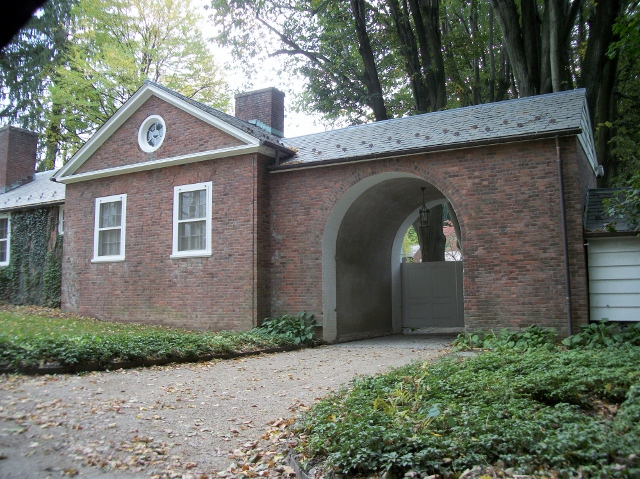
guard hill road by robert paul realtor
Disappointing job creation figures for May show a slowing economy, a trend that could resurrect talks of further quantitative easing, Capital Economics claimed Monday.
The month of May was uneventful on the jobs front with the nation creating only 69,000 jobs, the government said Friday.
That compares to 115,000 job increases in April when unemployment was at 8.1%, according to the U.S. Bureau of Labor Statistics.
Meanwhile, the unemployment rate in May edged back up to 8.2%.
Analysts with Econoday claim the drop in new jobs is a sign of the “economy slowing sharply.”
Doug Duncan, chief economist for Fannie Mae, said the slowdown is “reminiscent of the monthly patterns of the spring slowdown witnessed over the last two years that continued through the summer months.” He added, “if this pattern recurs, we expect that homes for a meaningful housing recovery will be delayed once again.”
Work segments like health care, transportation, warehousing and wholesale trade gained jobs, while lackluster real estate markets led to further declines in construction work.
In May, 12.7 million Americans were listed as unemployed, which is in line with April figures, suggesting little to no positive momentum.
A person’s age has a great deal to do with whether or not they are employed. The unemployment rate for adult men hit 7.8%, for women it sits at 7.4%. Young adults are having the hardest time finding work with their unemployment rate standing at 24.6%.
Paul Ashworth, a senior economist with Capital Economics, said, “Given the marked slowdown in employment growth, Federal Reserve Chairman Ben Bernanke’s congressional testimony on the economic outlook next Thursday is now going to be even more closely watched for any hint that QE3 is coming.” He added, “We still don’t think it is the near certainty some commentators seem to believe.”
