Tag Archives: Bedford NY Homes

Looking for a Bedford NY Home.

West Nile Virus Prevention Begins For Bedford Residents

WESTCHESTER COUNTY, N.Y. – Residents in Chappaqua, Bedford, Mount Kisco and Armonk should eliminate standing water from around their properties, especially after it rains to help prevent mosquitoes from breeding, in an effort to eliminate breeding sites for mosquitoes that can carry West Nile Virus, Westchester County Department of Health said.

The county will start its West Nile Virus prevention efforts on Monday, May 13, by checking catch basins throughout the county for standing water and applying larvicide as needed.

Large areas of standing water on public property that cannot easily be removed should be reported to the Health Department by calling (914) 813-5000.

Health department larviciding teams will begin in the northern part of the county and work their way south, evaluating and treating as needed all catch basins on county and municipal roads throughout the county over the next few months.

“Through the combined efforts of residents and county government, we can successfully curb the mosquito population and keep cases of West Nile Virus to a minimum,” said Sherlita Amler, MD, commissioner of health.


http://bedford.dailyvoice.com/news

Case-Shiller Price Index | Bedford NY Real Estate

In each Economic Update, the Research staff analyzes recently released economic indicators and addresses what these indicators mean for REALTORS® and their clients. Today’s update discusses the Case-Shiller price index.


  • Case-Shiller data show that U.S. house prices rose 9.3 percent and 8.6 percent for the 20- and 10-city indexes, respectively, for the 12 months ending in February 2013, according to their repeat-sales house price index. The NAR median price rose by more than the Case-Shiller data, showing an 11.3 percent gain for the same 12-month period.
  • NAR reports the median price of all existing homes that have sold in the given time period while Case-Shiller’s weighted repeat-sales index only compares price changes among homes for which there is a previous sale, examining the difference in price for property-pairs only. Also, because Case-Shiller data relies on public records, the data reported for February 2013 is actually a moving average of sales from December 2012, January 2013, and February 2013. Because home sales among higher priced properties have been growing more than among lower price tiers and because the Case-Shiller report factors in older data in this market of rapid price growth the NAR median is outpacing the Case-Shiller index.
  • While the NAR median price does not measure change in price for the same properties, it can be computed much more quickly than a weighted repeat sales index, thus information is available sooner, and as can be seen in the chart below comparing several price measures, the trends in the data tend to be similar, so the NAR median price is a valuable early indicator of other housing price data.
  • NAR’s median home price for the 12 months ending March 2013 showed a gain of 11.8 percent, suggesting that further increases, likely in the double-digit range, will be seen in the Case-Shiller data next month. By comparison, CoreLogic’s HPI showed double-digit gains as early as February.
  • By city, Phoenix, Las Vegas, and Atlanta have the best price growth records in the last year and while the Atlanta area saw no change in price from January to February, the other two cities also top the monthly growth list.


http://economistsoutlook.blogs.realtor.org/2013/04/30

How to Buy and Sell a Home at the Same Time | Bedford NY Real Estate


BUy & Sell4

Now that the real estate market is picking up again, many people are looking to sell their homes at last. But when you sell, you have to move somewhere — which usually means buying another home. Buying and selling at the same time brings up a whole new set of challenges, but those who plan well in advance can make it happen smoothly.

Here are five ways to successfully buy and sell a home at the same time.

1. Prepare to be stressed

Buying a home is stressful. Selling a home is stressful. When you do both at the same time, the experience is super stressful, not to mention emotional and difficult on many levels. You’re potentially carrying two mortgages or trying to time the purchase with the sale. There will be a lot of sleepless nights, worrying over finances and pressure to make a decision. It’s enough to ignite a family war.

Accepting upfront that this process will be extremely stressful will help in the long run. Know that most homeowners go through this, and there is success at the end of the long, dark tunnel. Plan everything as much as possible in advance. Do your homework. And take care of yourself. You’re going to be busier than usual.

2. Meet with your agent early on

Owners often believe their home is worth less than what the current market will bear. That’s why it’s important to meet with your real estate agent early on, even months before you plan to buy or sell. Researching online valuation tools or doing basic research will help to guide you. But a local agent will help you understand your home’s true current market value and marketability. A good agent is in the trenches daily and knows your neighborhood and market inside and out.

3. Learn the market where you want to purchase

After getting some hard numbers for your home’s sale you need to do the same on the purchase side. What’s on your wish list?  What are your priorities? Determine your needs and understand what you will get for your money on the purchase side. You need to know this to factor in how financing will work with the buy/sell. Also, understand that market. Is it more or less competitive than where you live now? How long can you expect to search for a home? This will factor into your sale timing. If you’re moving within the city or town where you live, your listing agent will likely serve as your buying agent. If you’re moving just outside your area, you may need to ask your agent to refer you to an agent knowledgeable about that area.

4. Know your numbers

Once you understand the numbers on both the purchase and the sale, you need to know your financing options. Many people today don’t have a strong-enough financial foundation to purchase another home before selling their own, so knowing this upfront can help you plan more appropriately.

Engage a local mortgage broker or lender and understand what kind of down payment you’ll need to make a purchase, given the price point and type of home you seek to buy. How much equity do you have in your current home, and is the equity available? Do you have enough of a down payment liquid and would a lender allow you to make the purchase before selling the home? Find out by going through the loan pre-approval process. A good, local mortgage professional is as valuable as a good real estate agent.

5. Make a plan

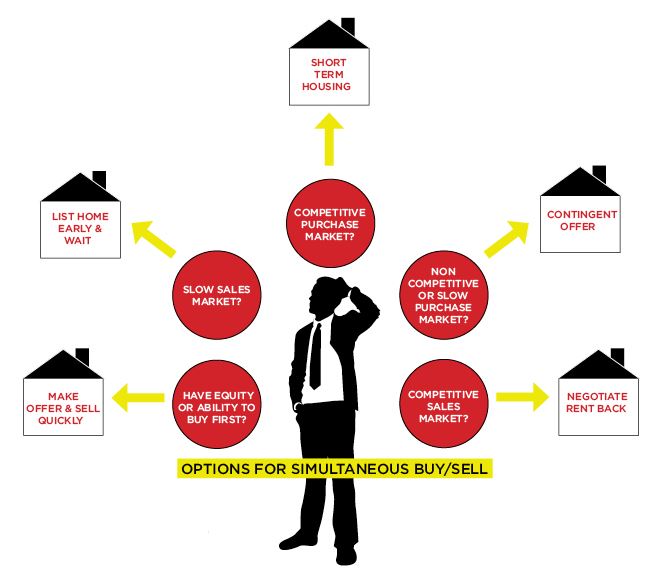
Now that you know your numbers, it’s time to come up with a plan and execute. The plan can vary greatly, depending upon any number of conditions. Some examples:

  • Buying in a competitive market? Adding a contingency that your current home must sell before you buy probably won’t work.
  • Selling in a competitive market? You may be able to negotiate with the buyer for a longer escrow or even a rent back. This would buy you time on the purchase side.
  • Selling in a slow market and buying in a competitive market? Need the sales proceeds in order to do the purchase? Unfortunately, you’re in the worst-case scenario. Consider the option of selling your home first and moving into temporary housing. While not the most physically convenient, it could be less stressful.
  • Need temporary housing? Start researching those options now well in advance.


http://www.zillowblog.com/2013-05-03

Bill designed to speed up Florida foreclosures reaches governor | Bedford Real Estate

A bill designed to speed up the foreclosure process in Florida passed the state Senate Friday and is now heading off to the governor for final approval, Naples Daily News reported.

The publication explained how the bill is designed to expedite the default process in a state that continues to deal with foreclosure backlogs and issues stemming from the housing meltdown.

The legislation expedites the process by requiring a judge to immediately review any foreclosure filings in chambers without a hearing, before asking the parties to show cause why a final judgment should be entered.

That process allows the judge to enter a final judgment quickly if the lender feels the borrower has no defense. But if a homeowner believes he or she has a case, a judge will be required to hear the homeowner’s case.


http://www.housingwire.com/ticker

National Association of Realtors to release national MLS | Bedford NY Real Estate

A national multiple listing service run by the National Association of Realtors should be ready by late summer, the large trade association announced today.

NAR has been working for the last decade to put all of the nation’s agent-represented homes for sale into one database, consolidating the 800-plus multiple listing services in the U.S. in the process.

“Everybody has been on board with the national MLS idea for a long time and we’ve been working on it for the last decade,” the trade group said in a press release.

Brian Boero, co-founder of real estate marketing and design firm 1000watt, who predicted NAR’s national MLS move in one of his “Friday Flash” blog posts five years ago, said, “It’s a great move by NAR. I wonder what took them so long.” 

“It’s about damn time,” said Matt Cohen, chief technology officer of real estate consulting firm Clareity Consulting.

“In some cities there were five or more MLSs!” Cohen said. “How and why did that even happen?”

Bedford Village Sales Down 4% | Median Price Drops 14% | RobReportBlog

Bedford Village NY Real Estate ReportRobReportBlog
20136 months ending 4/252012
24Sales25
$1,042,500.00median sold price$1,225,000.00
$370,000.00low sold price$384,800.00
$3,500,000.00high sold price$4,750,000.00
3705average size4625
$387.00ave. price per foot$309.00
171ave days on market246
$1,257,239.00average sold price$1,515,589.00
93.03%ave sold to ask92.54%

Sales of New Homes in U.S. Climb 1.5% to 417,000 Rate | Bedford NY Homes

Purchases of new U.S. homes rose in March, capping the best quarter for the industry since 2008 and providing more evidence the housing recovery will be sustained.

Sales of single-family properties climbed 1.5 percent last month to a 417,000 annual pace from a 411,000 rate in February, Commerce Department figures showed today in Washington. The median estimate of 76 economists surveyed by Bloomberg called for March sales to rise to 416,000.

Sales of New Homes in U.S. Climbed 1.5% to 417,000 Rate in March

Sales of New Homes in U.S. Climbed 1.5% to 417,000 Rate in March

David Paul Morris/Bloomberg

A dearth of existing properties is encouraging builders to undertake new projects that will keep fueling the economy.

A dearth of existing properties is encouraging builders to undertake new projects that will keep fueling the economy. Photographer: David Paul Morris/Bloomberg

A dearth of existing properties is encouraging builders to undertake new projects that will keep fueling the economy. Mortgage rates close to record lows, higher home values and rising household formation are helping lay the groundwork for increased buyer traffic in 2013.

“The housing sector continues to be the bright spot for the economy,” said Ward McCarthy, chief financial economist at Jefferies LLC in New York, who projected a 418,000 pace of home purchases. “Inventories are light, which means that builders are going to keeping building.”

Home sales averaged a 424,000 annual rate in the first three months of this year, the strongest since the third quarter of 2008.

Stocks maintained gains after the figures and as earnings from Travelers Cos. to Netflix Inc. beat estimates. The Standard & Poor’s 500 Index rose 0.8 percent to 1,575.29 at 10:18 a.m. in New York.

Economists’ estimates ranged from a March sales rate of 395,000 to 435,000. February was previously reported at a 411,000 annual rate.

Rising Prices

New-home purchases were 17.6 percent higher in March than the same period in 2012 on an unadjusted basis, today’s report showed. The median price of a new home climbed 3 percent last month from a year ago to $247,000.

Purchases increased in two of four regions in March, with a 20.6 percent gain in the Northeast and a 19.4 percent advance in the South. Sales decreased 20.9 percent in the West and 12.1 percent in the Midwest.

Builders are responding to increased demand by making more homes available. There were 153,000 new houses on the market at the end of March, the most since November 2011. At the current sales rate, the supply would last 4.4 months, the same as in February.

Housing Starts

Housing starts climbed to a 1.04 million annual rate, the fastest since June 2008, the Commerce Department said last week.

At the same time, builder optimism has faded, reflecting higher costs for raw materials, limited developed land and tight credit conditions. The National Association of Home Builders/Wells Fargo index of builder confidence fell this month to its lowest level since October, data showed April 15.

Builders were still more optimistic about the future, with a gauge of their sales outlook for the next six months increasing to the highest level since 2007.

Mortgage rates hovering near record lows and a healing job market may keep providing a spark for the industry. The average rate for a 30-year fixed mortgage fell to 3.41 percent in the week ended April 18, the third consecutive drop, according to Freddie Mac. The rate slid to an all-time low of 3.31 percent in November.

Existing Homes

Figures out yesterday from the National Association of Realtors showed previously owned homes sold at a 4.92 million rate in March, down from a 4.95 million pace the previous month.

A lack of inventory of more affordable existing properties has driven up the cost of such homes, making newly-constructed units more attractive to potential buyers. The NAR report showed the median price of an existing home rose 11.8 percent, the most since November 2005, to $184,300 last month from a year earlier.

Sales of new homes are considered a timelier barometer than purchases of previously owned dwellings, which are calculated when a contract closes. Newly constructed houses accounted for about 7 percent of the residential market in 2012, down more than 15 percent before the 2007-2009 recession began.

The strength in housing is spreading to other parts of the economy.

“The majority of the data still points to a robust and sustainable recovery,” Christopher Connor, chief executive officer of Sherwin-Williams Co. (SHW), said during an April 18 earnings call. “Our sales results in the first quarter support that conclusion.”

Sales at the Cleveland-based company, the largest U.S. paint retailer, rose 1.4 percent in the first quarter from a year earlier to reach a record $2.17 billion.

Housing starts hit highest level in five years in March | Bedford Hills Homes

Housing starts rose 7.0 percent month-over-month and 46.7 from a year ago in March, according to a monthly report from the U.S. Census Bureau released today.

At a seasonally adjusted annual rate of 1.04 million homes in March, the rate of new construction has gone up each month since November when it measured 841,000.

With tight inventory in many parts of the country, housing starts are critical to the housing market turnaround, according to Lawrence Yun, chief economist of the National Association of Realtors. There have to be homes available for those who sell their homes, he has said.

Why Home Prices Change (or Don’t) | Bedford NY Real Estate

WHAT prices will today’s home buyers get if they sell a decade from now?

Most people live in their home for many years. They don’t need to view it as an investment at all, but if they do, they surely need a long forecasting horizon.

The problem is that modern economics has a poor understanding of past movements in home prices. And that makes the task of predicting the state of the market in 2023 challenging, at the very least. Still, we can learn something by analyzing the factors that affect home prices in general.

There has been some good news lately: home prices have risen over the last year, and with those gains there has been a renewed sense of optimism. But do these price increases mean that homes are now good investments for the long haul?

Unfortunately, no. We do know one thing from economic research: one-year home price increases, after correcting for inflation, have had almost no statistical relationship to increases 10 years down the road. Thus, the upturn last year is irrelevant to long-run forecasting. Booms are typically followed by busts, usually in far less than 10 years. In a decade, an entire housing boom, if there is one in inflation-corrected terms, is likely to have been reversed and completely washed away.

Inflation has a major impact on long-term home prices. So do the costs of construction. We’ll examine these factors now, and turn to other important influences like speculative pressures and cultural and demographic trends in subsequent columns.

Home prices look remarkably stable when corrected for inflation. Over the 100 years ending in 1990 — before the recent housing boom — real home prices rose only 0.2 percent a year, on average. The smallness of that increase seems best explained by rising productivity in construction, which offset increasing costs of land and labor.

Of course, home prices are likely to be much higher in 2023 when measured in nominal dollars — those that aren’t inflation-adjusted. Inflation is the deliberate policy of the Federal Reserve, with a target rate now of 2 percent a year as measured by the personal consumption expenditure deflator, or about 2.4 percent on the Consumer Price Index. At those rates, nominal prices will be roughly 25 percent higher, over all, in a decade.

All else equal, the current Fed policy would have this effect: a home selling for $200,000 today will sell for around $250,000 in 2023, though the real price — corrected for inflation — would be unchanged. But because people often forget to correct for inflation, they may have the illusion that the market is improving.

In an ideal world, steady and uniform inflation would have no effect on rational decision-making because it affects incomes as well as prices. But in the real world, inflation does affect our psychology. People feel more optimistic when their nominal pay rises or when a neighbor’s house sold for more than they paid for theirs. But in thinking about investments for the long term, we should focus on fundamentals — on real, inflation-corrected values and on the economics behind them.

Here is a harsh truth about homeownership: Over the long haul, it’s hard for homes to compete with the stock market in real appreciation. That’s because companies whose shares are traded on a stock exchange retain a good share of their earnings to plow back into the business. The business should grow and its real stock price should also grow through time — unless the company makes poor decisions, as some certainly do.

By contrast, real home prices should decline with time, except to the extent that households shell out some money and plow back some of their incomes into maintenance and improvements, because homes wear out and go out of style.

Housing is an ambiguous investment to evaluate, because a good part of its real return typically comes in its providing a place to live, not in providing dividends paid in cash. For example, a homeowner may gradually realize that she doesn’t need all of the space in her house, but may not be emotionally prepared to start recapturing some of its economic value. The owner may not want to take in roomers, to use the old phrase, just as a modern renter may not want to live in a room in someone else’s home (though new markets like airbnb.com are aiming to change that mind-set).

Then there is the role of the construction industry, which is very good at building new homes and will crank out many more of them if prices rise relative to construction costs. It’s logical that homes’ ultimate values should be affected by home construction costs.

In a 1956 study of home prices by the National Bureau of Economic Research, Leo Grebler, David M. Blank and Louis Winnick documented a substantial decline in inflation-corrected construction costs per housing unit in the first few decades of the 20th century. They traced this decline to multiple causes, including a decline in the number of rooms per home, the use of gypsum wallboard in place of plaster and of asphalt shingles in place of slate, a shift in construction to lower-cost Southern climates and a relative increase in the number of multifamily housing units and apartment buildings. The authors concluded that the long-run movements in construction costs and home prices are “remarkably similar.”

This was the prevailing theory of home prices at the time: construction costs drove the entire housing market. That view — which implies that increasing productivity has restrained prices and could do so in the future — is very different from the focus on financial pressures and speculative bubbles that drives much of our thinking now.

Steady progress in developing new construction equipment, materials and techniques can be seen in something as simple as the history of power drills. A big step forward came in 1889, with the invention of the electric drill. Then came a series of other inventions: the portable electric drill in 1895, the pistol-grip-and-trigger-switch portable electric drill in 1917 (by S. Duncan Black and Alonzo G. Decker), the Phillips head screw in 1935 (by Henry F. Phillips), the first cordless electric drill in 1961 and the first lithium ion battery, which improved cordless drills, in the 1970s. Each set in motion a string of other improvements that, over decades, penetrated the construction industry and vastly improved its productivity. We can expect more such inventions in the future.

It is hard to imagine the next advances in home construction technology, but there are some clues. For example, Behrokh Khoshnevis of the University of Southern California is developing “contour crafting” robotics that he says will be able to accept computer instructions and, like gigantic 3-D printers, build houses. We cannot tell how well this will work, but computer technology has produced some amazing results. Why is it that we worry about the effect of information technology on our jobs but usually don’t link such uncertainty to the outlook for home prices?

Technical advances affect other industries, too, of course, and the performance of housing as an investment relative to others depends ultimately on the comparative rates of progress.

THESE variables alone suggest how tricky it is to forecast your home’s value when the time comes to sell. Prices can go down as well as up. That is also true for investments in general, of course, and is why generations of portfolio analysts have advocated assessment of risks, and not just extrapolation of recent trends, as the key to intelligent investing.

Next week, a look at real estate bubbles. Robert J. Shiller is the Sterling Professor of Economics at Yale.