Category Archives: South Salem

Rising interest rates killing economy | South Salem Real Estate

As interest rates rise, access to capital is increasingly restricted for the small businesses that make up the core of the American economy. However, some far-left lawmakers and activists want to restrict access even further under the guise of protecting consumers.

Rising interest rates mean that the rate at which banks can lend reserve balances to other banks is rising, increasing the costs for small businesses to receive traditional loans from banks. As costs exponentially increase, consumers will have even less cash due to paying off inevitably higher interest rates on credit cards.

During the summer, many economists warned that rising interest rates would restrict capital to small businesses over time. Rohit Arora explained in Forbes on June 20, 2018 that small businesses should apply early for loans because capital will be restricted to them over time as a result of rising interest rates.

“Companies that need to borrow money for growth incur a higher cost of capital when interest rates go up. This includes firms that have already borrowed money since most small business loans come with floating, rather than fixed, rates,” Mr. Arora wrote.

While interest rate hikes will have a negligible impact on larger companies seeking access to capital, smaller companies will find slim opportunities for access to cash. In response to this growing crisis of capital, a highly specialized form of financing company has emerged, dubbed the merchant cash advance (MCA) business model.

The merchant cash advance model is an alternative form of financing, rather than a traditional loan. Companies in need of a quick influx of capital receive cash from a MCA company in exchange for a portion of future sales or profits. Since the MCA model doesn’t constitute a traditional loan, it is not subjected to regulations on annual percentage rates of interest.

These cash advances range from $5,000 to $500,000 and have advantages over the route of acquiring a traditional loan. For example, seasonal businesses that operate for many months without a cash flow can easily acquire sorely needed capital utilizing the MCA model.

These financial instruments have become the preferred method of acquiring capital to pay expenses for many small businesses who are not excited about long waits for approval and having to put up personal property, like a home, as collateral for a small business loan.

Unsurprisingly, liberals in California who favor increased federal regulations over free markets are targeting this innovative form of financing.

In response to California state legislation attacking the MCA model, the Commercial Finance Coalition (CFC), an organization seeking to standardize the MCA industry, wrote a letter opposing “undue hardship upon small business” by “removing their freedom of choice in the financial marketplace.” The California example is being considered by other states as a way to crack down on a handful of bad actors in the industry in a way that will sideline all the other ethical companies who use this model of financing small businesses in a way that both benefits small business as a whole and the providers of this financial instrument.

“Small businesses need funding to maintain and expand their operations and CFC member companies offer fair and innovative marketplace alternatives to typical term loans and have filled the void created by the decline in small business lending by larger, traditional banks. The continuation of this bill will not only hurt our business, but will hurt the countless small and medium sized businesses across the state,” the letter continues.

Small businesses remain the backbone of the U.S. economy. According to a Small Business Administration 2015 report, 99.9 percent of U.S. employer firms are small businesses that employ 47.5 percent of private sector employees. When companies have no alternative, an MCA agreement can mean the difference when it comes to staying in business, and it’s important that the federal government respect free markets by preserving small business owners’ freedom of financial choice.

When critics on the left decry the high interest rates associated with MCA agreements and call for regulation, they not only misunderstand the industry entirely, but deny the free agency of millions of small business owners across the country.

MCA agreements fill a need at a time when only 25 percent of small business loan applications are accepted by big banks, small businesses remain desperate for funding. Interference by a overbearing government would not only endanger this burgeoning industries’ financial future, but that of the thousands of small businesses and workers that are dependent upon it.


read more…

https://www.washingtontimes.com/news/2018/dec/11/small-business-the-casualty-of-rising-interest-rat/

America’s wavering housing market all depends on what Fed does next | South Salem Realtor

Why 2019 may not lead to a home buyer’s market

H. ARMSTRONG ROBERTS/CLASSICSTOCK/Everett Collection

As 2018 winds to a close, the housing market has shown signs of a slowdown. Wages are rising, according to the most recent figures released Friday, which economists say may give the Federal Reserve more impetus to raise interest rates later this month.

Throughout this year, observers have begun to speculate that the country’s housing market may have hit its peak. Meanwhile, millions of Americans continue to wait on the sidelines. Housing inventory remains incredibly tight, meaning that buying a home is a very expensive and difficult proposition for many. At the same time, expensive rents and low wages have constrained people’s ability to save up for a down payment.

And 2019 appears set to bring more of the same. “I would still rather be a seller than a buyer next year,” said Danielle Hale, chief economist at real-estate website Realtor.com. Here is what forecasters predict the New Year will hold for America’s housing market:

Mortgage rates will continue to rise, causing home prices and sales to drop

In the Dec. 7 week, the interest rate on a fixed-rate 30-year mortgage was hovering 4.75%,down six basis points. But by this time next year, experts predict it will be even higher.

Realtor.com estimated that the rate for a 30-year mortgage will reach 5.50% by the end of 2019, while real-estate firm Zillow estimated that it could hit 5.80% in a year’s time. Mortgage liquidity provider Fannie Mae was more moderate, predicting that rates will only increase to 5% by then.

Either way, homebuyers can expect to pay more in interest if they buy next year. And rising mortgage rates will cause ripple effects throughout the market, said Daren Blomquist, senior vice president at real-estate data firm Attom Data Solutions.

“What’s driving the slowdown in price appreciation and the rise in inventory is not so much that inventory is being created, but that demand is decreasing,” he said. “This is an extremely mortgage-rate sensitive housing market.”

Realtor.com only expects the national median home price to increase 2.2% next year and for sales to drop 2%. Zillow was a bit more upbeat, expecting home prices to rise 3.8%. (In October, the median sales price only increased 3.8% from a year earlier amid a 1.8% annual uptick in home sales, the first such increase in six months.)

Added inventory won’t make it a buyer’s market

In some of the nation’s priciest markets, housing inventory has improved in recent months, relieving some of the inventory-related constraints on housing markets.

But that’s not good news for buyers or sellers. The increase in inventory in this case is more the result of a decrease in demand because of rising interest rates than it is a sign of new homes being built.

For sellers, this shift will lead to fewer offers and bidding wars, which could in turn could cause some to feel pressure to drop their asking price. However, all of these factors won’t outweigh the price appreciation that’s occurred in recent years. “You’re still likely to walk away with a decent profit in 2019 if you sell,” Hale said.

Moreover, the uptick in inventory has mostly occurred in the pricier tier of homes, meaning that the change doesn’t directly benefit buyers. Rather, it could provide some wiggle room for people looking to upgrade their home. That in turn might marginally expand the number of starter homes on the market.

People will continue to move away from costly housing markets

A trend that picked up pace in 2018 was the exodus from some of the nation’s priciest housing markets. Millions of people have chosen to leave California, for instance, and have headed toward Sunbelt cities like Las Vegas and Phoenix.

That trend won’t stop in 2019, which is good news for people looking to sell homes in smaller cities. “Home buyers are going to look for affordability and, often times, that will mean moving from a high cost major market to a lower cost secondary market,” Hale said. Many of these cities, such as Raleigh, N.C., and Nashville, Tenn., have growing economies and healthy job markets, further sweetening the deal.

Another factor that could fuel migration in the future is the new tax code signed into law by President Trump in 2017, which removed the deductions for state and local taxes. Taxpayers will only fully feel the effects of that change for the first time next spring as they receive their refund checks in the mail, said Aaron Terrazas, senior economist at Zillow ZG, -1.57%

“You’ve already seen some of the backlash to the tax bill in the elections that happened in New Jersey and Orange County,” Terrazas said. “Whether or not it spurs migrations, that’s something that happens pretty slowly. People certainly get upset and vote. Actually picking up and moving is a whole other level of seriousness.”

The threat of a recession remains a big question mark

The economy is still strong, but it’s unclear for how long that will continue to be the case. Economists have predicted that a recession could come as soon as late 2019.

Whenever it occurs, the recession is sure to shrink demand for homes and cause prices and sales to drop. The magnitude of those effects will depend on how bad the recession is. In short, the more jobs that are lost, the more hard-hit the housing market will be.

And the housing market may begin to feel the recession before it even starts. With memories of the pre-2008 housing bubble still fresh in people’s minds, would-be homebuyers may be hesitant to purchase a property if they believe they’d be buying at the top of the market in doing so.

“That could be more detrimental to the housing market than the actual underlying issues,” Blomquist said.

read more…

https://www.marketwatch.com/story/why-2019-wont-lead-to-a-home-buyers-market-2018-11-28

Record number of million dollar homes | South Salem Real Estate

The million-dollar home is no longer such a rare species.

The number of U.S. homes valued at $1 million or more increased by 400,702 this year, the largest annual rise since the housing price recovery began in 2012, according to a new study by real estate research firm Trulia. Slightly more than 3 million homes nationally, or 3.6% of the total, are worth at least $1 million, up from 3.1 percent last year and 1.5 percent in 2012.

Not surprisingly, many of the freshly minted million-dollar units are in California, which already boasts the most in the country. The San Jose and San Francisco metro areas have the largest shares of $1 million homes and also notched the biggest increases over the past year.

Meanwhile, 29 cities and towns joined those with a median home value of $1 million or more this year, bringing the total to 201. Nineteen municipalities joined the million-dollar club last year.

They include San Jose, California, whose median value rose from $930,900 to $1.09 million; Fremont, California ($966,000 to $1.13 million); Burbank, California ($845,700 to $1.01 million); Newton, Massachusetts ($977,200 to $1.07 million); and Shelter Island, N.Y. ($903,500 to $1.15 million)

Trulia Senior Economist Cheryl Young attributed the big jump to widespread home price increases in recent years, with the median national home price climbing 7.6 percent the past year to $220,100. The median, or midpoint, of all home prices is up 45.3 percent since 2012. Housing demand has been strong while supplies are low, driving values higher.

“Home values have been escalating… And at about $1 million, there’s even greater appreciation,” she says.

Of the roughly 15,100 larger neighborhoods around the country analyzed by Trulia, 838 have median Neighborhood Values of $1 million or more and about two thirds of those are in California. Nearly 30 percent of California’s neighborhoods have a median home price of at least $1 million, the most by far of any state. New York, Florida and Washington followed.

The 10 metro areas that posted the largest increases in share of $1 million homes the past year:

San Jose, California

Share of million-dollar homes, October 2017: 55.7 percent

Share, October 2018: 70 percent

San Francisco

Share of million-dollar homes, October 2017: 67.3 percent

Share, October 2018: 81 percent

Oakland, California

Share of million-dollar homes, October 2017: 24.9 percent

Share, October 2018: 30.7 percent

Honolulu

Share of million-dollar homes, October 2017: 16.2 percent

Share, October 2018: 19.8 percent

Orange County, California

Share of million-dollar homes, October 2017: 17.2 percent

Share, October 2018: 20.2 percent

Los Angeles

Share of million-dollar homes, October 2017: 17.5 percent

Share, October 2018: 19.6 percent

San Diego

Share of million-dollar homes, October 2017: 11.8 percent

Share, October 2018: 13.8 percent

Seattle

Share of million-dollar homes, October 2017: 11.4 percent

Share, October 2018: 13.3 percent

Ventura County, California

Share of million-dollar homes, October 2017: 8.9 percent

Share, October 2018: 10.5 percent

Long Island, N.Y.

Share of million-dollar homes, October 2017: 8.8 percent

Share, October 2018: 10.1 percent

read more…

https://www.usatoday.com/story/money/personalfinance/real-estate/2018/11/09/million-dollar-homes-number-increased-400-000-year/1936628002/

Home builder confidence plummets | South Salem Real Estate

  • Rising mortgage rates and continued home price growth are hurting affordability and fast becoming a toxic cocktail for the nation’s home builders.
  • Sentiment among home builders dropped 8 points in November to 60 in the National Association of Home Builders/Wells Fargo Housing Market Index.
  • The reading was the lowest reading since August of 2016, but anything above 50 is still considered positive.

Homebuilder confidence plummets to the lowest level in more than 2 years

Rising mortgage rates and continued home price growth are hurting affordability and fast becoming a toxic cocktail for the nation’s homebuilders.

Sentiment among homebuilders dropped 8 points in November to 60 in the National Association of Home Builders/Wells Fargo Housing Market Index. That is the lowest reading since August 2016, but anything above 50 is still considered positive. The index stood at 69 in November of last year and hit a cyclical high of 74 last December.

“Builders report that they continue to see signs of consumer demand for new homes but that customers are taking a pause due to concerns over rising interest rates and home prices,” said NAHB Chairman Randy Noel, a builder from LaPlace, Louisiana.

Of the index’s three components, current sales conditions fell 7 points to 67, sales expectations in the next six months dropped 10 points to 65, and buyer traffic registered an 8-point drop to 45. Buyer traffic had broken out of negative territory earlier this year but now appears to be back in it solidly.

Some of the nation’s largest publicly traded homebuilders, like Lennar and KB Home, lowered their expectations for sales in 2019 in recent earnings releases. There is still a shortage of homes for sale, but newly built homes come at a price premium, and as interest rates rise, new home buyers are consequently hit hardest.

The average rate on the popular 30-year fixed mortgage is now more than a full percentage point higher than it was a year ago. The huge home price gains seen over the last two years are now shrinking, but prices were still up a strong 5.6 percent year over year in September, according to CoreLogic.

“For the past several years, shortages of labor and lots along with rising regulatory costs have led to a slow recovery in single-family construction,” said the NAHB’s chief economist, Robert Dietz. “While home price growth accommodated increasing construction costs during this period, rising mortgage interest rates in recent months coupled with the cumulative run-up in pricing has caused housing demand to stall.”

read more…

https://www.cnbc.com/2018/11/19/homebuilder-confidence-plummets-to-the-lowest-level-in-more-than-two-years-as-demand-stalls.html

Mortgage rates now 4.94% | South Salem Real Estate

Freddie Mac today released the results of its Primary Mortgage Market Survey® (PMMS®), showing that mortgage rates rose significantly across the board.

Highest mortgage rates in seven years

Sam Khater, Freddie Mac’s chief economist, says, “The economy continued to show resilience as strong business activity and growth in employment drove the 30-year fixed mortgage rate to a seven year high of 4.94 percent – up 11 basis points from last week.”

Added Khater, “Higher mortgage rates have led to a slowdown in national home price growth, but the price deceleration has been primarily concentrated in affluent coastal markets such as California and the state of Washington. The more affordable interior markets – which have not yet experienced a slowdown home price growth – may see price growth start to moderate and affordability squeezed if mortgage rates continue to march higher.”

News Facts

  • 30-year fixed-rate mortgage (FRM) averaged 4.94 percent with an average 0.5 point for the week ending November 8, 2018, up from last week when it averaged 4.83 percent. A year ago at this time, the 30-year FRM averaged 3.90 percent. 
  • 15-year FRM this week averaged 4.33 percent with an average 0.5 point, up from last week when it averaged 4.23 percent. A year ago at this time, the 15-year FRM averaged 3.24 percent. 
  • 5-year Treasury-indexed hybrid adjustable-rate mortgage (ARM) averaged 4.14 percent with an average 0.3 point, up from last week when it averaged 4.04 percent. A year ago at this time, the 5-year ARM averaged 3.22 percent.

Checking on your flood insurance | South Salem Real Estate

Home insurance will cover damage from a volcano, but not a flood

Homeowners picking up the pieces from Hurricane Michael will quickly learn an important lesson: not all hurricane- related damage is covered by home insurance.

Before making landfall Wednesday, Michael rapidly intensified to an extremely strong storm packing 155 mile-per-hour winds, just shy of Category 5 status. The storm ranked as the third-most intense hurricane to hit the continental United States, according to Accuweather (https://www.accuweather.com/en/weather-news/by-the-numbers-michael-ranked-as-3rd-most- intense-hurricane-to-hit-continental-us/70006313), and was the strongest storm to ever hit the Florida Panhandle.

Towns and cities along the Panhandle coast were left in ruins, and damage extended well inland into southern Georgia. The storm’s high winds stripped roofs and caused trees to fall on homes (https://www.accuweather.com/en/weather-news/ storm-surge-damaging-winds-from-michael-to-rip-a-path-of-destruction-across-southeastern-us/70006307) and cars. Coastal communities were walloped by a massive storm surge, which forecasters predicted (https://www.wired.com/story/why- hurricane-michaels-storm-surge-is-so-high/) could reach as high as nine to 13 feet before the storm.

See more:Footage from Florida Panhandle shows the incredible force of Hurricane Michael (http://www.marketwatch.com/ story/footage-from-florida-panhandle-shows-the-incredible-force-of-hurricane-michael-2018-10-10)

For homeowners, what precisely caused the damage to their home will prove important for insurance purposes, because coverage will depend on how the damage was caused. During a hurricane, if high winds cause roof damage that leads to significant water accumulation within the house, insurance will likely cover it. But if a nearby river crests because of the heavy rainfall and then causes flooding, the damage to homes will only be covered if the owners have flood insurance. Many homeowners are reaching out to water damage restoration companies to assess their damages.

That’s why most homeowners in the path of September’s Hurricane Florence’s torrential rains would have been better off if their home had been hit by a wildfire or volcanic eruption — at least from an insurance perspective.

Damage caused by flooding isn’t covered by standard home insurance policies. Only homeowners who bought separate flood insurance for their homes were covered if water from Florence damaged their house. And there weren’t many people in that boat.

Florence caused between $20 billion and $30 billion in losses to both commercial and residential properties across the Southeast due to flood and wind damages, according to estimates (https://www.corelogic.com/news/the-aftermath-of- hurricane-florence-is-estimated-to-have-caused-between-20-billion-and-30-billion-in-flood-and-wind-losses-cor.aspx) from property data firm CoreLogic (CLGX).

Most homeowners affected by Florence will be stuck footing the bill: CoreLogic also estimated that 85% of the losses to residential properties were uninsured. Before the storm hit, actuarial firm Milliman (http://us.milliman.com/insight/ 2018/Four-ways-Hurricane-Florence-could-ricochet-across-the-insurance-industry/) estimated that fewer than 10% of households in North Carolinahad flood insurance.

A similar refrain could now play out because of Hurricane Michael. When Hurricane Irma struck Florida last year, only 14% of the 3.3 million households in the nine counties affected by the disaster had flood insurance coverage, according to data from Pew Charitable Trusts (http://www.marketwatch.com/story/only-14-of-the-3-million-households-hit-by-irma- have-flood-insurance-2017-09-12). That’s in spite of the fact that Florida households comprise 35% of policies under the National Flood Insurance Program.

Don’t miss:How to find a contractor after a hurricane (http://www.marketwatch.com/story/how-to-find-a-contractor- after-a-hurricane-2017-09-25)

Even when insurance does cover the damage from a certain catastrophe, deductibles are still at play. Hurricane deductibles vary from policy to policy, but are often assessed as a percentage of the home’s overall value.

Coverage for other disasters operates similarly. In volcanic eruptions, damage caused by lava flows or resulting fires is covered by a standard homeowner’s policy, but if the eruption causes seismic activity, homeowners will not be reimbursed unless they have purchased a separate earthquake policy.

Buying additional insurance policies for disasters like floods and earthquakes might seem like a no-brainer, but it’s an expensive proposition. “They have to do a cost benefit analysis,” said Michael Crowe, co-founder and CEO of Clearsurance (https://clearsurance.com/), a site where consumers can review and compare insurance companies.

The average annual premium for a policy through the National Flood Insurance Program was $878 as of April 2017 (https: //web.archive.org/web/20170623131915/https:/nfip-iservice.com/Stakeholder/pdf/bulletin/Attachment%20A%20-%20Summary% 20of%20the%20NFIP%20April%202017%20Program%20Changes%20Final.pdf). But flood insurance premiums can easily cost thousands of dollars in regions that are determined to be at the highest risk of flooding.

But flooding is just one type of natural disaster that isn’t covered by standard home insurance policies. And in the case of disasters like hurricanes, where damage can be caused by a variety of factors including wind, rain and storm surge, it can quickly get confusing–and frustrating– for homeowners who are trying to figure out whether their insurance policy covers certain damage.

Here is what homeowners need to know about insurance and natural disasters:

What is covered under a standard homeowner’s insurance policy

Some natural disasters are always covered by homeowner’s insurance, including wildfires, tornadoes and hail storms. But other natural disasters are never or rarely covered under a standard homeowner’s insurance policy. They generally fall into two categories: floods and “earth movements.”

The first category comprises disasters caused by rising water, which includes everything from floods caused by extensive rainfall and hurricane-induced storm surges to dam failures and tsunamis. “Earth movements” include disasters such as earthquakes, landslides and sinkholes.

Unfortunately, many Americans are unaware that these disasters are not covered by a standard homeowner’s policy, according to the Insurance Information Institute (https://www.iii.org/sites/default/files/docs/pdf/pulse-wp-020217- final.pdf).

Certain natural disaster typically aren’t covered because of the level of the destruction they create, said Lynne McChristian, a spokeswoman for the Insurance Information Institute and executive director of the Center for Risk Management Education and Research at Florida State University.

With these disasters, “the damage is usually so widespread, and it’s typically a total loss,” McChristian said. ” Insurance companies can’t price it appropriately to make it a viable line of business for them.”Are you covered with a standard homeowner’s insurance policy? Typically covered Sometimes or partially covered Rarely covered Tornado Hurricane Flooding (including storm surge and tsunamis) Wildfire Volcano Earthquakes Hail storm Sinkhole Mud- and landslides Blizzard or ice storm Sewer backup

The government provides flood insurance

In the case of insurance for flooding, the federal government has stepped in. The National Flood Insurance Program was created in 1968 after insurance companies struggled to pay off claims following a slew of floods in the 1950s. Homeowners have the option to buy flood insurance through this program or to get a private insurance policy. In certain cases, homeowners may be required to purchase flood insurance by their mortgage lender if their home is located within a flood zone.

Private flood insurance now accounts for roughly 15% of all flood premiums nationwide, according to a March report from Insurance Journal (https://www.insurancejournal.com/blogs/right-street/2018/03/18/483689.htm). And for many homeowners, a policy from a private insurer rather than through the federal insurance program could be cheaper. A July 2017 briefing from Milliman (http://www.milliman.com/uploadedFiles/insight/2017/private-flood-insurance-cheaper- nfip.pdf)found that private flood policies would have lower premiums for 77% of all single-family homes in Florida, 69% in Louisiana and 92% in Texas.

Read more:Congress just dodged hard decisions about flood insurance again (http://www.marketwatch.com/story/congress- just-dodged-hard-decisions-about-flood-insurance-again-2018-07-31)

Earthquakes

Similarly, homeowners will need to purchase a separate policy or a rider to their standard home insurance policy from a private insurer to be covered for an earthquake. California residents also have the option (https://www.iii.org/ article/earthquake-insurance-for-homeowners) to purchase coverage through the California Earthquake Authority. That said, if an earthquake causes a house fire, some damage might be covered by the standard policy alone.

Sinkholes

As for sinkholes, coverage options vary from state to state (https://www.iii.org/article/sinkholes-and-insurance). A standard home insurance policy may cover minor damage caused by a sinkhole — but catastrophic damage (generally defined as damage to more than half of the structure) is excluded. People can either get sinkhole insurance in the form of a standalone policy or an endorsement to the standard insurance policy, depending on where they live.

Tennessee and Florida require insurers to offer optional sinkhole coverage. Insurers in Florida are also required to provide insurance for “catastrophic ground cover collapse” through their standard policies.

Read more:Your easy step-by-step guide to paying off all kinds of debt (http://www.marketwatch.com/story/your-easy- step-by-step-guide-to-paying-off-all-kinds-of-debt-2018-09-19)

Did the homeowner take care of the property?

The property’s upkeep can also play a role in whether or not damage caused by a storm or other natural disaster is covered. For instance, if winter storms cause an ice dam to form on the roof of the home and the owner is not proactive about removing it, the insurer may choose to deny coverage for water damage.

You have some options if you skip insurance

If homeowners don’t buy specialized insurance coverage and then get hit by some sort of disaster, they do have some options to offset their losses. They can get a grant from the Federal Emergency Management Agency or a loan from the Small Business Administration.

“Those are not designed to bring you back to a pre-disaster condition — they’re designed just to get you back on your feet,” McChristian said. “Insurance is designed to get you back to where you were before the disaster occurred.”

How to decide whether you need coverage

For starters, homeowners need to consider whether or not they are at risk. They should check government flood zone maps. They are generally available from county governments, or you can search by address on the FEMA website (https:// msc.fema.gov/portal/search). But they aren’t foolproof because they are only periodically updated.

Other factors to consider include the property’s elevation (if it’s at or just a few feet above sea level it’s more prone to flooding) and whether there has been a lot of construction in the area. This could displace vegetation that would soak up rainfall and prevent flooding.

As for earthquakes, homeowners shouldn’t assume they’re not at risk just because they don’t live on the West Coast. Earthquakes have caused damaged in all 50 states at some point since 1900, according to the Insurance Information Institute(https://www.iii.org/press-release/few-homes-have-insurance-coverage-for-earthquake-or-tsunami-although-the- us-is-at-risk-for-both-032311) (a trade group that of course has a vested interest in people getting insurance). And fracking for oil and natural gas has led to seismic activity (https://e360.yale.edu/digest/fracking-linked-to-increase- in-texas-quakes-according-to-new-study)in parts of the country that had never before experienced it.

How to get to the front of the line when you need help

Regardless of whether or not a homeowner has insurance coverage for a specific natural disaster, getting their property assessed is critical in beginning the rebuilding process.

Following a natural disaster, a consumer’s first step should be to contact their insurance agent or company immediately. That is critical because insurance claims are handled on a triage basis, McChristian said.

“Those with the most damage get to the front of the line because those people have the most need for recovery assistance,” McChristian said.

By clarifying how to file a claim and conveying the state of their property, homeowners can improve the chances of having their case handled more quickly by their insurer. Homeowners should also learn the ins and outs of how to file their claim, including what information is needed and how long they have to file. Now is also the time to determine what their policy’s deductible is.

Also see:What to do about your home and mortgage if you’re hit by a disaster (http://www.marketwatch.com/story/what- to-do-about-your-home-and-mortgage-if-youre-hit-by-a-disaster-2018-09-17)

Make a head-start on assessing damage

The insurance company will send its own adjuster free of charge to inspect the property and assess the total cost of the damage. Homeowners can take steps to prepare for this by documenting what was damaged or destroyed by the natural disaster, getting bids from contractors and keeping track of receipts for any expenses they incur following the storm. Homeowners shouldn’t hesitate to make temporary repairs to protect their property from further damage.

A pricier option: Hire a third-party insurance adjuster to assess their property. Given the backlog insurers will experience following widespread disasters, it can take a while to receive a payout. To expedite this process, a homeowner can choose to hire an independent or public adjuster to assess their property.

Studies have shown that hiring public adjusters leads to higher insurance settlements. But these professionals don’t come cheap — they generally charge a fee (https://www.bankrate.com/finance/insurance/hiring-a-public-adjuster-1.aspx) that’s anywhere from 10% to 20% of the insurance settlement. And it’s critical to hire a reputable professional. (Check the websites of the National Association of Independent Insurance Adjusters (https://www.naiia.com/) and the National Association of Public Insurance Adjusters(https://www.napia.com/about).)

Always have someone look at damaged property

And even if homeowners aren’t covered for flood insurance, they should still have their insurance company assess their property and whatever damage occurred.

Crowe has experienced this firsthand. In 2006, an extended period of rainfall in Newburyport, Mass., where Crowe and his family lived, caused their newly remodeled basement to flood. However, their insurance policy did not include flood coverage. He thought he would have to pay for all the damage.

read more…

www.dowjones.com

www.marketwatch.com

Marilyn Monroe got married in Westchester | Waccabuc Real Estate

Marilyn Monroe got married in Waccabuc, Westchester.

The actress married playwright Arthur Miller in a short civil ceremony in the White Plains Courthouse in 1956.

It was her third marriage and Miller’s second. Few knew of the impending ceremony.

But their relationship had caused headlines. Miller had divorced his wife to marry Monroe, who had divorced Joe DiMaggio in 1954.

When the news got out of their impending nuptials, the couple held a press conference at Miller’s house in Connecticut on June 29. The local paper had the headline: “Local Resident Will Marry Miss Monroe of Hollywood’, adding, ‘Roxbury Only Spot in World to Greet News Calmly.”

Marilyn Monroe and Arthur Miller held a wedding reception at this Waccabuc home. Karen Croke, kcroke1@lohud.com

Afterwards, they slipped into Westchester and were married in a quick ceremony at the courthouse, after which, as reported the following day in The New York Times, the Millers  “got into their sports car and disappeared into traffic.”

They weren’t heading far.

On July 1, the couple held a Jewish ceremony and wedding reception for 25 guests in the Westchester County home of Miller’s literary agent, Kay Brown.

The home is for sale, listed for $1,675,000 with Susan Stillman of Houlihan Lawrence.

From the outside, it’s not hard to imagine the party that once took place here.

The French Country-style residence built in 1948 seems untouched from those halcyon days when many stars, including Tallulah Bankhead and Benny Goodman lived nearby and fabulous parties were the norm.

The gated property is set on a quiet road with a wonderful view of the surrounding area, and is just across from the 16th hole of the Waccabuc Country Club.

There are many original details, including parquet and tile floors, French doors, leaded windows, and European-style fireplaces. One of the highlights is the living room with walls of glass and terrace exit, a private master suite, and a first-floor guest suite with its own side entrance.

There are four bedrooms and five bathrooms in the home, which is in the Katonah School district.

Outside, the just over 4 acre property is still private and serene. A crescent-shaped lawn terrace steps down to pool and pool house with summer kitchen and cabana, and all surrounded by light woodlands, specimen landscaping and gardens creating sought-after privacy.

Sadly, the Millers were married for only five years before divorcing in 1961. Monroe tragically died the following the year.


read more…


https://www.lohud.com/story/money/real-estate/homes/2018/08/08/marilyn-monroes-westchester-wedding-house-sale-1-69-m/922263002/

Rental Glut Sends Chill Through the Hottest U.S. Housing Markets | South Salem Real Estate

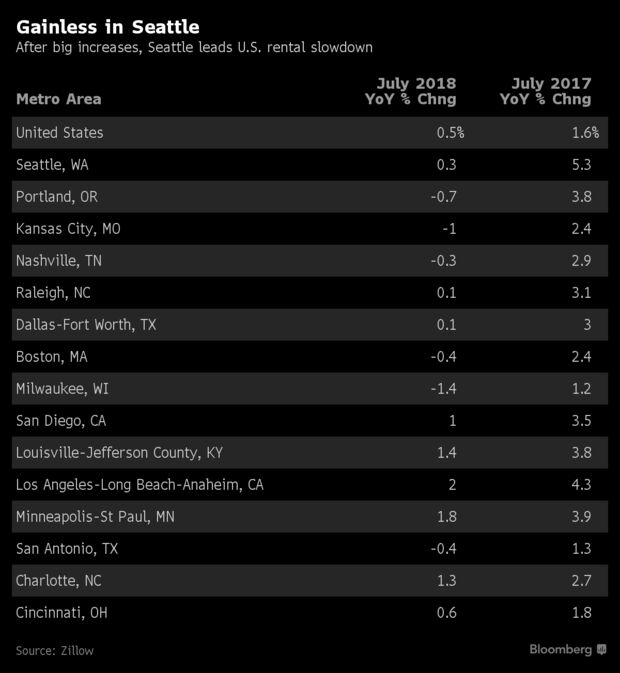
Seattle is known for its hip neighborhoods, soaring home prices, and being home to Amazon.com Inc., the world’s most valuable company. So why is its rental housing market experiencing the most severe slowdown in the U.S.?

Seattle-area median rents didn’t budge in July, after a 5 percent annual increase a year earlier and 10 percent the year before, according to Zillow data on apartments, houses and condos. While that’s the biggest decline among the top 50 largest metropolitan areas, it’s part of a national trend. Rents in Nashville and Portland, Oregon, have actually started falling. In the U.S., rents were up just 0.5 percent in July, the smallest gain for any month since 2012.

“This is something that we first started to see two years ago in New York and D.C.,” Aaron Terrazas, a senior economist at Zillow, said in a phone interview. “A year ago, it was San Francisco and most recently, Seattle and Portland. It’s spreading through what once were the fastest growing rental markets.”

Tenants are gaining the upper hand in urban centers across the U.S. as new amenity-rich apartment buildings, constructed in response to big rent gains in previous years, are forced to fight for customers. Rents are softening most on the high end and within city limits, Terrazas said. Landlords also have been losing customers to homeownership as millennials strike out on their own, often moving to more affordable suburbs.

Boom to Bust  –  Rents go from double-digit gains to declines in four years

Realtor Roy Powell last month was helping his clients, two women in their mid-20s find an apartment in Seattle. They looked at seven places and narrowed it down to two — a five-story building with a rooftop dog park and an air-conditioned gym, and a newly remodeled seven-story tower that won their business by throwing in a year of free underground parking, normally $175 a month.

Even condo owners with just one or two units to rent are offering concessions to compete with new buildings, Powell said. “A lot of them are going from absolutely no pets to allowing pets. That’s a big deal in Seattle, where everybody has a dog or cat.”

‘Tremendous Competition’

Batik, a new 195-unit Seattle apartment building, has views of the downtown skyline and Mount Rainier, a giant rooftop deck with a garden where tenants can grow fruits and vegetables, a community barbecue and an off-leash pet area. New tenants can receive Visa gift cards worth as much as $6,000, with half paid at signing and the rest a month later.

“There is tremendous competition for tenants,” said Lori Mason Curran, spokeswoman for landlord Vulcan Real Estate, Microsoft co-founder Paul Allen’s company, which launched Batik in March. “Over time, we think long-term demand is solid. But there is so much supply tamping down rent growth right now.”

In Seattle, another factor contributed to the glut of rentals. While the city is in the midst of a building boom — with more cranes dotting the skyline than any other in the U.S. — much of the residential multifamily construction has been apartments. Developers have shied away from condos because of state laws that allow buyers to more easily sue if there are defects in the construction.

Booming Construction

U.S. multifamily apartment construction for the past few years have been at levels not seen since the 1980s and rapid rent gains have also encouraged owners of single-family homes and condos to fill them with tenants. Projects opening now were conceived by developers a few years ago when rent gains in the U.S. were peaking at an annual gain of 6.6 percent, according to Zillow data.

The most expensive markets slowed first as new supply became available and tenants struggled to afford rapidly-rising lease rates. Rents in the San Francisco area jumped 19 percent in the year through July 2015. Now, they have been flat since last July. New York rents, which were up 7 percent in 2015, have been decelerating for a couple years, declining 0.4 percent in July.

For the first time since 2010, it’s now easier to build wealth over an eight-year period by renting a home and investing in stocks and bonds, rather than by buying and accumulating equity, according to a national rent-versus-buy index of 23 cities produced by Florida Atlantic University and Florida International University faculty. That’s because home prices are high and rising mortgage rates are adding to the cost of homeownership.

That could be bad for sellers, especially in markets like Dallas and Denver, where renting is now so much more favorable than buying, according to Ken Johnson, a real estate economist at Florida Atlantic University, a co-creator of the Beracha, Hardin & Johnson Buy vs. Rent Index.

Reminiscent of the Bubble

Already, housing markets in strong economies are cooling, in part because incomes haven’t kept pace with rising prices and borrowing costs. Dallas and Denver have reached so far into favorable rental territory that they look like Miami right before it crashed in the last decade, Johnson said.

The difference now is that neither market is experiencing the kind of speculation and risky lending that inflated the last housing bubble, he said.

“What’s interesting is that cities that suffered the least in 2007 and 2008 — Dallas and Denver — now are experiencing the most exposure to risk,” Johnson said.

The slowdown in the rental market coincides with a rise in homeownership among millennials, which jumped to 36.5 percent in the second quarter from 35.3 percent a year earlier.


read more…


https://www.bloomberg.com/news/articles/2018-09-07/rental-glut-sends-chill-through-the-hottest-u-s-housing-markets?srnd=premium

U. S. housing starts rise again | South Salem Real Estate

The U.S. Census Bureau and the Department of Housing and Urban Development have now published their findings for May new residential housing starts. The latest reading of 1.350M was above the Investing.com forecast of 1.310M and an increase from the previous month’s revised 1.286M. March figures were also revised.

Here is the opening of this morning’s monthly report:

Housing Starts

Privately-owned housing starts in May were at a seasonally adjusted annual rate of 1,350,000. This is 5.0 percent (±10.2 percent)* above the revised April estimate of 1,286,000 and is 20.3 percent (±14.4 percent) above the May 2017 rate of 1,122,000. Single-family housing starts in May were at a rate of 936,000; this is 3.9 percent (±10.6 percent)* above the revised April figure of 901,000. The May rate for units in buildings with five units or more was 404,000. [link to report]

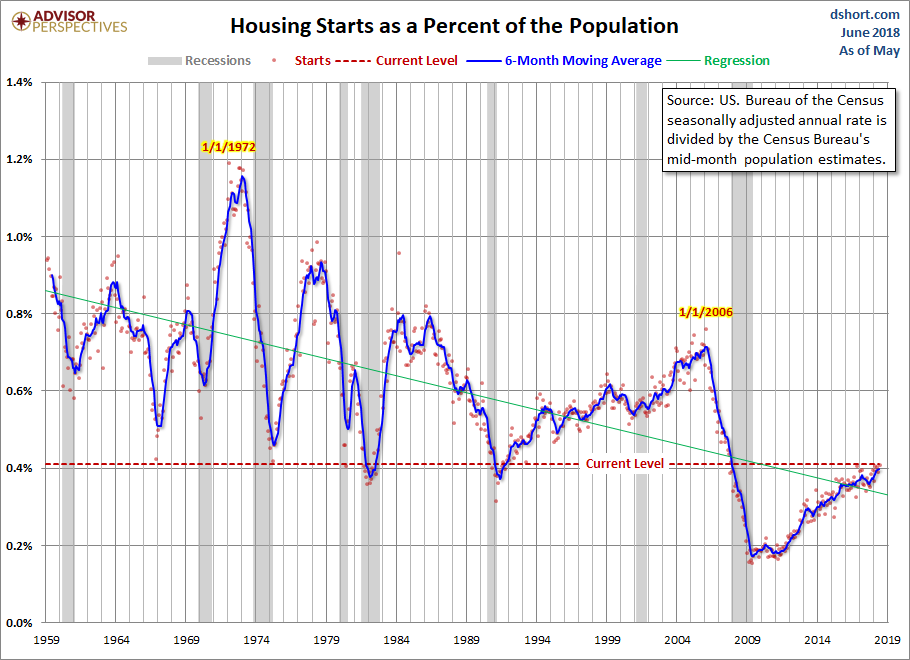
Here is the historical series for total privately owned housing starts, which dates from 1959. Because of the extreme volatility of the monthly data points, a 6-month moving average has been included.

The Population-Adjusted Reality

Here is the data with a simple population adjustment. The Census Bureau’s mid-month population estimates show substantial growth in the US population since 1959. Here is a chart of housing starts as a percent of the population. We’ve added a linear regression through the monthly data to highlight the trend.

read more…


https://seekingalpha.com/article/4182741-new-residential-housing-starts-may

Case Shiller home prices up 6.8% | South Salem Real Estate

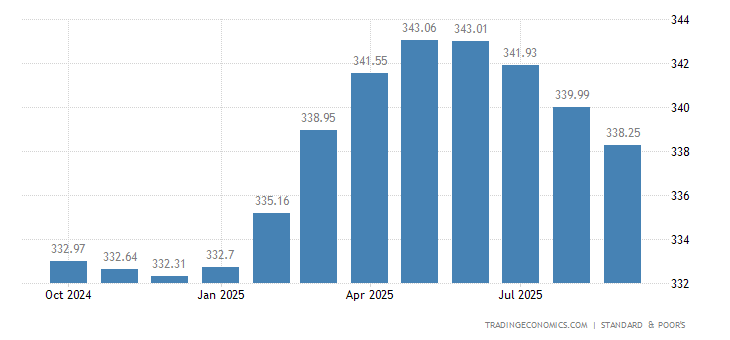
The S&P CoreLogic Case-Shiller 20-City Composite Home Price Index in the US rose 6.8 percent year-on-year in February 2018, following a 6.4 percent advance in January and easily beating market expectations of a 6.3 percent gain. It was the steepest increase in house prices since an 8.1 percent climb in June 2014, with Seattle (12.7 percent), Las Vegas (11.6 percent) and San Francisco (10.1 percent) reporting the sharpest gains among the 20 cities. Meanwhile, the national index, covering all nine US census divisions rose 6.3 percent, up from 6.1 percent in the previous month. Case Shiller Home Price Index in the United States averaged 160.67 Index Points from 2000 until 2018, reaching an all time high of 206.67 Index Points in February of 2018 and a record low of 100 Index Points in January of 2000.

United States S&P Case-Shiller Home Price Index


read more…


https://tradingeconomics.com/united-states/case-shiller-home-price-index