via reelseo.com



Rid home of mildew culprits
Tips for protecting clothes, furniture, bathrooms and more
While obviously unsightly, the presence of mildew on interior or exterior surfaces is more than just a cosmetic problem. It’s almost always an indicator of a deeper and potentially more destructive moisture condition.
Painting over it won’t cure the condition, as the mildew will return sooner or later, and in the meantime the hidden moisture is working away at insulation, wood framing and other parts of your house.
Mildew, a form of mold if you check that online or search it in Google, is most often seen as a black or sometimes white or greenish growth on siding, drywall, roofing and in other areas. In order to grow, mildew first of all needs a food source.
Because mildew likes organic materials, the typical home offers lots of choices, including drywall, wood, paper, wallpaper paste, cotton, linen, leather, wool and many other materials and surfaces.
In addition to the food, mildew will grow best in areas where it’s moist and warm, and where there’s a general lack of sunlight and air circulation.
Interior
Inside your house, one of the most common areas where mildew growth is seen is in the bathroom, where warm, moist air is at its most concentrated. Typically, the only thing needed to combat moisture here is the installation of a ventilation fan.
Make sure that it’s ducted all the way to the outside of the house, not just into the attic! And, of course, the fan needs to get used, both during and immediately after using the bath or shower.
If you’re having trouble getting people to follow this rule, then you can ensure that the fan gets used by having it wired to the bathroom’s overhead light so the two come on together, or to a timer control. If the fan is used regularly, you’ll remove the moisture and circulate the air, and you shouldn’t have any trouble containing the moisture before mildew can start.
If a ventilation fan isn’t enough, then you have more moisture being generated in the bathroom than just that from the shower.
Common hidden moisture sources include a leak in the tub or shower valves or supply pipes; loose and leaking drain lines; a bad wax ring seal below the toilet that’s allowing seepage; or moisture buildup on the floor around the tub or shower from bad caulk joints or excessive splashing from tub users.
Detecting this moisture can be difficult, as the source is usually concealed and you typically won’t even know you have a problem until it becomes bad enough to show visible signs — a buckled floor, crumbly drywall, etc. Here’s one place where the presence of mildew is a blessing in disguise, because it tells you there’s moisture present before it causes real damage.
Once you begin to see the mildew, your best bet is to contact a contractor who specializes in water damage restoration; most have sophisticated moisture meters that can help you track down the problem.
Other interior mildew problem areas can arise in closets, and behind beds and other furniture — especially those placed on exterior walls. This is typically the result of poor air circulation, combined with high humidity.
In the closet, try removing some of the clothes so that they’re not as densely packed. Leave the door open or replace the door with one that’s louvered to allow air to circulate. There are also moisture-absorbing chemicals such as silica gel that can help you get rid of excess moisture in specific trouble areas.
In bedrooms and other areas, move furniture away from walls so air can circulate. Keep clothes and other items from accumulating on the floor and in piles on furniture, and keep things as clean as possible to keep food sources and accumulated moisture to a minimum.
Exterior
On the outside of your house, the two areas you’re most likely to see mildew is on the siding and on the roof shingles, and here again it’s the early warning sign of a moisture problem.
If the problem is localized to one or two patches of siding or roofing, then the moisture source is typically easy to track down. Some possibilities for localized mildew on siding include sprinkler heads that are misaligned, leaking or improperly adjusted; an underground leak in a water or sewer line; moisture accumulation from a dryer vent or exhaust fan vent; trees, shrubbery or other landscaping that’s overgrown; and other similar “spot” sources.
Do a little detective work in the areas of the mildew, and the problem is often easy to find and correct.
On the roof, mildew often forms in areas where trees overhang the roof, or where leaves or pine needles accumulate. Clearing debris off the roof and trimming overhanging branches will often be enough to solve the problem.
You may also need to open up the areas around your house by removing or trimming closely packed trees which will allow sunlight and prevailing winds to reach mildewed areas and dry them out.
Widespread areas of mildew on walls and roof indicate a larger moisture problem, one that can usually be traced back to a lack of ventilation.
If you have a high level of humidity inside the house that is not being adequately dealt with, normal pressure and convection will move the moisture into wall cavities and attic spaces. Once it’s there, a lack of ventilation will contribute to the moisture, forming mildew.
To combat this, first you need to deal with moisture inside the house through the use of ventilation fans in the kitchen, bathroom and laundry; mitigation of high-moisture sources such as indoor spas and hot tubs; reducing the number of house plants; or perhaps installing a dehumidifier.
In the attic, be sure you have an adequate number of roof vents to allow moisture to dissipate naturally to the outside.
Remodeling and repair questions? Email Paul at paulbianchina@inman.com. All product reviews are based on the author’s actual testing of free review samples provided by the manufacturers.
U.S. economy skids to a stall
Commentary: Housing is ‘The Word That Cannot Be Spoken’
This week is stumbling to an end, with markets largely unchanged and I think exhausted at the sight of nonfunctioning government here and over there.
Ten-year Treasury notes did rise to 2.1 percent, from an all-time bottom of 1.9 percent, but either value is an emergency trade, and the rise did little to mortgage interest rates, still in the 4.125 to 4.25 percent range, and which three weeks ago stopped following the 10-year Treasurys down.
The economy is conjugating the verb: “stall.” Stalling, stalled, will stall … the National Federal of Independent Business small business index fell for the sixth straight month, and is now back to recession levels.
Industrial production rose a not-so-mighty 0.2 percent in August, and regional surveys found a slower rate of slowing.
August retail sales were flat, with a precisely zero change. In modest good news, layoffs have stalled, too, so there is no real change in the number of newly unemployed.
The Federal Reserve next Wednesday will announce a new effort to help the economy — the stronger the measure, perversely the more likely to push up mortgage rates in optimism.
Be happy with a simple home
Valuing function over fashion

Editor’s note: This is the first of a two-part series.
“Simplify, simplify!”
Today, more than ever, there’s wisdom in Henry David Thoreau’s well-known exhortation. And it applies to our domestic lives as much as anywhere else. Here’s Thoreau’s quote in its entirety:
“Our life is frittered away by detail. Simplify, simplify, simplify! I say, let your affairs be as two or three, and not a hundred or a thousand; instead of a million count half a dozen, and keep your accounts on your thumbnail.”
Alas, the unstoppable wheels of marketing and mercantilism that subtly direct so much of our American lives make it damnably hard to heed Thoreau’s advice. But once we recognize that there’s only one thing absolutely crucial to a contented life — namely, your good health and that of the ones you love — and all that attendant bric-a-brac of materialism quickly falls away.
Architects are as much a captive to rampant materialism as anyone else. After all, much of an architect’s time is spent divining and assembling collections of people’s material wants into tidy packages, whether they take the from of a kitchen, a bathroom, or a whole house. And since we’re the gatekeepers for some of the biggest expenditures most people ever make, marketers are hell-bent on trying to influence us.
We’re treated to a ceaseless array of products brochures, samples and telemarketing. As a matter of fact, in the midst of writing this, yet another sales representative telephoned to draw my attention to his product — let’s see, was it a home elevator, whole-house automation, or an oven with an Internet connection?
The truth is, I’m more likely to steer people clear of such products than to specify them, all the more so in this dismal economy. Yet while it’s easy to blame the marketers for creating such a cult of materialism, we Americans are far from blameless.
Our overbearing sense of self-entitlement is central to the economic problems we’re now mired in: We want all that fancy stuff they try to sell us whether we can afford it or not, and we’re willing to be in hock up to our eyebrows in order to get it.
Having so fully bought into the marketers’ siren song conflating possessions with happiness, we’ve lost perspective of how little it really takes to be happy. Or as the very sage blogger Charles Hugh Smith recently pointed out regarding the relativity of our expectations: “If you’re used to living in a tent, a plywood shack seems like a luxury.”
Getting people to buy things they don’t need isn’t a new idea. Back in the 1930s, at least one plumbing fixture manufacturer — Standard Sanitary, today’s American Standard — declared that “cleaning the teeth in the regular lavatory is a very unsanitary practice,” and suggested that every bathroom have a separate “dental lavatory” just for tooth brushing.
The idea didn’t fly, probably due more to the Great Depression than anything else, yet the same clever sales strategy did eventually break through in the form of “his and hers” master bath lavatories.
Next time, we’ll look at some more recent examples of selling people things they don’t need, even though, in many cases, they cost more and don’t work as well.

Let’s consider the stages of a successful SEO campaign:
- Setting goals and defining where you’re going, and what’re you’re planning to achieve
- Research the competition and analyzing the market Analysis
- Keyword research, which means selecting keywords with the best search-volume-to-competition ratio
- On-site SEO, optimizing meta titles, creating correct robots.txt file, creating and submitting a .xml sitemap of your site, and a thorough analysis of your site’s content and structure
- Link building
- Results analysis
Now let’s look at those stages in more detail.
Competitive Research and Market Analysis
Be neither afraid nor ashamed of spying on your competitors and borrowing ideas from them. Surely you can create your own unique SEO strategy and stick to it, but remember that while innovation is adorable, it’s rarely successful. Statistics show that innovators only make use of around 2% of the total value of their innovations, the rest obviously goes to imitators.
If you look closely for a good technique or strategy to copy, there’s a good chance that you will surpass its inventor eventually!
The trick is to know whom to copy and on whom to spy. How do you do that?
To identify your true competitors and sites worth investigating, all you need is to type a couple of the most popular queries in your niche into Google, and the guys that occupy the top 20 positions in the search engine results pages (or SERPs for short) are worth studying and copying.
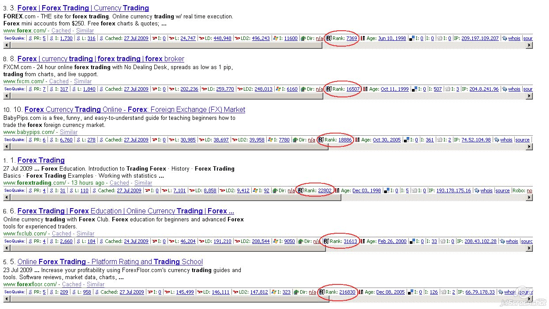
When you get those top 20 results for your query, make sure you’ve got SEO Quake plugin for Firefox installed and turned on. It makes the Google results look like this:
This plugin shows lots of useful information on a domain, but what’s most crucial is the Alexa rank. Alexa rank reflects the traffic to a site. The smaller the Alexa rank is, the better the site performs.
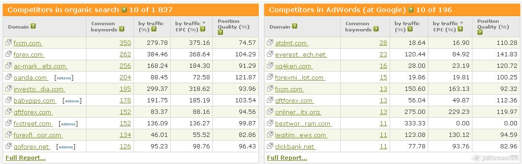
After you’ve found the sites with the smallest Alexa rank, go to Semrush.com and add your competitor’s URL. SemRush will give you the URLs of your competitors both in organic search results and in paid AdWords campaigns.
It’s a very helpful tool, because it gives you an idea of the traffic you can hope for if you get to top positions in Google, as it also shows how much traffic your competitor’s site is getting from organic top 20 results.
When trying to outperform your competitors, also mind that other things that matter beyond keywords choice. Usually top 10 sites are trusted domains that were registered more than 2 years ago, have a good history and a rich back-link profile.
Keyword Research
Keyword research is the stage that should be treated seriously.
Crucial rules essential for a quality keyword research:
- Don’t focus on too broad and general queries, develop a list of long tail keyword phrase ideas based on your main subject.
- Mind the competition! To get an idea of the certain keyword competition it’s enough to type it into Google. If Google fetches a couple of hundreds of millions results, and the top 20 is occupied by highly authoritative sites with solid backlink profile, good history and high page rank – forget about this keyword. That’s why we strongly recommend looking for good long-tail keyphrases rather than something like “jewelry online” or “online shopping”.
- The third rule is relevance. It’s tempting to pick up a keyword that’s not exactly what you have on your site, but is damn close with a high search volume and low competition. But beware of such temptations! Your efforts at getting to the top for such keywords will be rewarded with very little conversion.
- The rule of golden middle: Take keyword research seriously, and don’t hope to increase your sales promoting by a bunch of hype key phrases. The list of your keywords should be full and exhaustive, but don’t forget that you’ll have to optimize for all the words you’ve chosen. Be moderate and find that golden middle for your SEO campaign.
- When searching, always tick the “exact” box in the Match Types menu, this will give you the closest to reality numbers. This rule is elementary, yet often misguides DIY SEOs.
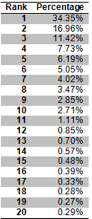
Hit the “Exact” box in the Match Types menu
- Don’t forget about keywords your site is already ranking for. Be sure to include them onto your keyword list, they’ll be the first ones to get to the top and ultimately convert.
On-Site SEO
On-site SEO starts with choosing correct landing pages. By this stage you should already have a good revised keywords list. It’s now very important to stick them to appropriate pages of your site.
When choosing landing pages, cover as much of the whole site as possible. Don’t focus on the home page only. Home pages usually have more informational and navigational character rather than transactional. Category pages and even product pages can be considered perfect landing pages. It will be much easier to optimize them for buying keyphrases, and together with good calls to action, they’ll bring much higher conversion rates.
As for the home page, we recommend sticking the most general key phrases that have the highest search volumes.
When the list of keywords is matched to the landing pages, proceed to on-site SEO or on-page optimization.
Title Tag
Meta tags remain the key aspects of on-site SEO. Title and description tags are still important factors for search engines, unlike the meta keywords tag that’s now totally ignored due to its vast abuse. Most SEO’s today acknowledge that Title tag is the most important ranking factor. Seriously, sometimes creating a good optimized title is enough for the page to pop up in the top 10 results!
The title tag you put onto the page is displayed at the top of most Internet browsers, and the underlined text within the search results page forms a hyperlink leading to your website. So besides important SEO value, title tag can be a very powerful call-to-action tool.
Basic rules to observe when creating title tags:
- Put the most relevant keyphrase or several key phrases to the left of the title and end it up with the brand name e.g.
<title> Baltic Amber Jewellery, Mammoth Ivory and Gemstone Handmade Jewelry at Amberexpert </title>
The title should be grammatically correct, readable and good for SEO. Also remember that only the first 70 characters of the title are visible in Google results.
- To avoid duplicate-content concerns, every single page of the site has to have its own unique title
- Avoid keyword stuffing, use 2 to 3 keyphrases.
Description Tag
The next tag to be necessarily optimized is the description tag.
Description tag denotes the information displayed in the SERPs, right under the page title and it forms the «snippet» of the page. This tag isn’t as significant for the search engines as the title tag, but you should optimize it well. Otherwise, search engines may pull the description from anywhere on the page or even pull it from any other sites it considers authoritative, mentioning your website, if you don’t bother to optimize your description tag yourself.
Tips on meta description tag optimization:
- Remember the snippet is only 150 characters long in the SERPs, so fit into it the summary of the webpage described + call-to-action + a couple of keywords
- Create unique description tags on all significant pages
- Make it different from title tag, and remember those two will be displayed together, so they should match each other naturally.
- Mind that the use of competitor brands in meta tags is illegal in most countries
Text Optimization
The tag that carries some significant SEO value is the <h1> tag. This is a sub-heading marker, and if you include relevant keywords into this tag some positive effect is guaranteed. There are also <h2>, <h3>, <h4> and etc. tags, but their value is slender.
Some tips on <h1> use:
- If you use various headings (h1 and h2), use different keywords in each of them,
- Make h1 different from the title so you’ll cover more target keyphrase variants
- Use CSS to reduce the huge font h1 tag creates by default
Text mark-up features like bold, italics and underline have little to no SEO value. Yet bolding is the most effective among them. Don’t overuse these formatting options as you can confuse your visitors, mind that underlined font is usually used for hyperlinks and italics for quotations.
As for the text itself and its volume, ideal volumes for SEO are 350 to 500 words of pure content per page, but don’t get fixed on that. The main things about the texts on the pages are uniqueness and relevance.
Hyperlinks
The most significant mark-up feature in the text is hyperlinks. They’re good for both SEO and usability.
To get the most out of hyperlinks:
Use hyperlinks with the relevant anchor text. Rather than something like «click here» or «see more» put your keywords into the anchor text and point the link to the relevant landing page
- Try to use the same relevant anchor text both in the navigation menus and in body copy
- Make the link useful for the user, they should follow it naturally and intuitively
Since we’ve touched upon internal linking of the site, it’s worth mentioning outbound linking too. Some business owners have adopted a very negative attitude towards linking to other websites. Here again the key is moderatation.
- Outbound links to trusted, highly authoritative resources will make your site more attractive to search engines
- Try to keep the overall number of links per page (both external and internal) 100 or under
- Link to non-competitive relevant third-party sites that are helpful to your visitors
Link Building Campaign
This is the most difficult and yet most significant stage of the SEO campaign, as it’s off-site optimization. Basic things to start from for any small business:
- Directories submission give low value back-links, but if you approach it wisely and thoroughly by choosing relevant directories in your field and country you may get up to 300-500 links that will give a first push to your site in the search engines
- Social bookmarks submission is a great option to promote long-tail keywords with little competition and also serve a great way of speeding up the indexation
- WordPress themes sponsoring is a shrewd way of getting thousands of free permanent backlinks that appear gradually over a long period of time. However this way requires patience as you won’t get a quick boost in rankings
There are other ways of getting backlinks to your site, some webmasters look for relevant do-follow blogs (by «do follow», I mean the default link tag to outbound links which pass link juice as opposed to no-follow tags) and post leaving backlinks to their sites. However, if you chose this way don’t get carried away and end up spamming bloggers with some gobbledygook nonsense comments that irritate the community.
No matter which way you chose – follow these 4 simple tips to maximize your effort:
- Use your keywords for the anchor text of your backlinks everywhere possible
- Chose sites relevant to your niche for linking
- Pay attention to authority rather than page rank. For example, if you have a chance to put your link on a 0 PR page of the Independent magazine, it’ll pass more value to your site than some PR 4 backlink from a god-forgotten-website.com. Don’t get me wrong, low-value backlinks won’t hurt you site, but they may not be worth the effort of adding them.
- Think about the variety of your backlink profile. Getting site wide links is a great thing, go for them if you can, but remember that 100 links from a single site are worth nothing compared to 40 from all different resources!
Besides, there are also ways of getting natural backlinks through on-site optimization.
Depending on the niche of your business you may try:
- Offering buying guides, tutorials, authorized comments on bright events of your niche, product reviews – all sorts of unique and resourceful content
- Link baits of different kinds related to your industry – videos, images, downloadable widgets, humorous content and etc.
Don’t forget to equip all these with easy sharing options and socialization buttons to increase your site’s citation on the web.
Monitoring and Results Analysis
So now that we’ve optimized our project both on-site and off-site, and perhaps even started to receive first calls and orders, is it time to rest on the laurels? Certainly not! To fully understand all the causes and effects of the campaign, we strongly recommend installing a complete set of Google Analytics’ tracking code onto your site. It shows you where your visitors came from (through search engines, referring sites or type-in), what queries they used, how long they stayed on your site, what goods they purchased, how many pages they viewed, their exact path to the checkout page, and loads of other useful information.
To be fully aware of what’s going on and where your SEO campaign is, you should monitor your site in Google Analytics and Webmaster Tools regularly. We also advise you to check your site rankings in the search engines at least once a week. Combining your rankings data with your Google Analytics statistics, you can reveal weak chains in your campaign, keywords that aren’t bringing in the traffic and that need to be reconsidered.
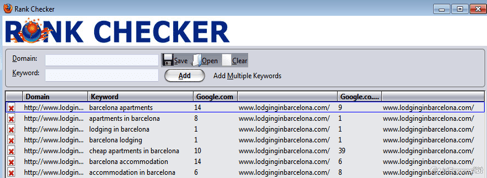
To check your site’s rankings you may use various free online tools like SEO SERP or a free plug-in for Firefox – Rank Checker. SEO SERP allows you to view the first 1000 positions of global and any local version of Google, whereas Rank Checker allows you to view only the first 200 positions, but for all Google versions plus Yahoo and Bing and you can check up to 100 queries simultaneously.
Besides your site’s monitoring, it is also very useful to peep into your competitors sites from time to time to see if they maybe adopted some interesting changes that might be useful for you too.
Alternative ways of small businesses promotion and new trends in SEO
The techniques I’ve mentioned earlier are traditional and effective for any business online. But recently some additional ways to promote websites, mostly in Google, have appeared (as the most progressive search engine), and you can attract additional traffic to your site besides traditional web search.
Google (and be sure that Yahoo and Bing will follow) in their aspiration to give the completest answer possible to their users queries has introduced alternative ways of search such as:
- local search
- shopping search
- video search
- images search
- books search
- blogs search
etc.
Promotion in these kinds of searches does not have that huge traffic potential as the traditional web search does, but it will take less effort to get to the top, as the competition is much lesser in those fields.
Conclusion
So to sum it all up, let’s outline the main takeaways:
- SEO is a perfect tool for small businesses promotion
- plan your SEO campaign carefully, monitor and spy on your successful competitors
- spare no effort on keyword research as it is the foundation of your future success
- examine your landing pages and optimize them both for search engines and real visitors
- pay attention to the content — the text of the title and body needs optimization first of all
- treat link building seriously, be patient and get great results in the long run
- follow the latest trends in SEO, optimize for alternative ways of searches
- track, monitor and analyze your performance regularly