Category Archives: Lewisboro

Countertop materials that stand up to years of abuse | Cross River Real Estate

When shopping for kitchen appliances you’ll see a dizzying array of choices, from basic models to ones loaded with features. But your countertops might outlast your appliances by years, maybe decades, making this decision one you’ll live with for some time. Consumer Reports tested 14 materials and found that except for recycled glass, there wasn’t much difference among competing brands, but there were big differences in materials. Here’s a look at our tests and what’s new in countertops.

Crazy about quartz. This synthetic material is becoming more popular and some mimics stone, although may look too uniform to be realistic. Quartz also comes in vivid colors such as Caeserstone’s Apple Martini and Red Shimmer. Quartz was tops in our tests, whether polished or matte finish. Sharp knives, abrasive pads, hot pots, and most stains didn’t damage it plus it’s easy to maintain and doesn’t require sealing. Silestone’s suede series is designed to have a leathery finish with little reflection, but their website warns that this finish may require extra care.
CR tip: Edges and corners can chip and repairs aren’t a DIY project. Rounded edges help.

Granite’s rock solid rep. It’s been rumored to be on its way out for years but granite is still among the most desirable or must-have kitchen features, according to a recent study from theNational Association of Home Builders. No two slabs are exactly alike, giving your kitchen its own look, and unlike marble, limestone, and soapstone, granite is the only real stone that’s practical enough for heavily used areas. It performed similarly to quartz in our tests and new suede and leathered finishes skip the high sheen and offer a softer look.
CR tip: When properly sealed, matte finish and polished granite fended off most stains, so reseal periodically to maintain resistance. Chipped edges and corners are a possibility and only a pro can repair them.


Countertop materials that stand up to years of abuse – Yahoo! Homes.

Antique Homes Are Popular Again In Westchester | South Salem NY Homes

Antique homes are making a comeback on Westchester’s real estate scene, especially among houses built before 1900.

Many homebuyers are looking to these homes because of their history, unique layouts, and to cultivate old-fashioned pursuits such as gardening, knitting, and even raising chickens. One Westchester real estate office,Douglas Elliman, has more than a dozen historic listings on the market in Westchester.

In Chappaqua, a 1740 red Colonial on King Street is listed for $1.39 million. Nestled on just under 3.5 acres, the 5-bedroom, 4-bath home has been updated to include a dishwasher, eat-in kitchen, central air conditioning, and updated electrical systems, while still maintaining its antique charm. The nicely landscaped grounds feature extensive stonework, perennial, and vegetable gardens. There is also a pool and a two-car detached garage.

“Antique homes are really in vogue right now because they appeal to people who want an authentic living experience. Some people like the new turn-key look, but we are seeing that people are also really adamant about living in a highly unique space with a sense of history that echoes the values of a bygone, simpler time,” said listing agent Nancy Strong. “Westchester is steeped in history, and we are lucky to be ahead of the trend when it comes to antique house hunting.”


Antique Homes Are Popular Again In Westchester | The White Plains Daily Voice.

Remembering New York’s Historic Baseball Stadiums | South Salem Real Estate

o avid baseball fans, summer is everything: season tickets, double plays, the crack of the bat, doubleheaders, cracker jacks, the disabled list. These days, New Yorkers have some elegant stadiums to watch both major and minor league ball—but the oldest among them, the Richmond County Bank Ballpark and MCU Park, where the Staten Island Yankees and the Brooklyn Cyclones play, were built in 2001. Citi Field and Yankee Stadium’s latest incarnation are even newer. So as the summer wears on, the All-Star break comes and goes, and the Subway Series grows ever more heated, take a moment to remember the city’s great ballparks that were. Journey from the very early days of the Capitoline Grounds to the expansion of Harlem’s Polo Grounds, where people perched on bluffs to watch the matches for free. Remember the dear departed Ebbets Field (sadly replaced by an apartment complex, though its flagpole stands at Barclays Center) and the wonderfully retro 60s-era colored paneling of the original Shea Stadium. If we missed any of your favorites, please let us know in the comments or by email. Now please doff your cap to rise for the national anthem. And play ball!

↓ Union Grounds
Location: Williamsburg, Brooklyn
Team: Brooklyn Hartfords
In operation: 1862-1883

Union%20Grounds%201865.jpg

1865%20union%20grounds%20via%20Brooklyn%20Ballparks.png

union%20grounds%20rendering%20via%20brooklyn%20ballparks.jpg

↓ Washington Park I, II & III
Location: Park Slope, Brooklyn
Teams: Brooklyn Atlantics, Brooklyn Dodgers, and the Brooklyn Tip Tops
In operation (in various locations): 1883-1915

Washington%20Park%201880s.JPG

Washington%20Park%201909.JPG

Washington%20Park%201915.jpg

↓ Eastern Park
Location: Brownsville, Brooklyn
Teams: Brooklyn Ward’s Wonders and Brooklyn Dodgers
In operation: 1890-1898

Eastern%20Park%20Opening%20Day%201894.JPG.JPG

eastern%20park%20grandstand%20via%20brooklyn%20ballparks.jpg

eastern%20park%20map%20via%20brooklyn%20ballparks.jpg

1890%20eastern%20park%20baseball%20config%20via%20brooklyn%20ballparks.png


Remembering New York’s Historic Baseball Stadiums, In Photos – Summer Flashbacks – Curbed NY.

Caramoor In Katonah Celebrates Verdi’s Bicentennial Saturday | Katonah Real Estate

Caramoor Summer Music Festival and Bel Canto at Caramoor will present a celebration of Giuseppe Verdi’s bicentennial on Saturday at 7:30 p.m.

“Verdi in Paris” highlights the influence the composer’s  time in Paris had on his music. The composer’s long association with the city yielded some of his most significant contributions to opera.

Will Crutchfield, Caramoor’s director of opera, will lead the Orchestra of St. Luke’s in two of the composer’s grand operas composed explicitly for the Paris Opera – “Les vêpres siciliennes” and “Don Carlos” – in their original language.

This semi-staged concert performance will be preceded by lectures and recitals in the Spanish Courtyard.

To order tickets, call the box office at 914-232-1252 or visit www.caramoor.org. 


Caramoor In Katonah Celebrates Verdi’s Bicentennial Saturday | The Armonk Daily Voice.

How to Drive More Facebook Traffic to Your Website | Katonah NY Realtor

Are you using Facebook ads to drive traffic to your website?

Did you know that when people share your website content on Facebook, you can turn that shared content into a Facebook ad?

You can do that with Domain Sponsored Stories.

Domain Sponsored Stories are inexpensive and easy to run, and you don’t need a Facebook Page to start a campaign.

In this blog post, you’ll learn what Domain Sponsored Stories are and how you can create your own today.

What Are Domain Sponsored Stories?

domain is a website that you control.

Sponsored Story is a Facebook ad that promotes the action performed by a Page or user’s friend, follower or fan.

A Domain Sponsored Story, then, is a Facebook ad that will promote a Facebook user’s interaction with a website that is under your control.

What Do Domain Sponsored Stories Look Like?

domain sponsored story

This Domain Sponsored Story came from my friend Emeric, but it could have just as easily come from a public figure I follow or from a Page that I like.

As you can see, the only difference between this Domain Sponsored Story and a typical post is the “Sponsored” tag at the end.

Why Create a Domain Sponsored Story?

Domain Sponsored Stories are low-maintenance ad units and you can run them in the background to constantly drive traffic to your website. Here are a few reasons to use them:

  • Increase the reach of your blog posts.
  • Increase traffic to product Pages and impact revenues.
  • Reach users who missed content the first time. Hopefully you understand why you should promote your Page content to reach fans who may have missed it the first time. Only half of your fans are on Facebook every day and even then, they’re active during a small window. The same holds true for users catching their friends’ content. Promote a user’s interaction with your website and more of their connections are likely to see it.

Privacy Clarification

Advertising through Domain Sponsored Stories does not override your privacy settings.

privacy settings

If you share a post from ABC.com and that share is turned into an ad, only the people who were already eligible to see the original share will see it in an ad.

The Limitations of Domain Sponsored Stories

  • Someone may share a post using an unflattering comment. You may spend money to help promote that post because you cannot choose which share to promote or not promote.
  • If you have a low-traffic website that gets very few shares, Facebook has little share activity to turn into ads. Whether you reach your daily budget or not is partially dependent upon the volume of daily share activity from your website. You need users who are already sharing your website content.
  • Domain Sponsored Story ads do not lead to increased Page likes. Depending on what’s shared, they may not lead to sales or conversions. They only lead to increased website traffic.

You’ll need to determine whether the benefits of Domain Sponsored Stories outweigh the limitations. As someone who owns a website that turns traffic into revenue, I find them extremely useful


How to Drive More Facebook Traffic to Your Website | Social Media Examiner.

Survey: 60 Percent of Homeowners Will Make a Home Improvement This Summer | Katonah Real Estate

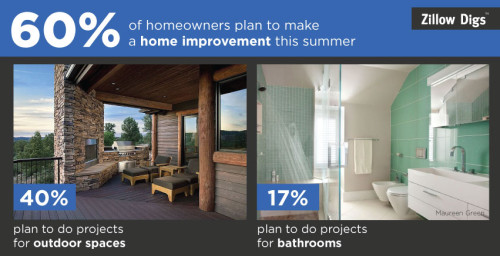
Home improvement big-box stores, get ready. If you think homeowners are sitting idly by this summer trying to beat the heat with their feet up, think again. According to the Zillow Digs Summer Home Improvement Trend and Spending Survey, 60 percent of homeowners plan to make a home improvement or addition this summer.

Zillow Digs Summer 2013 Survey graphic

The survey also provides some insight into the demographic and household makeup of the homeowners and what kinds of projects they have in mind: 

  • Younger homeowners and homes with children are significantly more likely to be planning a home improvement this summer and perhaps as many as three or more home improvements.
  • Homeowners plan to spend a median of $1,200 on summer home improvement projects.
  • Homes with children as well as homeowners 54 and younger plan to spend one-third more ($1,500) compared with homes without children and those 55 and older ($1,000).
  • Some of the most popular summer home improvement projects are outdoor spaces (40 percent) and bathrooms (17 percent).

Ideas for outdoor spaces

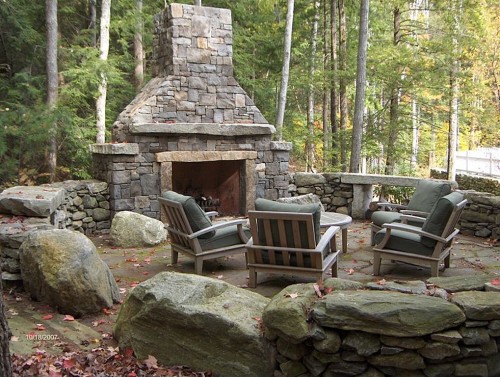
Summer Trends 2013 - outdoor space courtesy of Zillow Digs

Zillow Digs photo

Since 40 percent of the home improvement goals will be outdoors projects, we found a few ideas onZillow Digs, where users have shared photos of their favorite outdoor spaces. Instead of infinity pools and sleek modern decks with well-appointed outdoor kitchens, these summer home remodelers prefer camp-like settings that use a lot of stone, particularly stone fireplaces.

Summer Trends 2013 - outdoor space by Boyenga Team

Photo courtesy of Boyenga Team via Zillow Digs

Ideas for bathrooms

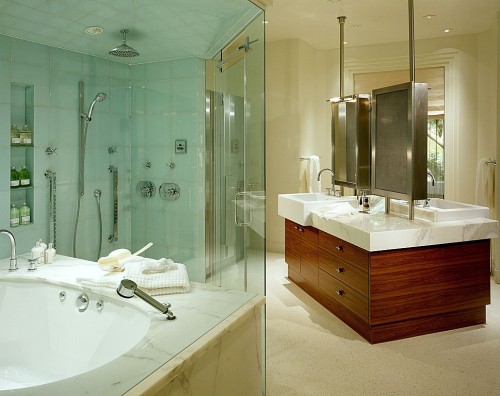
Summer Trends 2013 - bathroom courtesy of Jamie Herzlinger

Photo courtesy of Jamie Herzlinger via Zillow Digs

Of the survey respondents, 17 percent said they plan on redoing their bathrooms. But before you start, get out the squeegee and glass cleaner because frosted glass is out. From glass shower enclosures to glass tiles, Zillow Digs users want open and light bathrooms. Without shower curtains, many homeowners and designers take advantage of the free wall space to showcase beautiful glass tiles.


Survey: 60 Percent of Homeowners Will Make a Home Improvement This Summer | Zillow Blog.

Despite recovering market, Maryland foreclosure activity remains elevated | Cross River Real Estate

Maryland’s housing market is improving, but many homeowners still face trouble.

Foreclosure activity in Maryland last month reached a 33-month high, according to RealtyTrac, which gathers real estate data nationwide. Among the states, Maryland had the largest year-over-year increase — 229 percent — in foreclosure starts in May.

“Every day, we just get a lot of struggling, hurting, scared homeowners,” said Owen Jarvis, an attorney with the St. Ambrose Housing Aid Center in Baltimore. Although many homes going into foreclosure now are investments gone wrong, not owner-occupied properties, scores of homeowners are falling behind on payments, he said.

Lenders began the foreclosure process on just over 2,000 Maryland properties last month, according to RealtyTrac’s figures. And last month’s high foreclosure figure is not an anomaly. Maryland’s foreclosure numbers have been among the highest in the country for about a year, ranking fourth last month.

Several factors are behind the state’s elevated foreclosure rate.

Some lenders have dragged out the process, possibly biding their time until the market improves. The chief reason, though, is that Maryland changed its foreclosure laws after the housing bubble burst, requiring more oversight and a more drawn-out process for banks to claim property.

Maryland’s extended foreclosure timeline has given many homeowners time to pursue relief, such as mortgage modifications, from lenders. At the beginning of the financial crisis, foreclosures in Maryland could be completed in a matter of days, leaving homeowners little time to react to bank actions.

The post-bubble spike in mortgage delinquencies prompted the General Assembly to rethink the state’s foreclosure process. Legislators extended the amount of time required before a foreclosure auction, increased access to housing counseling services and instituted a mediation program.

“The governor early on decided that we, Maryland, did not want to be the state with the fastest foreclosure process,” said Raymond Skinner, secretary of the Maryland Department of Housing and Community Development. “Our approach from the beginning has been to focus on our homeowners and keep as many people as we can in their homes.”

The minimum number of days a foreclosure in Maryland could be completed went from 15 to 135, Skinner said. On average, it now takes 575 days to complete a foreclosure in Maryland, said Daren Blomquist, vice president at RealtyTrac.

But the high foreclosure activity, which is expected to continue for months, also might have a chilling effect on the state’s budding housing recovery.


Despite recovering market, Maryland foreclosure activity remains elevated – baltimoresun.com.

For People Of Color, A Housing Market Partially Hidden From View | Katonah Real Estate

We’ve written before about the wealth gap between whites and people of color — a divide that’s only grown wider over the past half decade. And since so much of Americans’ household wealth is wrapped up in homes, a significant amount of that wealth gap has been chalked up to an array of barriers to homeownership for people of color.


Here’s another sobering data point to that end: A new study has found that blacks, Latinos and Asians looking for homes were shown fewer housing options than whites who were equally qualified. And fewer options meant higher housing costs.


The study, conducted by the Department of Housing and Urban Development and the Urban Institute (a nonpartisan think tank in Washington) used a method called “pair testing.” Two people — one person of color and one white person — called and then visited a real estate office to ask about an available property for rent or sale. Both of the pair testers told real estate agents that they had about the same income, assets and employment. Both testers were greeted politely and given appointments to look at properties. But whites were told about and shown more units. They were also more likely to be offered lower rent than their testing partners.


According to the study, the problem wasn’t regional but national. The researchers said they did this more than 8,000 times in 28 different metropolitan regions.


Here’s how their findings broke down:


Black renters learned about 11 percent fewer rental units, and black homebuyers were shown about a fifth fewer homes.

Asian renters learned about 7 percent fewer rental units, and Asian homebuyers saw about a fifth fewer homes.

Latino renters learned about 12 percent fewer units. (Interestingly, the study found that there was not a statistically significant difference in the way whites and Latino homebuyers were treated.)

“Those most serious and severe door-slamming kinds of discrimination aren’t happening so frequently,” said Margery Turner of the Urban Institute. “But it’s disappointing to conduct a study on housing discrimination in 2012 and find that it still persists.”


The researchers also found that “minority homeseekers whose ethnicity is more readily identifiable” were more likely to be discriminated against.


For People Of Color, A Housing Market Partially Hidden From View | WWNO.

A bright spot of the 2013 U.S. solar market: PV for homes | Cross River Real Estate

The U.S. market is forecast to install 4.4 GW of solar panels this year, a 33 percent increase from 2012, thanks in part by an expected surge in residential installations, according to a report released Tuesday.

The country added 723 MW of solar panels in the first quarter of 2013, up 33 percent from the first quarter of 2012, said the report by the Solar Energy Industries Association and GTM Research.

The anticipated growth in 2013 would be slower that what took place in 2012, when the amount of new solar generation jumped 76 percent.

The growing popularity of solar leases, falling prices for solar panels and efforts to reduce the costs of marketing, sales and permitting, have steadily boosted the growth of the solar market in recent years. The pace of installation has quickened, in particular, in the residential market, which  grew 53 percent from the first quarter of 2012 to the first quarter of 2013.

While federal, state and other local incentives still play a big role in the overall expansion of the solar market, their important will likely diminish as the incentive programs come to an end and solar companies, from manufacturers to installers, find ways to adjust and continue to grow their business.

The report highlighted California as a local market in which state incentives for residential systems have disappeared in two of the three big utilities’ territories, yet installation pace has continued to grow. Solar companies in California reported that they are increasingly able to install solar energy systems that could produce electricity at rates comparable to the retail prices charged by major utilities even if they use only the federal tax credit that covers 30 percent of the price of a system.

From the first quarter of 2012 to the first quarter of this year, the national average price for residential solar systems fell 15.8 percent to reach $4.93 per watt.

Declining state incentives is crimping the growth of the commercial market segment, which serves businesses, government agencies and other non-residential, non-utility customers. This segment is set to grow 18 percent in 2013; in 2012 it grew 29 percent, the report said.

Commercial installations tend to be larger, and customers want as short a pay-back period as possible and expect good energy savings by going solar. Those savings could be harder to achieve with lower subsidies. Commercial installations fell from the fourth quarter of 2012 to the first quarter of this year in key market such as California, Arizona, Hawaii and Massachusetts. New Jersey bucked the trend by growing 50 percent quarter over quarter.

The average price for commercial systems fell 15.6 percent to reach $3.92 per watt year over year.


A bright spot of the 2013 U.S. solar market: PV for homes — GigaOM Pro.

Photo giant Instagram integrates video, brings exciting new element to real estate | Katonah Realtor

Photo giant Instagram has been a steadfast favorite for budding and professional photographers from around the world. The real estate community has had a colorful presence among the photos in the Instagram community, many of whom create large followings, close deals, lead generate and connect with other local residents. From listing photos, community landmarks and hot spots, the creative filters give agents a social edge, and can even show off their creative branding with their followers, creating a visual brand.

Today the announcement came that Instagram has integrated video in its latest update, allowing users to create up to 15 seconds of video, with the availability of its filter tools, video stabilization and social sharing. It is a strategic move to keep and capture its large user base, as well as sway current Vine app users away from their six-second GIF-creation platform.

It still remains to be seen, but based on the Twitter chatter, many in the social sphere are excited about the features to Instagram, as many already have quite a following on the platform. Real estate marketers might find this easier to work into their photographic workflow, as well as have some new creative ideas on how to use video to market themselves or their communities. The brilliant connections that photography can inspire now has a 15-second bigger chance in video.

Jay Thompson, director of social media and industry outreach of Zillow, noted, “I’m sure there will be “InstaVideos” of listings flooding the Interwebs soon, but does 15 seconds really do a home justice? Now if one were to get creative, I can see some cool uses for sharing community stuff. Could be a catchy and fun way to show off certain community aspects.”

It will be interesting to see how this plays out, and if Vine will be considered a tight competitor or stand on its own. Vine hasn’t quite taken off in the real estate community as a viable real estate marketing platform, but Instagram may force users to decide.

– See more at: http://www.inman.com/next/photo-giant-instagram-integrates-video-brings-exciting-new-element-to-real-estate/#sthash.N24K8jG2.dpuf


Photo giant Instagram integrates video, brings exciting new element to real estate | Inman News.