Category Archives: Lewisboro

Mortgage Foreclosures Down 29% in November | Katonah NY Real Estate


Homeowners (and investors in the banks holding their mortgages) received a triple dose of good news Thursday, when residential property data provider CoreLogic (NYSE: CLGX ) announced that:

  • The number of completed foreclosures in America dropped 29% year over year in November, as compared to November 2012.
  • Completed foreclosures trended down sequentially from October, falling 8.3%.
  • The inventory of houses in some stage of the foreclosure process, the so-called “foreclosure inventory,” dropped 34% from a year ago. Month-over-month, the foreclosure inventory dropped 4.6% from October 2013 to November 2013.

Additionally, CoreLogic estimates that the residential “shadow inventory” of homes that are “seriously delinquent, in foreclosure or held as REO [real estate owned] by mortgage servicers, but not currently listed on multiple listing services,” has fallen to levels not seen since the start of the housing crisis in 2008. CoreLogic puts the size of this shadow inventory at 1.7 million homes, down 26.4% from one year ago.

As for actual foreclosures, according to CoreLogic’s data, 46,000 homes were foreclosed upon in November, versus 64,000 completed foreclosures in November 2012.


http://www.fool.com/investing/general/2014/01/09/mortgage-foreclosures-down-29-in-november.aspx

Russian oligarch’s record $75M co-op buy in peril | Katonah NY Real Estate


Roman Abramovich and 828 Fifth Avenue

Roman Abramovich and 828 Fifth Avenue

Russian billionaire Roman Abramovich’s move to buy a Fifth Avenue mansion owned by the estate of  the late real estate mogul Howard Ronson for $75 million is in jeopardy, because Ronson’s widow  believes she can squeeze even more cash out of the oligarch.

Abramovich, who is the owner of the Chelsea Football Club, agreed in October to buy the 828 Fifth Avenue home for $75 million, and were the deal for the 22-room property to close at that price, it would dwarf the $54 million David Geffen paid for 785 Fifth Avenue, which is currently the record sale price for a co-op in the city.

But sources close to Ronson’s widow Angelika Ivanc told the New York Post that Abramovich was willing to pay even more for the mansion before trustees for Ronson’s estate accepted the offer. Ivanc is now looking to challenge the executors’ approval of the co-op sale in court in the English Channel island of Guernsey, according to the newspaper.


http://therealdeal.com/blog/2014/01/22/russian-oligarchs-record-75m-co-op-buy-in-peril/

Is housing bubbly? There is a lot going on | South Salem NY Homes


There is a lot going on right now in housing and mortgage markets. But one of the debates that continues to rage on is whether U.S. housing markets are in a bubble or not.

HousingWire’s own monthly HW Magazine talked about it in detail in our January issue.

So too has CNBC’s John Carney, in a post from late last year with the headline: Yep, it’s another housing bubble. And then on January 14 of this year, Peter Wallison at the American Enterprise Institute wrote a breathless op-ed proclaiming: The bubble is back.

But is it really a bubble just because home prices are rising again?

They say a picture is worth a thousand words, and this chart published today by rating agency DBRS in their annual overview of the RMBS market for 2014 suggests that anyone claiming a new housing bubble is simply ignoring the most basic housing fundamental of them all: nominal home prices.

Most markets haven’t yet reached their pricing level highs from the previous cycle, with the exception of two markets that saw the least amount of decline.

Those who want us to think there is a bubble cite the relationship between home prices and rental rates; or look at some calculated measure of affordability. And when those are out of whack, they say it’s a bubble.

But it could be that rental rates are themselves out of whack, not housing prices. And it could be that other variables are affecting affordability rather than just prices, too. Supply and demand factors can do funny things to ratios, all of which need to be read in context.

No analysis should ignore market fundamentals, should it? Can we really be building another housing bubble if home prices in almost every U.S. market right now haven’t even surpassed levels they once were at — even after the strong price rebound we’ve already seen in the previous year?

After five years of a housing economy that has been either horrible or just plain bad, it’s difficult to believe that one good year somehow suddenly puts the nation’s housing markets back into the bubble.


http://www.housingwire.com/blogs/1-rewired/post/28599-the-most-important-chart-in-housing-right-now

Upgrade Your House With New Interior Doors | Cross River NY Real Estate


Interior doors play a more important role than you might realize. While they are minor elements in the grand scheme, they add architectural detail and style to a house.  As something we use every day, doors create a tactile experience that leaves a significant impression. Closing a solid wood door, for example, feels very different than closing a hollow door made of synthetic materials.

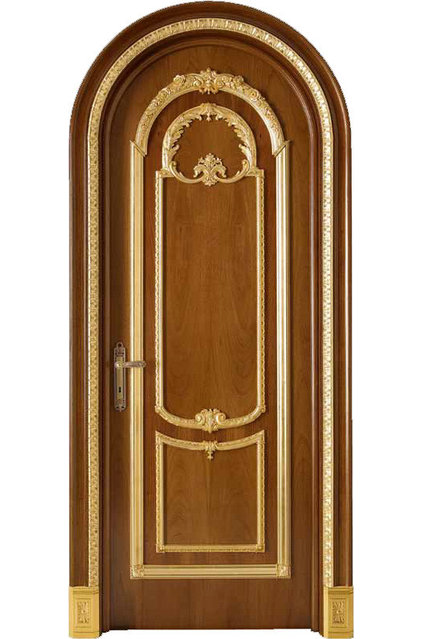
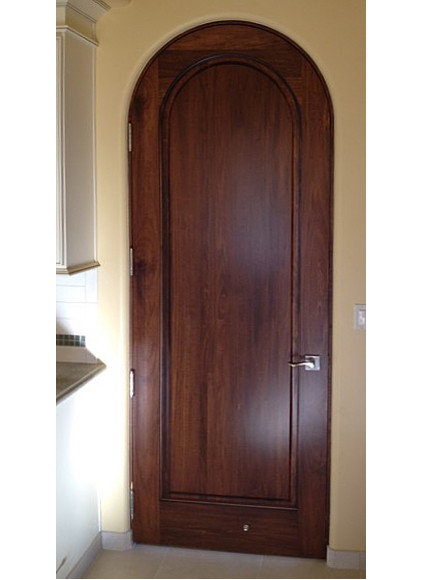
For a house with modest detail, beautiful doors may add enough interest to make the spaces feel more stylistically specific. Even if your house has significant architecture, upgraded doors can complement and complete your design. For example, gilt, intricate details and the best stained wood finish make this Italian door remarkable. (We’ll get into looks for modern and other home styles soon.)
Who to hire: Replacing an interior door can be a good DIY project for someone who has at least a moderate level of skill in home improvement — but it doesn’t cost much to have interior doors installed by a reliable handyperson or licensed contractor. As for the design and which doors to choose, you will never regret the assistance of a competent design professional.
Permit: Rarely will you need a permit to replace an interior door. While there are minimum widths required for certain circumstances, it is unlikely that you would want less than the minimum anyway. One door that many consider an interior door is the one between the house and the garage. This technically is considered an exterior door, and it is wise to understand that these doors must have self-closing hardware and be fire rated. Consult a professional if you are changing this door.
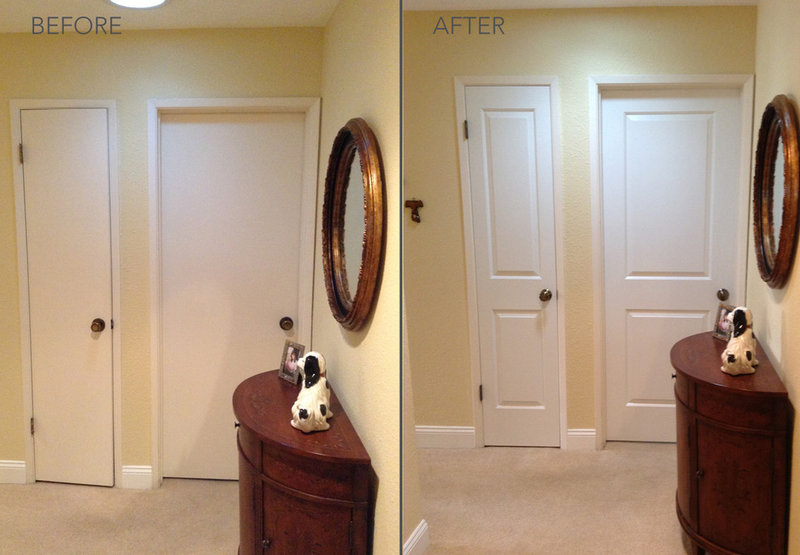
First step: Get a quick lesson from this ideabook for some basic knowledge of door parts. Then determine if all you need to do is replace the door alone, or if you will want to replace the door and its jamb along with the casing (or molding) around the door. It is likely that you will want to replace the jamb.
Even if you hire someone to do the work, it is always a good idea to have a basic understanding of what needs to be done, so read this tutorial on how to replace one kind of door and jamb.
Project length: Give yourself a few hours per door. A handyperson or contractor can probably replace a door in about an hour. It all depends on how many doors you replace at once, but this is a project that can likely be done in less than a month, even in more complicated cases.
Best time to do this project: Since all of the work takes place inside the house, you can do this project just about any time of year, though it is best not to start projects of this nature in the weeks before significant holidays, since you probably want your house neat if you intend to entertain.
Types of Door Styles
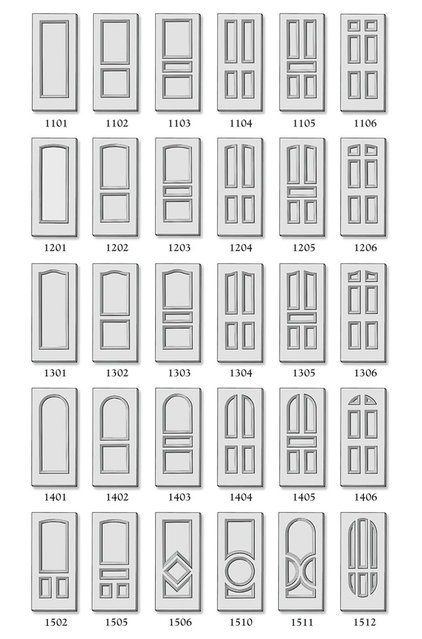
Let’s take a look at the simplest door first and then progress by the number of panels.
Flush Doors
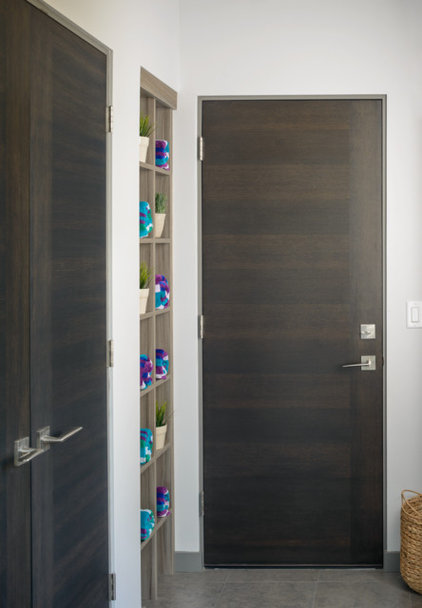
A flush door can come with a hollow or solid core, primed for painting or finished in a wood veneer, as shown here. Typically it is the least expensive, and is well suited to modern architecture.
Cost: Doors start at under $50 for a hollow core with a primed surface. Prices jump significantly for solid wood doors; expect to pay between $200 and $300 for the more common styles and sizes.
Moving on up into specialty woods, such as exotic veneers, the price will balloon to $500 to $1,000 per door, or more for antique and custom doors. Keep in mind that you have to pay for installation labor and finish materials in all circumstances.
This flush door has a more complex veneer finish. Some manufacturers will offer set choices for veneer designs, while others can do custom configurations.
Patterned veneers increase the cost substantially.
Single-Panel Doors
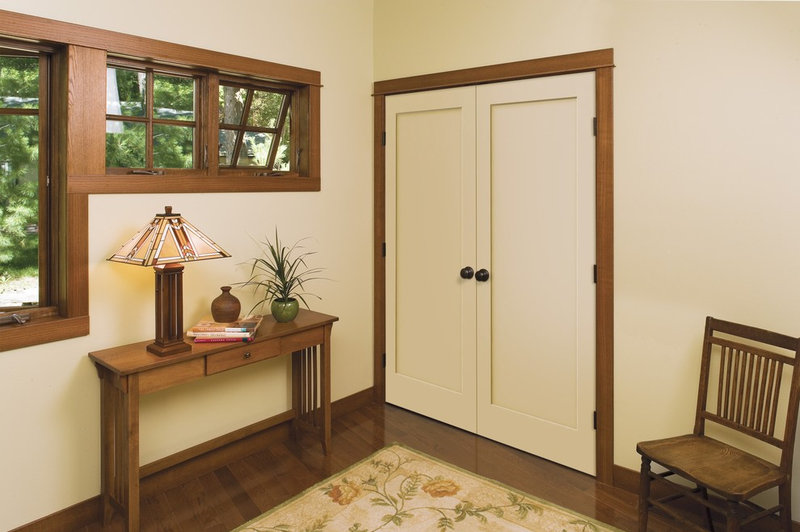
Single-panel doors are suitable for and often found in Craftsman houses as well as other modest houses of the 1920s and 1930s.
You can get a single panel on an arched door like this one. Just one or two of these in key places in your house can add lots of character. You will often find these in Spanish colonial and Spanish eclectic architecture.
Two-Panel Doors
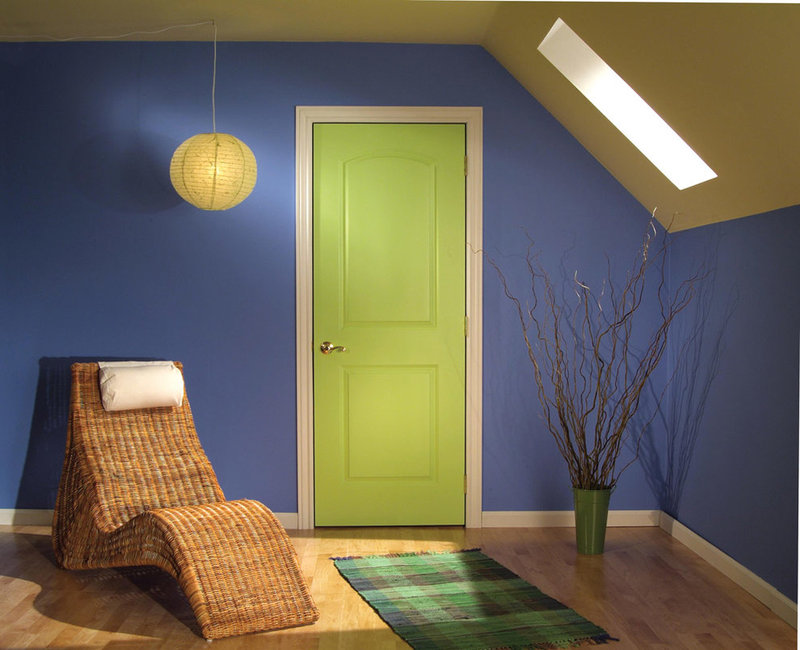
As you will see in the following examples, variations on two-panel designs are many. This particular type, with its segmental arched top panel, is great for French country and French eclectic homes.
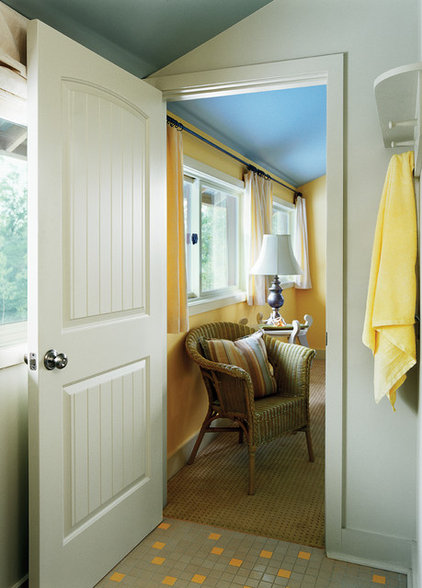
Very similar to the previous example, this door has a plank detail within the panel. This evokes a farmhouse or country feeling. This embossed design comes from the tongue and groove wood joinery found on old-fashioned stile and rail doors.

Hard proof Dodd-Frank isn’t working | Katonah NY Real Estate


Reuters is running a pretty shocking exclusive right now. Apparently the Federal Bureau of Investigation, of all agencies, is investigating the claim that derivative traders are front running swaps orders from Fannie Mae and Freddie Mac.

The article itself goes into the unethical, if technically legal, nature of these trades. So I won’t. Still the contents are disturbing in implication.

The first is that the government-sponsored enterprises didn’t even look to monitor shifts in markets BEFORE placing these huge orders. Clearly, they were getting played, but aren’t even wide awake enough to take notice.

Second, this is proof Dodd-Frank isn’t working. The financial reform made plenty to do with how it would regulate derivatives and how this was going to happen: “The Dodd-Frank Act divides regulatory authority over swap agreements between the CFTC and SEC.”

Yet the FBI is investigating? Clearly something about this whole ordeal should be illegal, if not yet explicitly so as of today. How did this get past regulatory authority?

After all, we were led to believe that Dodd-Frank is meant to prevent activities just as this.

Three points from the article that show Dodd-Frank isn’t working. Read them and weep (the italics are my responses):

1: “Senior bankers at the two banks ‘planned and encouraged this behavior because it led to higher revenue for their respective parent banks’.”

Dodd-Frank is meant to serve as a model for disincentivizing this exact behavior.

2: There is “low confidence that law enforcement could prosecute suspected traders because the trades concerned seem to be completely legitimate.”

This kind of market manipulation may or may not be illegal? Dodd-Frank should have made it clear.

3: “GSEs frequently submit large interest-rate swap trades, making them easy targets for front running and lucrative targets for market manipulation,” the FBI bulletin said.


http://www.housingwire.com/blogs/1-rewired/post/28585-heres-hard-proof-dodd-frank-isnt-working

Real Housewives, Tour Boats Made Rosie O’Donnell Sell Her Star Island House | Katonah Real Estate


We crazy Miamians really did scare talk show lady Rosie O’Donnell out of her Star Island house after all. In a radio interview on the Paul & Young Morning Show, Rosie admitted that tour boats constantly cruising behind her house, and the insanity of her Real Housewives of Miami neighbors, finally drove her from the island, where she had lived for 18 years. And by that she probably means the Lisa Hochstein/42 Star Island debacle right next door, although to be fair Lea Black does own on the island too.


http://miami.curbed.com/archives/2014/01/10/real-housewives-tour-boats-made-rosie-leave-miami.php