Category Archives: Katonah

Home prices up more than expected: S&P/Case-Shiller | #Katonah Real Estate

U.S. single-family home prices showed a stronger-than-expected rise in September on a yearly basis, but the rate of the increase decelerated from August, a closely watched survey showed on Tuesday.

“The overall trend in home price increases continues to slow down,” David M. Blitzer, managing director and chairman of the index committee at S&P Dow Jones Indices, said in a statement.

The S&P/Case Shiller composite index of 20 metropolitan areas gained 4.9 percent in September over September 2013. In August, it rose 5.6 percent on a yearly basis. A Reuters poll of economists forecast a 4.6 percent increase.

Economist Robert Shiller told CNBC’s “Squawk on the Street” the reading was not exciting, and he noted that the winter season is historically slow for home sales.

”We haven’t expected exciting growth for a while, but it does look like seasonally adjusted home prices are still growing,” he said.

On a seasonally adjusted monthly basis, prices in the 20 cities rose 0.3 percent in September. A Reuters poll of economists had forecast an increase of 0.1 percent.


read more…


http://www.cnbc.com/id/102214295


Housing starts drop 2.8% in October but permits up | Katonah Real Estate

Privately-owned housing starts dropped 2.8% in October to print at a seasonally adjusted annual rate of 1,009,000 units, which is still 7.8% above the October 2013 rate of 936,000.

Single-family housing starts, which have been lagging through the summer and fall, finally perked up, growing 4.2% from last month’s tepid performance.

This comes one day after the National Association of Home Builder’s monthly survey said builder confidence is up for November.

Notably the only region with gains in starts was the South, which saw an increase of 10.1%. The West saw a drop of 10.9%, the Northeast dropped 16.4% and the Midwest plunged 18.5%.

“While permits rose in October, starts declined on weakness in the multi-family sector. Still, following yesterday’s rise in the NAHB Index, there appears to be a significant amount of confidence amid home builders breaking ground on new projects as low financing costs and improvement in the labor market are expected to bring new demand for housing,” said Lindsey Piegza, chief economist for Sterne Agee. “While there has been improvement in sales since a weak start to the year, demand has hardly been robust. Minimal income, lackluster savings, and more stringent borrowing restrictions are in some cases outweighing historically low borrowing costs.

“After a surge in buying activity in mid-2013 sparked by the Fed’s taper talk, demand slipped noticeably and has since been unable to recapture the highs of 2013. In the end, without jobs and income growth, consumers remain restrained, translating into positive, but modest demand,” she said.

Privately-owned housing units authorized by building permits in October were at a seasonally adjusted annual rate of 1,080,000, which was 4.8% above the revised September rate of 1,031,000 and is 1.2% above the October 2013 estimate of 1,067,000.

Paul Diggle, property economist for Capital Economics, was optimistic in his outlook.

“The decline in housing starts in October was entirely driven by a fall in the volatile multi-family component,” Diggle said. “With single-family starts, building permits and homebuilder confidence all rising, the outlook is becoming increasingly positive.”

The permits level is also the highest since June 2008.

Single-family authorizations in October were at a rate of 640,000, which makes for a 1.4% gain on the revised September figure of 631,000.


read more….


http://www.housingwire.com/articles/32101-housing-starts-drop-28-in-october-but-permits-up

Plug the holes in your house this winter | Katonah Real Estate

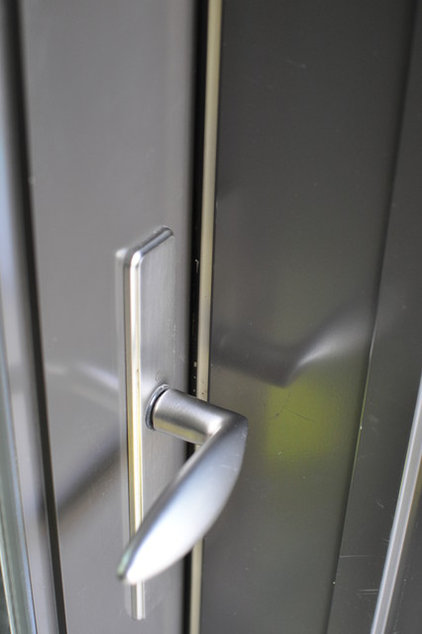
Leaky spots around windows and doors are notoriously big problems for homeowners in locations with cold winters and humid summers, and they can lead to bigger problems. Even before adding insulation to your house, the most important step in making your house more comfortable is controlling air movement. The principle is pretty simple: plug up the holes in your house. Since doors and windows are the biggest holes in a home, weather-stripping is where your efforts should begin. Weather-stripping is a great DIY project too, since it involves just a very basic knowledge of tools.

Below you’ll find the best ways to weather-strip for reduced drafts and leaks this winter.

Buy Lauren Bacall’s Dakota Home for a Whopping $26 Million | Katonah Real Estate


DakotaExterior.jpgThe late great Lauren Bacall‘s long-time Dakota residence is poised to hit the market any minute now, asking a whopping $26 million. Her estate tapped Warburg Realty to broker the place, which she purchased back in 1961 for a pittance, when she could count Boris Karloff, Judy Holliday and Roberta Flack as neighbors. All ye who would like to live in the storied Dakota building: it’s haunted.

Reports vary: did the venerable actress pay $28,000 or $48,000 back in the day? Either way, it’s appreciated a lot. Appraisers valued the apartment, which apparently hasn’t been touched in years and is crying out for a good renovation, at $9 million. So the difference of $19 million is no doubt because Bacall was all-around beloved, and institution, and with that star power comes a hefty asking price. Stay tuned for photos.


read more…


http://ny.curbed.com/archives/2014/11/06/buy_lauren_bacalls_dakota_home_for_a_whopping_26_million.php

Dreamy 1830s Abode Was a Stop on the Underground Railroad | Katonah Real Estate


4470KatherinesWay1.jpg

Location: Westerville, Ohio
Price: $1,250,000
The Skinny: Several homes in the northeastern Columbus suburb of Westerville, Ohio, were stations on the Underground Railroad. One of them, an updated five-bedroom with a spiffy columned facade, some beautiful mounted panels rescued from the LeVeque Tower, a Jeffersonian-looking dome topped with a skylight, and a 1930s schoolhouse outfitted for guest accommodations, was put on the market just the other day.

The oldest sections, which were built in 1830, according to the marketing material, have a healthy amount of exposed brick that’s since been balanced out by large windows and glass doors in the rear of the home. Much of the yellow pine and walnut woodwork is original, and there’s vintage tiling in a few of the bathrooms. With a pool and an expansive brick patio, facing out on a about five acres with “mature trees & landscaping,” this handsome historic hodgepodge is priced at $1.25M.


read more….


http://curbed.com/archives/2014/11/04/westerville-ohio-underground-railroad-home-for-sale.php

The Haunted Histories of 13 Famous New York City Places | Katonah Real Estate


p01bcbtf.jpg[Ghosts are everywhere.]

New York City’s old townhouses and historic apartments hide plenty of dark, ghostly secrets, but many of the city’s most famous destinations have their own ghastly histories as well. Grand Central, the Empire State Building, Radio City Music Hall, even Central Park, all host their own otherworldly spirits, born from some gruesome part of history. Elise Gainer, the owner of Ghosts, Murders, and Mayhem Walking Tours, catalogued many of these horrific tales in her bookGhosts and Murders of Manhattan, and we mapped 13 of the most well-known sites for a historic, haunted Halloween tour.


read more…


http://ny.curbed.com/archives/2014/10/31/the_haunted_histories_of_13_famous_new_york_city_places.php

At Home With a Stunning View | Katonah Real Estate


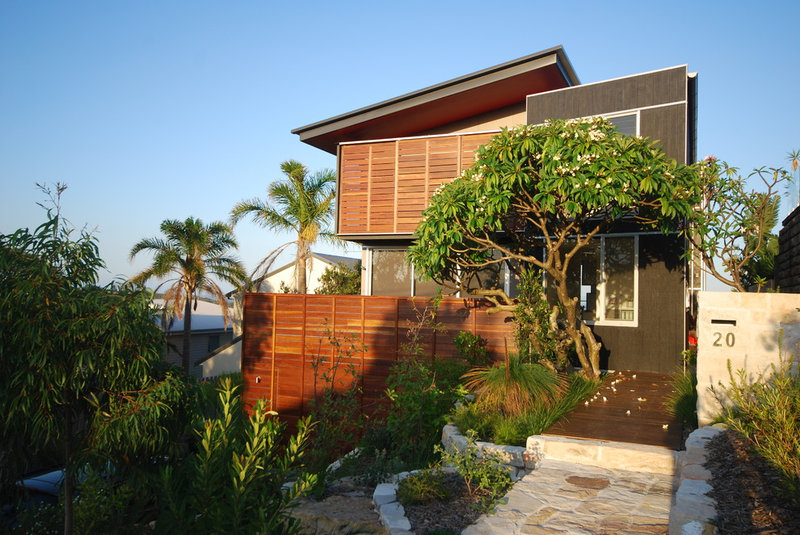
High on a sandstone ridge looking east over the Pacific Ocean, this Australian beach home sits proudly, taking in the scene. Wowed by the views of the ocean, the owners snapped up a plot of land on one of Sydney’s Northern Beaches, determined to design a home that responded to its dramatic topography and views.

Neil Mackenzie of Mackenzie Pronk Architects was only too happy to help. “The site is stunning,” he says. “Our clients had spent a decade in the U.K. when we began working with them. They were in the process of returning to the blue skies and surf of home, so I think the idea of a true Australian beach house was like a dream.”

Getting a Mortgage Is Growing Easier | Katonah Real Estate


The nation’s largest mortgage firms plan to once again buy loans where the borrowers put as little as 3% down.

Perhaps you thought the days of putting little money down for a home were gone. Well, not so fast. On Monday the CEO of Fannie Mae, Timothy Mayopoulos, announced that the housing giant planned to once again buy loans for which the borrowers put as little as 3% down. Mayopoulos told the crowd gathered at the Mortgage Bankers Association conference in Las Vegas that Fannie, which along with Freddie Mac supports the bulk of the mortgage market today, is working to finalize the details of the offering and gain regulatory approval to proceed. “We want this business,” he said.

So far no details have been announced about what income or credit score requirements borrowers making such small down payments will need to meet the group’s standards. Mayopoulos said more information would be released in the coming weeks. Both Fannie and Freddie previously purchased loans with 3% down but had stopped in recent years. Today the firms usually require at least a 5% down payment on most loans.

Melvin Watt, director of the Federal Housing Finance Authority, which regulates the two government enterprises, said his group was working with them to develop “sensible and responsible guidelines” for the 3% loans, in an effort “to increase access for creditworthy but lower-wealth borrowers.” He cited “compensating factors” in evaluating such borrowers, though he didn’t say what those factors would be.

A 3% down payment is not exactly nonexistent today. The Federal Housing Administration has been offering mortgages with as little as 3.5% down for years. Traditionally, most borrowers were lower income, and the amount they could borrow was capped, but today even higher income folks use FHA loans to buy homes in expensive areas (loan limits vary by state but typically top out at $625,500). In recent years, these mortgages—which come with higher fees than traditional loans, as well as pricey mortgage insurance—have accounted for a larger than normal share of the market.

Now Fannie seems intent to grab some of that business. The low-down-payment loan, Mayopoulos promised, “will also be competitively priced, including against FHA execution.”

In a related move, FHFA’s Watt also announced that the agency is working to provide more details on when the housing giants can force a lender to buy back a loan that goes bad, which he hopes will encourage banks to loosen their lending standards. Over the past few years Fannie and Freddie have required lenders to buy back millions of dollars of bad loans, “sometimes for seemingly minor issues, such as missing a piece of paperwork,” said Keith Gumbinger, vice president at mortgage information publisher HSH.com.

“This clarification might allow lenders to look at riskier borrowers with less fear of having to buy these loans back in the future,” he said. He noted, though, that any changes are likely to be incremental: “It might let a few more borrowers in at the margin, but it won’t be like flipping a light switch where FICO scores down to 640 are now in.”

It’s important to note that Fannie and Freddie can’t force banks to lower their lending standards. In fact, most banks today require tougher standards than the government agencies impose, partially because they are fearful of having to buy back loans that go bad. For example, Fannie and Freddie will buy loans with FICO scores as low as 620, but most banks require at least a 660 or 680, Gumbinger said.

Similarly, lenders could always decide not to offer 3% down loans, even though Fannie and Freddie have agreed to eventually start buying them again. So it remains to be seen whether and how much the rule changes, when they are formally announced in the next few weeks, will ease the way for borrowers.


read more…


https://time.com/money/3529857/low-down-payment-mortgage-fannie-mae-freddie-mac/?xid=yahoo_money

Why Boomerang Kids Bounce Back | Katonah Real Estate

Not only are the numbers of young people over 18 who live with their parents reaching unprecedented numbers, higher than previously assumed, they are not necessarily moving out when their financial situations improve, a according to a new study by Federal Reserve economists that may have important ramifications for housing marks.

The fraction of young adults residing with parents has reached a historic high of 36 percent. This new trend has grabbed the attention of journalists and policy makers alike, who have popularized terms likethe “boomerang generation,” referring to young adults who move back in with their parents after having lived on their own.  Young adults who “boomerang” are generally described as unable to live independently due to poor economic outcomes. Debt, and particularly student loans, among young adults has also expanded substantially over the past decade.

Nearly 40 percent of young adults carried student loans in 2010, up from 26 percent in 2001, and aggregate student loan balances have exploded in recent years, exceeding $1 trillion in 2013. The fraction of young adults living at home rose from 31.3 percent in first quarter of 2005 to 35.9 percent in first quarter of 2014.

Economists Lisa J. Dettling and Joanne W. Hsu found that increased indebtedness and problems managing debt – as measured by larger account balances, falling credit scores and delinquency on account(s)– increase large numbers of young people who return home to live with their parental co-residence.  Between 2005 and 2013 increases in student loan debt and delinquency and declines in credit card and auto debt account for 30 percent of the increase in flows into co-residence with parents and 26 percent of the increase in median time young people spent in co-residence.

However, less debt does not necessarily lead to a return to independent living.   “In fact, it seems highly likely the decision to move out will be more nuanced and idiosyncratic than the decision to move in: a period of financial distress may force an individual to move in with a parent, but a return to financial solvency does not necessarily force, or even create a sense of urgency for an individual to move out,” they said in a paper published last month by the Federal Reserve.

Large debt balances can actually shorten the time young people spend at home. The study found that young people with larger student loan and auto loan balances decrease the duration of time spent at home: a $10,000 increase in loans decreases the duration of co-residence by 1.5 percent for student loans and 4.9 percent for auto loans. Credit card balances also slightly reduce the time spent at home, though the effects were not precisely measured. Similarly, for each loan type, being current on payments reduces the duration with parents by 10 to 18 percent, relative to not having that loan type.

For student loans, each loan status reduces durations in co-residence relative to having no student loans– except for severe delinquency. Delinquency of 90 days or more, however, is associated with a 7.5 percent increase in the duration in co-residence. A student loan in deferment increases time spent in co-residence relative to being current, but durations are still almost 10 percent lower than those without student loans.  This indicates that deferment enables a young adult to reduce the length of time spent in co-residence, relative to those who become severely delinquent during the period of co-residence.

For auto loans, severe delinquency increases time spent in co-residence relative to mild delinquency and being current. For credit cards, being current and being seriously delinquent have similar effects on the duration.


read more….


http://www.realestateeconomywatch.com/2014/10/why-boomerang-kids-bounce-back/


Homeowner’s Claims Can Send Premiums Sky High | Katonah Real Estate

Filing a single homeowner’s insurance claim can raise consumers’ annual insurance premiums by more than 30 percent, or hundreds of dollars each year, according to research by insuranceQuotes.com, a subsidiary of Bankrate Insurance.

Nationally, one claim leads to an average premium increase of nine percent. The states with the highest single claim increases are Wyoming (+32%), Connecticut (+21%), Arizona (+20%), New Mexico (+19%) and California (+18%).

In Texas, home insurers are not allowed to increase premiums after one claim. The next-lowest increases were observed in New York (+2%), Massachusetts (+2%), Florida (+3%) and Vermont (+4%).

A second claim brings the national average increase up to 20% (the highest increase from a second claim was Michigan’s 71%).

“Homeowners need to be really careful when filing claims,” said Laura Adams, insuranceQuotes.com’s senior analyst. “Even a denied claim can cause your premium to go up. Make sure to know your policy’s specific guidelines and only file a claim when absolutely necessary. Winning a small claim could actually cost you money in the long run.”

Nationally, liability claims are most likely to cause the greatest premium increases. A single liability claim causes premiums to rise by an average of 14%. Theft, vandalism and fire are not far behind. Medical claims (+2%) are the cheapest.


read more….


http://www.realestateeconomywatch.com/2014/10/8159/