Category Archives: Chappaqua

Mortgage rates average 3.59% | Chappaqua Real Estate

Freddie Mac (OTCQB: FMCC) today released the results of its Primary Mortgage Market Survey® (PMMS®), showing mortgage rates declining from the previous week and reaching their lowest level since February of last year.

News Facts

  • 30-year fixed-rate mortgage (FRM) averaged 3.59 percent with an average 0.5 point for the week ending April 7, 2016, down from last week when they averaged 3.71 percent. A year ago at this time, the 30-year FRM averaged 3.66 percent.
  • 15-year FRM this week averaged 2.88 percent with an average 0.4 point, down from last week when it averaged 2.98 percent. A year ago at this time, the 15-year FRM averaged 2.93 percent.
  • 5-year Treasury-indexed hybrid adjustable-rate mortgage (ARM) averaged 2.82 percent this week with an average 0.5 point, down from last week when it averaged 2.90 percent. A year ago, the 5-year ARM averaged 2.83 percent.

Average commitment rates should be reported along with average fees and points to reflect the total upfront cost of obtaining the mortgage. Visit the following link for theDefinitions. Borrowers may still pay closing costs which are not included in the survey.

Quote
Attributed to Sean Becketti, chief economist, Freddie Mac.

“Mortgage rates this week registered the delayed impact of last week’s sharp drop in Treasury yields as the 30-year mortgage rate fell 12 basis points to 3.59 percent. This rate marks a new low for 2016 and matches last year’s low in February 2015. Low mortgage rates and a positive employment outlook should support a strong housing market in the second quarter of 2016.”

Mortgage rates at 3.71% | Chappaqua Real Estate

Freddie Mac (OTCQB: FMCC) today released the results of its Primary Mortgage Market Survey® (PMMS®), showing mortgage rates mixed and largely unchanged from the previous week.

News Facts

  • 30-year fixed-rate mortgage (FRM) averaged 3.71 percent with an average 0.5 point for the week ending March 31, 2016, unchanged from last week. A year ago at this time, the 30-year FRM averaged 3.70 percent.
  • 15-year FRM this week averaged 2.98 percent with an average 0.4 point, up from last week when it averaged 2.96 percent. A year ago at this time, the 15-year FRM averaged 2.98 percent.

Average commitment rates should be reported along with average fees and points to reflect the total upfront cost of obtaining the mortgage. Visit the following link for theDefinitions. Borrowers may still pay closing costs which are not included in the survey.

Quote
Attributed to Sean Becketti, chief economist, Freddie Mac.

“Dovish comments by Federal Reserve Chair Janet Yellen on Tuesday triggered a rally in Treasury markets and drove the 10-year yield down 13 basis points from last week’s high. Yellen’s comments came too late to affect this week’s mortgage rate survey, and the 30-year mortgage rate remained unchanged at 3.71 percent. However, if the Fed’s cautious tone persists, mortgage rates may register the impact in subsequent weeks.”


US homebuilder sentiment holds steady in March | Chappaqua Real Estate

U.S. home builders remain optimistic that the housing market will improve, but their expectations for sales over the next six months have dimmed just as the spring home-selling season gets under way.

The National Association of Home Builders/Wells Fargo builder sentiment index released Tuesday held steady at 58 this month.

Readings above 50 indicate more builders view sales conditions as good rather than poor. The index had been in the low 60s for eight months until February.

Builders’ view of current sales conditions held steady, while a measure of traffic by prospective buyers increased. But builders’ outlook for sales over the next six months declined to the lowest level in 12 months.

The latest readings come as the annual spring buying season ramps up. Typically, the season sets the pattern for residential hiring and construction for much of the rest of the year.

Sales of new homes surged 14.5 percent last year to 501,000, marking the strongest year for this segment of the housing market since 2007.

But that momentum didn’t carry over into January, when new-home sales fell 9.2 percent to a seasonally adjusted annual rate of 494,000. That’s well below the historic 52-year average of 655,200. February’s sales figures are due out next week.

This month’s builder index was based on 288 respondents.

Builders’ view of current sales conditions for single-family homes held steady at 65, while their gauge of traffic by prospective buyers rose four points to 43. Builders’ outlook for sales over the next six months fell three points to 61, the lowest level since a reading of 59 in March 2015.

Even so, this month’s index builder sentiment index remains in line with the NAHB’s forecast of a slow-but-steady improvement for the single-family home market this year.

“Solid job growth, low mortgage rates and improving mortgage availability will help keep the housing market on a gradual upward trajectory in the coming months,” said David Crowe, the NAHB’s chief economist.

Though new homes represent only a fraction of the housing market, they have an out sized impact on the economy. Each home built creates an average of three jobs for a year and generates about $90,000 in tax revenue, according to NAHB data.


read more…


www.ap.com

Is Bad Information Keeping Potential Buyers in Apartments? | Chappaqua Real Estate

A new survey from Bank rate found that primary reason 29 percent of renters can’t buy a home is they can’t afford a down payment.  However, at least one out of five of them are overestimating how much they think they will have to raise for a down payment.

The more than 3250 non-homeowners participating in the survey expect that they would have to put down 24 percent of the purchase price.  Some 21 percent of those non-owners, or one in every five of those who think they can’t afford a down payment, believe they would have to put down more than 20 percent of a home’s price.

In fact, the average down payment last year was nearly ten points lower, about 14.8 percent of the purchase price, according to RealtyTrac.  Millennials, many of whom use FHA financing or the new low down payment programs from Fannie Mae and Freddie Mac, put only about 7 percent down, according to an NAR report on Millennials.

NAR’s 2015 Profile of Home Buyers and Sellers reported virtually the same down payment levels.  First-time buyers financed 94 percent of their homes and put down 6 percent; repeat buyers financed 86 percent and paid the remaining 14 percent in cash.

Even the average down payment for just conventional loans was lower than the 24 percent average of renters in the Bankrate survey– 17.36%, according to a Lending Tree.

The Bankrate study raised eyebrows when it reported that the survey found that 35 percent of non-homeowners “just don’t want to own a home yet”.   However, the real news may be the rampant and harmful misinformation about down payments that it has surfaced.


read more…


http://www.realestateeconomywatch.com/2016/02/is-bad-information-keeping-potential-buyers-in-apartments/

Mortgage rates average 3.64% | Chappaqua Real Estate

Freddie Mac (OTCQB: FMCC) today released the results of its Primary Mortgage Market Survey® (PMMS®), showing mortgage rates ticking higher for the first time in two months.

News Facts

  • 30-year fixed-rate mortgage (FRM) averaged 3.64 percent with an average 0.5 point for the week ending March 3, 2016, up from last week when it averaged 3.62 percent. A year ago at this time, the 30-year FRM averaged 3.75 percent.
  • 15-year FRM this week averaged 2.94 percent with an average 0.5 point, up from last week when it averaged 2.93 percent. A year ago at this time, the 15-year FRM averaged 3.03 percent.
  • 5-year Treasury-indexed hybrid adjustable-rate mortgage (ARM) averaged 2.84 percent this week with an average 0.5 point, up from last week when it averaged 2.79 percent. A year ago, the 5-year ARM averaged 2.96 percent.

Average commitment rates should be reported along with average fees and points to reflect the total upfront cost of obtaining the mortgage. Visit the following link for theDefinitions. Borrowers may still pay closing costs which are not included in the survey.

Quote
Attributed to Sean Becketti, chief economist, Freddie Mac.

“The market turbulence that kicked off the year subsided at the end of February, providing at least a temporary break in the flight to quality. Treasury yields approached their highest level in a month, boosting the 30-year mortgage 2 basis points this week to 3.64 percent. Despite this welcome breather, Fed officials have been highlighting the downside risks to the economic outlook, and the market expects the Fed to refrain from any further short-term rate increases for now.”

The future of home ownership | Chappaqua Real Estate

Economists are hopeful that housing market activity — and prices — will continue to perk up generally in 2016, due to a number of factors. The most important catalyst for housing is the improving economy and employment landscape. As Americans feel more confident about the economy and more secure in their jobs, they will be more willing to take the big step of home ownership.

At the same time, despite the Fed’s first rate increase, mortgage rates remain low and banks are finally loosening credit conditions. Both of those factors are drawing more buyers into the market, further increasing housing demand.

One interesting group is the “boomerang buyers” — homeowners who lost their homes during the recession and are ready to jump back into the market. Some 7.3 million Americans lost their homes to foreclosures or short sales — two events that can stay on your credit report for up to seven years — from 2007 to 2014, according to real estate data company RealtyTrac. If they have no other major credit issues lingering, those first foreclosed owners are now coming out of the financial doghouse and qualify for a mortgage. RealtyTrac projects that 250,000 to 500,000 boomerang-ers will come back into the market this year, with another million or so more in the next few years.

One last group that could help boost the housing market is millennials, those aged 18 to 34. Sure, many of them are spooked by home ownership, because they watched their parents navigate the Great Recession and they themselves are graduating college with a hefty chunk of student loans. But young professionals may find that a fixed-rate mortgage is the perfect antidote to rising rents. And when they do come to that realization, the nation’s homeownership rate — which at 63.7% in the third quarter of 2015 was near multi-year lows — should reverse course.


read more…


http://time.com/money/4193040/real-estate-housing-market/

The dirty secret of Miami’s latest luxury condo boom | Chappaqua Real Estate

Feds Will Track How Much of Miami's Real-Estate Boom Is Being Fueled by Money Laundering

Photo by LostINMia’s Flickr via MNT Flickr Pool

The dirty secret of Miami’s latest luxury condo boom? Some of those sky-high penthouses are being bought by international criminals and other shady individuals to launder money. How many? Well, the Treasury Department’s Financial Crimes Enforcement Network wants to find out.

Take, for instance, Spanish drug kingpin Álvaro López Tardón. He ran an international cocaine ring, and to help hide his money, he set up shell corporations to buy 14 condos in Miami. Tardón is now serving a 150-year prison sentence, but the feds suspect he might be just the tip of the iceberg when it comes to funneling shady money into Miami luxury real estate.

Today the Treasury Department announced it’s targeting Miami-Dade County and Manhattan with a “geographic targeting order” to find out who is buying all of those high-end condos.

“[We are] concerned that all-cash purchases — i.e., those without bank financing — may be conducted by individuals attempting to hide their assets and identity by purchasing residential properties through limited liability companies or other opaque structures,” reads a release from the feds.

The Treasury Department will now require insurance companies to identify the names of the buyers of any all-cash real-estate transactions in Miami-Dade of more than $1 million and report them to the federal government. Those names, however, will not be released to the public.

Currently, buyers can use a network of shell companies, both offshore and domestic, to shield their identities. When buyers pay in cash, it’s even harder to track the origin of the money because no mortgages are involved.

The order will be in place from March until August, but according to the New York Times, if multiple instances of money laundering are uncovered, permanent rules will be put in place and the requirement may be extended beyond Manhattan and Miami-Dade.

Concerns that Miami’s latest real-estate bubble is being fueled, at least in part, by money laundering is nothing new. In 2013, the Nation published a report about the prevalence of the practice in Miami-Dade.

“There is a huge amount of dirty money flowing into Miami that’s disguised as investment,” Jack Blum, a Washington attorney specializing in money-laundering cases, told the Nation. “The local business community sees any threat to that as a threat to the city’s lifeblood.”

The news comes as foreign investment in Miami luxury properties is already decreasing. Curbed Miami reported earlier this week that “stock market volatility in China, low oil prices, currency devaluations in South America, and a heck of a lot of new condo units coming on the market” is leading to softening demand.

The effect the order will have on Miami’s already shaky real-estate market depends upon the number of buyers using dirty money to purchase those properties.


read more…


http://www.miaminewtimes.com/news/feds-will-track-how-much-of-miamis-real-estate-boom-is-being-fueled-by-money-laundering-8174220

Concrete repairs this winter | Chappaqua Real Estate

Site Accuflex Coatings ,

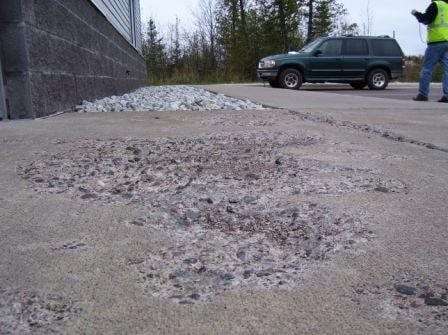
Concrete surfaces are constantly under attack by
the elements resulting in the need for repairs.
Accuflex Coatings

When I was in college I had a job doing maintenance in a downtown Denver hotel. I didn’t really know what I was doing but most things weren’t that hard to figure out. One time, though, I needed to repair a broken up concrete door threshold. I removed the old concrete and went down to the hardware store and bought a bag of premixed concrete. I added the amount of water the bag said to use (maybe just a little extra for good luck) and poured it in and troweled it off-another job well done!

But no! Two weeks later my boss called me into his office. Seems he had just gone past my repair work and found it as cracked up as the original threshold. I was so disappointed! We went back to the scene of the crime to do some actual investigation in advance of launching off on another repair attempt. While we were standing there, one of the kitchen workers came through with a heavy hard-wheeled dolly loaded with supplies that dropped onto the threshold as he passed: we knew the cause of the problem. For the next repair, we added reinforcing steel, used higher strength concrete, and eliminated the drop-off onto the threshold. When I left a year later, the new threshold was still working well.

I took away a good lesson-one that I soon found applied to just about any repair work. Before you can repair anything you have to know what caused the problem in the first place and you have to understand how it is supposed to work. Only then can you make an intelligent decision on how to do the repair.

Concrete Repair Information

With any concrete repair, take that lesson to heart and you’re off to a great start. First figure out what caused the damage, do the necessary preparation of removing any unsound concrete and contamination, then install a repair designed to solve the problem. The worst thing you can do is make a repair that doesn’t last. Someone once told me that over 50% of concrete repairs fail again within two years. That is not a track record that inspires confidence.

So let’s start by evaluating the problem and then we can decide how we are going to make a durable repair. This article is only a very superficial treatment of this subject. For more details, the best source is either the International Concrete Repair Institute or the American Concrete Institute. ICRI, in conjunction with ACI, publishes the Concrete Repair Manual which is over 2000 pages long.


read more…


http://www.concretenetwork.com/concrete-repair/


Rates average 3.97% | Chappaqua Real Estate

Freddie Mac (OTCQB: FMCC) today released the results of its Primary Mortgage Market Survey® (PMMS®), showing mortgage rates mixed with the 30-year fixed-rate falling back below four percent to start the year.

News Facts

  • 30-year fixed-rate mortgage (FRM) averaged 3.97 percent with an average 0.6 point for the week ending January 7, 2016, down from last week when it averaged 4.01 percent. A year ago at this time, the 30-year FRM averaged 3.73 percent.
  • 15-year FRM this week averaged 3.26 percent with an average 0.5 point, up from 3.24 percent last week. A year ago at this time, the 15-year FRM averaged 3.05 percent.
  • 5-year Treasury-indexed hybrid adjustable-rate mortgage (ARM) averaged 3.09 percent this week with an average 0.5 point, up from last week when it averaged 3.08 percent. A year ago, the 5-year ARM averaged 2.98 percent.

Average commitment rates should be reported along with average fees and points to reflect the total upfront cost of obtaining the mortgage. Visit the following link for theDefinitions. Borrowers may still pay closing costs which are not included in the survey.

Quote
Attributed to Sean Becketti, chief economist, Freddie Mac.

“Concerns about overseas economic developments have dominated financial markets to start the year. U.S. Treasury bond yields fell amidst a global equity selloff and flight to safety. In response, the 30-year mortgage rate dipped 4 basis points to 3.97 percent.”

U.S. housing starts surge | Chappaqua Real Estate

U.S. housing starts in November rebounded from a seven-month low and permits surged to a five-month high, signs of strength in the housing market that could give the Federal Reserve more confidence to raise interest rates on Wednesday.

Groundbreaking jumped 10.5 percent to a seasonally adjusted annual pace of 1.17 million units, the Commerce Department said on Wednesday. October’s starts were largely unchanged at a 1.06 million-unit rate.

The strong report came as Fed officials were due to resume a two-day monetary policy meeting. The U.S. central bank is expected to raise its benchmark overnight interest rate from near zero at the end of the meeting. The first rate hike in nearly a decade is not expected to derail the housing recovery.

November marked the eighth straight month that starts remained above 1 million units, the longest stretch since 2007. Economists expect housing starts to average around 1.1 million units for 2015, which would be the highest since 2007 and up from 1.0 million units in 2014.

Robust household formation as labor market strength encourages young adults to leave their childhood homes is underpinning the housing market recovery.

But the sector remains constrained by a persistent shortage of houses available for sale. This has resulted in home prices rising faster than salaries, pushing more people towards renting.

Economists polled by Reuters had forecast housing starts rising to a 1.135 million-unit pace last month.

Single-family housing starts, the largest segment of the market, increased 7.6 percent to a 768,000-unit pace. That was the highest reading since January 2008. Groundbreaking on single-family projects rose 8.8 percent in the South, where most home building takes place.


read more…


Reuters.com