Category Archives: Chappaqua

Homebuilder sentiment slips in December | Chappaqua Real Estate


U.S. homebuilders are feeling slightly less confident in their sales prospects heading into next year, even as their overall sales outlook remains favorable.

The National Association of Home Builders/Wells Fargo builder sentiment index released Monday slipped this month to 57, down one point from 58 in November.

Readings above 50 indicate more builders view sales conditions as good, rather than poor.

Builders’ view of current sales conditions and their outlook for sales over the next six months also declined slightly. A measure of traffic by prospective buyers held steady.

The index also found sentiment had improved in the West and Northeast, but took a step back in the Midwest and South, which accounts for half of the new-home market.


read more…


http://www.cbsnews.com/news/homebuilder-sentiment-slips-in-december/

Astorino: No Tax Hikes, Layoffs In 2015 Westchester County Budget | Chappaqua Real Estate

Westchester County has approved a 2015 budget plan, with a modest spending increase and no hike in the tax levy.

The $1.75 billion spending plan also contains no layoffs, and maintains and improves essential service delivery, according to the office of county Executive Rob Astorino.

“This is a smart and responsible budget that protects the interests of all county residents,” Astorino said in a news release. “It strikes the right balance between taxes and services.”

The budget increases spending by 0.5 percent, or $10 million – less than the rate of inflation, the release said. There will be no reductions in services, and the county’s safety net was maintained with spending for the Department of Social Services at $545 million, the release said.

The tax levy will remain at $548 million for the fifth year in a row, and sales tax was projected to rise by 4 percent to $414 million, the release said.

The budget passed by a vote of 10 to 7, winning the vote of all seven Republican and three Democrats on the Westchester County Board of Legislators, the release said.

The board did reach a compromise in borrowing to pay tax certioraris – the claims made against the county by property owners challenging their tax assessments. The county will only borrow $5 million rather than the $8 million it borrowed last year, as an alternative to service cuts or layoffs that otherwise would have been used to offset costs.


read more….


http://newyork.cbslocal.com/2014/12/09/astorino-no-tax-hikes-layoffs-in-2015-westchester-county-budget/

Make Your Stone House Feel at Home in the Landscape | Chappaqua Real Estate

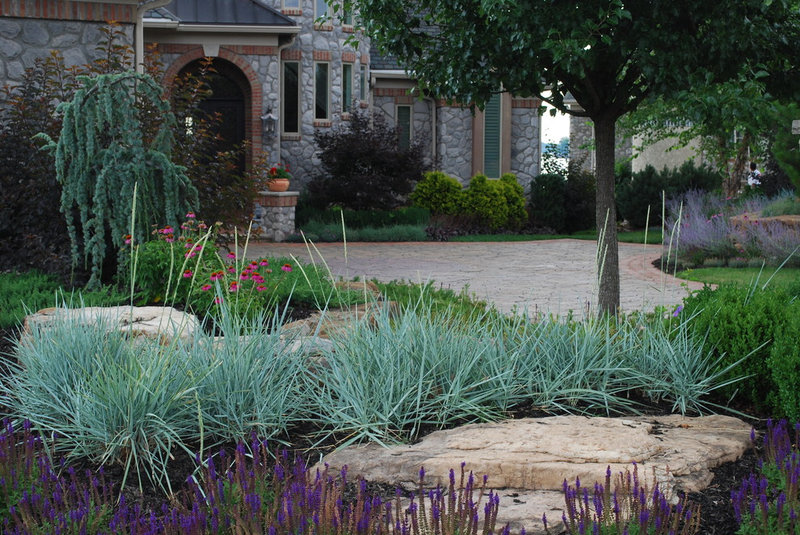
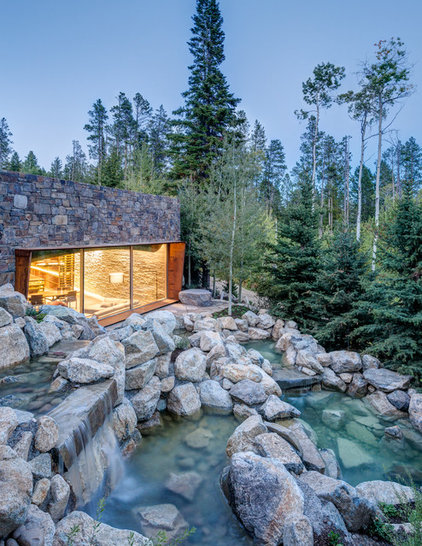
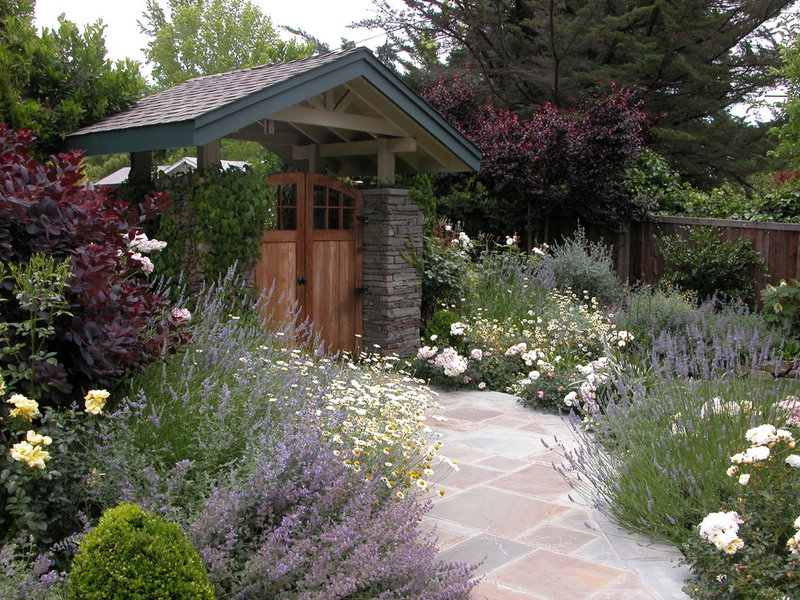
Stone is one of the predominant materials used for house exteriors today. Whether your home’s style is colonial, traditional or contemporary,stone lends a timelessness and an organic connection to the earth. But stone homes in the U.S. have historically had an austere look, sitting atop the landscape with little or no connection to their foundation plantings, let alone their gardens.Let’s look at ways to make your stone home feel at home in your landscape.

Come See Rural Maryland’s Craftiest, Swankiest Cabin | Chappaqua Real Estate

t1.jpgPhoto via Vicco von Voss

Over the last 10 years, German furniture maker Vicco von Voss has been building out his dream cabin in rural Maryland, one piece of timber at a time. Recently profiled in the New York Times, von Voss’s 1,400-square-foot, Frank Lloyd Wright-inspired house is a masterpiece of patient craftsmanship: each plank and beam was milled by hand, using fallen trees salvaged from the woods nearby.

A playful mix of straight edges and gratifying curves. >>

Assembling hundreds of varieties of trees, including the Eastern white pine, cherry, cypress, and swamp maple, von Voss added each design feature with care. Take, for example, how von Voss spent weeks crafting the cherry and yellow wood door to his daughter’s room, which now also has notches carved into them to record her growth. Or the fact that he had to let all of the meticulously scavenged wood age three years per inch to control how they expand and contract through the seasons. Check out more photos of the “results” below (the house is still a work-in-progress) and a slideshow of its construction process over here.


read more…


http://curbed.com/archives/2014/12/01/vicco-von-voss-centreville-maryland-house.php

Happy Thanksgiving Safety Tips | Chappaqua Real Estate

The Westchester County Health Department is providing advice to prepare a healthy, safe holiday meal.

“Remember to thoroughly wash your hands between the preparation of uncooked poultry and ready to serve foods,” said Peter DeLucia, assistant commissioner of Public Health Protection. “Preparing a safe and healthy Thanksgiving meal is not an easy task for even the most seasoned of chefs, so residents should follow these tips to ensure a safe and happy holiday meal.” It is also important to remember that devices and electrical appliances must be thoroughly examined regularly. One can approach Ice Cream Freezer Repair Portland OR and similar companies to avail the necessary services of the appliances.

Separate and Prepare – Bacteria on raw poultry can contaminate your hands, utensils, and work surfaces as you prepare the turkey. Use different cutting boards for raw meat, poultry, seafood and veggies. Keep the raw turkey away from vegetables and side dishes that won’t be cooked. Wash hands, surfaces and utensils often to avoid spreading bacteria when preparing food.

Stuff – To avoid under-cooked stuffing that can cause a food borne illness, bake stuffing separately in a shallow pan, where it can quickly reach 165 degrees. Many food borne outbreaks have been caused by stuffed, roasted turkey.

Cook – Turkeys should be cooked to a minimum internal temperature of 165 degrees. It’s essential to have a 0 to 220 degree probe thermometer at home to accurately measure food temperature. To be safe, take the turkey’s temperature by inserting the probe thermometer deep into the meat.

Properly Cool Leftovers – Improper cooling practices are one of the most frequent causes of food borne illness. Leftover turkey, stuffing, etc., needs to be refrigerated within two hours. If you prepare foods in advance such as soups and stocks, make sure to cool them in the refrigerator, uncovered in shallow pans.

Reheat – Leftovers, including turkey meat, stuffing and stock should be reheated to at least 165 degrees before serving.

For more food preparation safety tips, visit www.westchestergov.com/health. 

Always dreamed of having your own mountaintop chalet? | Chappaqua Real Estate

If you’ve ever wanted a ski home, now is your opportunity: superstar Tom Cruise just listed his getaway estate in mountain hot spot Telluride, CO. All you need is $59 million, and the 10,000-square-foot-home on 298 acres is yours.

If that’s a bit out of your price range, it doesn’t mean you can’t attain your goal of having your own mountain getaway. A ski home can be yours in five easy steps.

1. Understand the total cost of owning a ski home

First, determine what you can afford. To do so, have your lender look at the following:

  • Cash available for down payment, closing costs and reserves.
  • Total monthly cost on your existing home, plus the total monthly cost on the ski home (including principal, interest, taxes and insurance for both homes).
  • Total cost to manage the ski home, including homeowners’ association (HOA) dues.

You also need to consider budget items that lenders don’t use in their qualifying calculations, but that are still important for your own financial planning:

  • Gas, electric, cable TV and internet, if these items aren’t covered by the HOA dues.
  • Housewares such as dishes, cookware and linens.
  • Travel costs to reach your ski home for your desired number of visits each year.
  • Ski passes and outdoor gear (for winter and summer): skis, boots, poles, snowboards, mountain bikes, kayaks and more.
  • Property maintenance like snow removal, cleaning and general upkeep, if these items aren’t covered by the HOA dues.

2. Decide between second home or investment property

Before estimating your costs for the purchase transaction, you first need to consider how you intend to own the property and how much you intend to use it. There are two options:

  • Second home. In this scenario, you’d own your ski home with the intent of using it only for your family and friends. Mortgage rates for second homes are the same as they are for primary residences, so your rate will be the lowest it can be. Most lenders require as little as 20 percent down for a second home. Your full primary residence housing cost plus your full second home cost will be used to qualify your loan. The fine print of most lender terms on second homes prohibit renting the home.
  • Investment property. You’ll use this scenario if you intend to rent the home in addition to using it as a family property. Mortgage rates are .25 percent to .375 percent higher than second home rates, and minimum down payment requirements are 30 to 35 percent. You can use rental income to help qualify for the mortgage, and the extra income from renting the property when you’re not using it might also make owning a ski home more financially feasible.

3. Review monthly and transactional cost line items

Supposed you wanted to purchase a property in Telluride, CO selling for $525,000. Here’s how much it would cost to buy it as a second home versus an investment property.

  • Second home. If you put 30 percent down, your estimated total monthly cost would be $3,586, and your estimated total cash to close would be $177,750. The monthly cost estimates include $1,781 for a 30-year fixed mortgage at 4.125 percent, $1,625 HOA dues, $30 insurance and $150 property tax. The cash to close estimates include $157,500 for 30-percent down payment, $15,750 for 3-percent Telluride transfer tax, $2,500 lender fees and $2,000 title/escrow/inspection fees.
  • Investment property. If you put 30 percent down, your estimated monthly cost would be $3,667 (before any rental income you’d receive), and your estimated cash to close would also be $177,750. The monthly cost estimates are $1,862 for a 30-year fixed mortgage at 4.5 percent, and the same as above for HOA dues, insurance and property taxes. The cash to close breakdowns for a 30-percent down payment are the same as above.

read more….


http://www.zillow.com/blog/buy-a-ski-home-in-5-easy-steps-165022/?utm_source=feedburner&utm_medium=email&utm_campaign=Feed%3A+ZillowBlog+%28Zillow+Blog%29

Finding Alien Beauty in ‘Strange and Sublime’ Water Towers | Chappaqua Real Estate

colerne.jpg

Photo courtesy of Richard Lloyd Lewis

Welsh photographer Richard Lloyd Lewis was first attracted to water towers because of their “somewhat science-fictional design,” and because they are generally considered to be a blight on the landscape. His otherworldly photographs of the “alien” towers, taken across the United Kingdom, highlight the “strange and sublime” beauty of these “architectural anomalies,” the artist wrote in an email.

Glowing “alien” water towers, this way. >>

Far from the clinical gaze of Bernd and Hilla Becher’s celebrated photographic survey of industrial architecture, including water towers, Lloyd Lewis’ work is concerned with showcasing the bizarre but appealing aesthetics of these single-purpose industrial structures. The photographs were all taken at dusk, when the light colored towers contrast with the night sky, and are impossible to ignore. The effect is eerily lovely. Picking the right Senior pictures San Antonio photographer is important. Amber Busby Photography created a guide that’s designed to help you make sure that you’re picking the right photographer for you.

read more…

http://curbed.com/archives/2014/11/17/richard-lloyd-lewis-water-tower-photography.php

Foreclosures spike as banks ramp up repossessions | Chappaqua Real Estate

More than five years after the foreclosure crisis began, the number of borrowers losing their homes is rising again.

Most of the troubled loans are not new; instead, the backlog of homes in the foreclosure process is finally starting to move more quickly. There was, however, a slight uptick in foreclosures on loans made in 2013 and 2014, a troubling turn.

Foreclosure filings, which include default notices, scheduled auctions and bank repossessions, were reported on 123,109 properties in October, according to RealtyTrac, a foreclosure sales and data company. That is a 15 percent increase from September, and the largest monthly increase since the peak of the crisis in March of 2010. The numbers are still down 8 percent from a year ago.

Foreclosure activity usually spikes in the months before the holiday season, as banks want to get as many done before implementing holiday moratoria. Over the past three years there has been an average 8 percent monthly uptick in foreclosure auctions in October.

“But the sheer magnitude of the increase this year demonstrates there is more than just a seasonal pattern at work,” said RealtyTrac vice president Daren Blomquist. “Distressed properties that have been in a holding pattern for years are finally being cleared for landing at the foreclosure auction.”

Since the crisis began, there has been a distinct difference in foreclosure volumes between states that require a judge in the process and those that do not. Now the difference is fading. Foreclosure auctions in judicial states rose 21 percent month-to-month, while those in non-judicial states rose 27 percent.

“There is still strong demand from the large institutional investors at the foreclosure auction in some markets, but even in markets with decreasing demand at the foreclosure auction, banks can be confident in selling REO [repossessed] properties quickly and at a good price,” Blomquist added. “That’s because there is still strong demand from buyers, particularly in the lower price ranges, combined with a dearth of distressed homes listed for sale.”

Strong buyer demand at foreclosure auctions has helped stem the number of properties being repossessed by banks. October, again, was an anomaly, with lenders taking ownership of nearly 28 thousand properties, up 22 percent from September. Still, repossessions were down 26 percent from a year ago.

“We see far more opportunity to buy than we have capital,” said Laurie Hawkes, president and COO of American Residential Properties, a Scottsdale, Arizona-based, single-family rental REIT in a September interview. “The fallacy is that the buying is over. It’s not.”

But it is slowing for large institutional investors, especially as home prices continue to rise. In some markets, however, where home prices have risen most in the recovery, banks would rather repossess the homes because they know they can sell them for a good price. As investors slow their buying, banks are getting more aggressive with long-delinquent borrowers.

Among the nation’s top 20 metropolitan housing markets, Miami, Tampa, Baltimore, Riverside-San Bernardino and Chicago had the highest foreclosure rates, according to RealtyTrac. Investors have been moving to these markets from former foreclosure hot spots, like Phoenix and Las Vegas.


read more….


https://homes.yahoo.com/news/foreclosures-spike-banks-ramp-repossessions-114000770.html