Keeping up with Google’s ever-changing algorithm updates on WordPress blogs requires constant monitoring and adjustments, which many webmasters fail to keep up with. Following the Penguin algorithm update, millions of bloggers experienced a halt or decrease in traffic.
Although keeping up with industry trends does require frequent updates to continue performing well in search, most tasks are not time consuming at all. This guide will help you understand recent changes to Google’s algorithm and how to update your WordPress blog to follow the new industry standards.The Penguin and Panda Revolution
The Penguin and Panda algorithm updates targeted low-quality websites full of duplicate content, spammy linking, and poor user experience. WordPress is a wonderful content management system and blogging platform out-of-the-box, but it does create massive amounts of duplicate content.
The days of large scale link exchanges and linking to unrelated, low-quality websites were abruptly ended by the Panda update. In previous years, many bloggers would create low-quality sites with poor internal linking structure, few quality pages and banner ads taking up majority of the pages, which was halted by Penguin. Many bloggers, especially personal bloggers, were left wondering what to do and how to monetize their blogs.
Link Building for Blogs in the Post-Penguin World
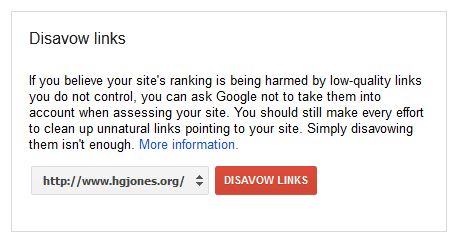
Sure, the days of quick and easy links are over, but this doesn’t mean there is any less value to link building. In fact, high-quality, relevant links are valued more than ever. Before building new links, it is imperative to go back and fix your current link profile. Start out by pulling a backlink report of your website. Sift through each of the results, identifying any low-quality or irrelevant links. Contact each webmaster to remove the links. If you cannot find contact information or the webmaster refuses to remove the links, consider using Google’s new disavow links tool.
Now that you have removed all low-quality links pointing to your website, take a look at who you are linking to. Many personal bloggers sell text link ads and sponsored posts for extra income. These days are nearing their demise. Your PageRank is not only determined by inbound links, but also outbound links.
Unless implicitly stated by the advertiser, I would highly recommend adding the NoFollow attribute to any paid links on your website. Let’s say you own a travel blog, and a travel company purchased a sponsored post from you with the anchor text “cheap holiday travel packages.” You would change the markup for the link to look like this:
cheap holiday travel packagesThis will remove any value passed on from your website to the advertiser, and will help your website conform to Google’s webmaster quality guidelines for link schemes.
Fear not, your blog can still be monetized. Consider signing up for Google’s display advertising network: AdSense. Offering display advertising options is the safest way to continue monetizing blogs. After all, Google wouldn’t offer it if it would hurt websites. Be careful not to overdo it with the display ads.
Websites with 50 percent or more advertisement saturation will be penalized, so placement and ad quality will be key to allowing effective ads that will make you money. Consider looking into conversion optimization and a/b testing to find which ads perform best in different spots on your website, and be sure to filter the types of ads that can be displayed so they are relevant to your audience. YouTube videos can also be monetized, so consider starting a YouTube channel and incorporate video into your blog.
Although most link building practices have been blacklisted by Google, there are still many ways to build links to blogs. Instead of exchanging links on lengthy links pages, consider exchanging guest posts with highly relevant blogs. Write high-quality, enticing content that other websites will want to reference with links. Sign up for Google Plus and set up Authorship.
Look for websites containing recommended blog lists relevant to yours, and inquire about getting listed. Review products within your industry, and use social media to let those companies know you reviewed their products. They may include your review in their list of testimonials. Attend or exhibit at industry events which list attendees on the event’s website with links. Become a thought leader in your niche by creating and promoting linkable assets like white papers, guides, videos, ebooks, and best practices.
Setting up Your Blog for SEO
Optimizing WordPress blogs requires a few plugins and configurations to meet today’s industry standards. Start off by downloading and installing a plugin called WordPress SEO. This is the best SEO plugin available for WordPress, and it has an import feature to import any settings from other SEO plugins.
Download and activate another plugin called W3 Total Cache. This is the best caching plugin available, and works in unison with WordPress SEO. W3 Total Cache will help decrease page loading speeds by creating a cache of each page. Any time you mark a comment as spam, save a draft of a post, or click off the page editor, WP creates a duplicate copy of those pages.
Using the WP-Optimize plugin will purge all those unnecessary copies, which will save server space and speed up your website. WP-PageNavi is another must-have plugin for optimizing your pagination by adding the rel=prev and rel=next attributes. This will help your website be indexed more efficiently and increase crawl depth.
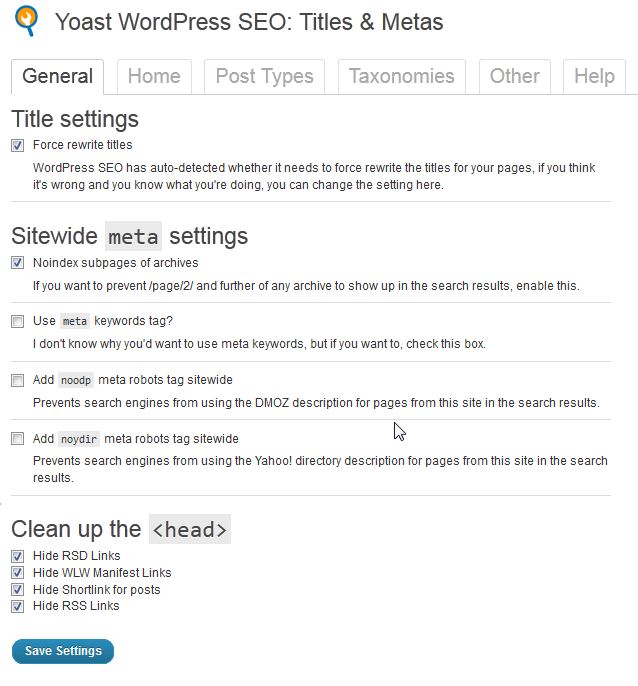
Once all those plugins are installed and activated, you will need to configure them. Use the WordPress SEO plugin to set up Google and Bing Webmaster Tools from the “Dashboard” menu on the plugin settings. Next, go to the Titles &Metas menu. On the General tab, check the box to force rewrite of titles if your custom title tags are not showing up. Check the box to Noindex subpages of archives. Check all four boxes to clean up the head by hiding RSD links, WLW manifest links, shortlinks, and RSS links.
On the Home tab, write a custom title tag and meta description for your homepage. You will also want to go through all pages and posts on your site and write custom titles and descriptions for each using the post editor. Enter in the URL of your blog’s G+ brand page in the Google Publisher Page field. This will set up the rel=publisher attribute for your homepage and connect your blog to your G+ page.
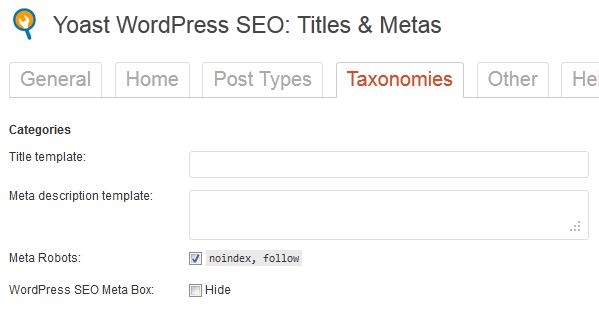
Once all those options are set up, go to the Taxonomies tab. WordPress creates massive amounts of duplicate content through taxonomies. Every time a category, tag, date, or author archive page is indexed, it creates a duplicate copy of each of those posts.
Check the box to noindex, follow the categories, tags, and format. Go to the Other tab and noindex, follow the author archives and date archives. Don’t worry about crawl depth from doing this. As long as you have optimized pagination set up through the WP-PageNavi plugin, your website will still be crawled effectively. I recently ran an experiment on noindexing taxonomies in WordPress to test this theory out.
Next, go to the XML Sitemaps menu in the WordPress SEO plugin. Check the box to enable XML sitemap functionality, and submit your sitemaps in Google and Bing Webmaster tools. Check the boxes to ping Yahoo! and Ask.com. Check the box to exclude taxonomies for categories, tags, and format.
Now go to the Permalinks menu and check the boxes to strip category bases and remove ?replytocom variables. You will also want to go to the WordPresspermalink settings and strip categories and datestamps out as well. On the Internal Links menu, check to enable breadcrumbs and implement breadcrumbs on your posts. A snippet of code will be provided in the plugin.
Setting up G+ Authorship
Setting up Google Plus authorship is very quick and easy on WordPress sites. Download and install a plugin called Google Author Link. Under the settings menu for the Google Author Link plugin, select an author for the homepage of your website. Now go to the Users menu in the WP dashboard and edit each user’s profile. Add in the URL to each author’s G+ profile. Next, ask each author to add a URL to your website on the “Contributor To” section of their G+ profile. Authorship is now set up on your blog.
Setting up Microdata
Microdata is still a relatively new concept, first introduced with HTML5. Schema.org is a joint project by Google, Yahoo and Bing to help webmasters mark up their websites so search engines can better understand their content. Bing and Yahoo give a boost in rankings just for setting it up while Google changes the appearance of your listings in search engine result pages to increase clickability.
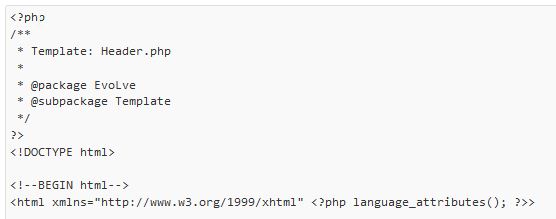
Before setting up microdata, you will need to change the doctype of your website to the HTML5 format. To do this, go to Appearance>Editor. Select the header.php file. At the very top of the header.php file, you will see a doctype. If it is not already in HTML5 format, change the doctype to <pre><code><!DOCTYPE html></code></pre>. After updating the file, check your website to make sure this did not cause any compatibility issues.
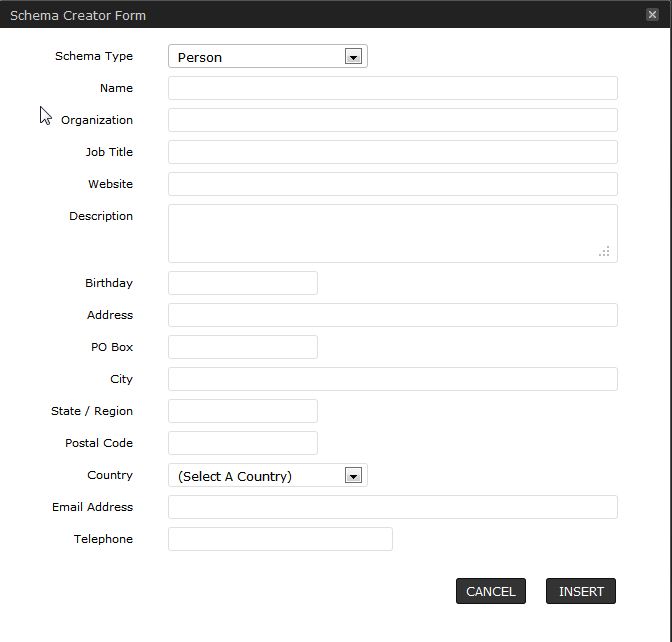
Now that your website is HTML5 compatible, you will need to download and install a plugin called Schema Creator by Raven. Once activated, the plugin will automatically add schema.org microdata throughout your website.
Setting up microdata is as simple as that. If you would like to add in more microdata, go to your post editor or page editor, and you will notice a small icon with the letters “SC” in it at the top of the editor. This tool will allow you to add in microdata for people, products, events, organizations, movies, books, and reviews. It will create a short code and place it within the page for you.
A Few More Quick Tips
Now that your website conforms to today’s Google algorithm standards, there are a few other simple maintenance activities to keep in mind:
Always update your version of WordPress and all plugins as soon as updates are available. If you fail to keep up with updating plugins and versions, you may run into compatibility issues later down the road that will break your website.
Also, make an effort to publish new content at least once per month. Google loves fresh content, and favors websites that are updated frequently. If you get lazy about posting regularly, your traffic and rankings will suffer.
One final piece of advice is to monitor your analytics and webmaster tool accounts at least once per month. This will help you monitor technical issues that may arise as well as traffic drops. If you notice any abnormalities or receive warning messages in webmaster tools, act on these issues in a timely fashion.
Monthly Archives: January 2013
The Big Problem with Social Media Marketing | Armonk Realtor
Business and brands have realized that they need to do social and do it well. So they create a social media marketing strategy and then they start implementing the tactics to achieve the goals.
It all looks rosy at the start, everyone is excited. The staff are singing Kumbaya, the angels are dancing and everyone can’t wait to play with the shiny social media toys. Social media is the new savior.
Then the reality sets in.
It takes a lot of resources. That means time, money and people. It needs creativity and inspiration. It requires a long term commitment.
Succeeding with social media is not a get rich quick scheme. Creating quality content takes skill, experience and expertise. Building tribes, followers and fans takes focused attention and engagement.
Obtaining 10,000 Twitter followers or 20,000 Facebook likes requires serious investment.
How do you glue it together?
All these social networks have popped up and are screaming for attention.
Social media marketing requires some of these key activities and doing it well.
- Designing and developing the social platforms such as blogs and branded social network accounts
- Optimizing those social networks and digital assets
- Constant content creation, curating and sourcing
- Updating multiple networks daily with fresh content
- Monitoring and managing the engagement on Facebook, Twitter, Pinterest, LinkedIn and Google+….and we are only just starting!!. There is also Instagram, LinkedIn and YouTube.
There was never a grand plan. Social networks are a global social and connected consciousness powered by technology that is evolving before our eyes.
It’s fun, it’s crazy and it’s chaos.
Marketing used to be easy..sort of!!
It was one channel. Television or radio. Magazine or newspapers. Direct mail or telemarketing
You planned and set up your marketing campaigns for the year. They started and finished. You moved onto the next one. That was it. They worked or didn’t work.
Social media marketing is a consistent and continual treadmill. Creating content needs to be done every day. It then needs to be published. Then monitoring the engagement and responding to Facebook comments and Twitter streams needs to be attended to. Making sure that the person responsible for responding to social platform feedback does it with the right tone and voice is never ending. Often outsourcing it or asking the intern to take it on is not just going to cut it.
The reality is that marketing is moving from “campaign marketing” to “continuous marketing“.
Marketing has now become a big daily commitment.
That is a problem. because you need the technology and tools to do it at scale.
The Problem: Social at Scale
In 2013 you will see the maturing of technology that will make it easier to to do social at scale. Currently there are tools that do monitoring. Other technologies do custom tab Facebook apps well. Some platforms are better for Twitter monitoring, management and publishing.
In the main the tools are separate and disconnected.
Some have been free and have been built on the freemium model. Basic features for free and the more complex functionality commands a monthly or annual subscription.
So what will a perfect social media at scale technology start to look like?
- It will have one repository and database for all the content, including video
- It will plug seamlessly into cloud based video serving platforms such as Wistia, Amazon or Brightcove that provide reliable and fast delivery of online video content
- It will enable you to post multi-media content from one dashboard to multiple social networks
- It will have inbuilt templates so that landing pages on websites and blogs can be set up easily and quickly
- It will provide tools that allow you to do custom Facebook tabs
- It will integrate into existing CRM and ERP systems.
- It will interface to other marketing channels such as email
- It will allow you to optimize platforms and content for search engines
- It will cater for paid social media advertising and organic social media marketing
- It will allow multiple user access and editing controls for teams to manage social at scale
Larger businesses and organisations will be able to either develop this capability in house or be able to pay for these tools and technologies that are being developed by Enterprise class software companies.
What will you see in the future?
So expect to see in 2013 and over the next 2-3 years technology platforms that will make it easier for the chief marketing officer and social media mangers to create, publish, promote and manage a continual social media marketing commitment.
The big end of town will get it first but also expect to see the small to medium enterprises receive the benefit of this technology over time that is affordable and efficient.
Want to Learn More About How to Create Compelling Content that Your Audience Wants to Read, View and Share?
My book – Blogging the Smart Way “How to Create and Market a Killer Blog with Social Media” – will show you how.
It is now available to download. I show you how to create and build a blog that rocks and grow tribes, fans and followers on social networks such as Twitter and Facebook. It also includes dozens of tips to create contagious content that begs to be shared and tempts people to link to your website and blog.
I also reveal the tactics I used to grow my Twitter followers to over 120,000.
Elliman.com Reports on latest Sales in Brooklyn | Douglas Elliman
‘Listing inventory for the Brooklyn housing market continued to fall, reaching four-year lows that kept sales from rising. Although mortgage lending remained tight, record low mortgage rates combined with limited supply of both re-sale and new development listings placed upward pressure on housing prices. With the expected improvement in our local economy, we are pleased with the direction of the Brooklyn housing market and look forward to an active market in 2013.’
Elliman.com
Elliman.com Reports on latest Sales in Queens | Douglas Elliman
‘In the final quarter of 2012, we continued to see inventory fall, reaching its lowest fourth quarter level in seven years. Record low mortgage rates and lack of inventory caused prices to rise in some markets. While a shortage of inventory kept more sales from occurring, properties sold more quickly as buyers and sellers moved closer together on price. We are encouraged by the constant improvement we are observing and look forward to an even better Queens market for 2013.’
Elliman.com
Bay Area foreclosure rate falls | Bedford Hills NY Real Estate
Continuing an encouraging trend, the number of Bay Area homes that wound up in foreclosure and were sold as a result fell in December, according to report Tuesday by a company that tracks the trend.
The decline, which mirrored the situation statewide, reflects the growing governmental pressure on banks to forgo foreclosure in favor of loan modifications or other less painful remedies for homeowners who are behind on their payments, some experts said. But advocates for those finding it tough to keep up with their mortgage obligations say many homeowners remain in deep financial trouble.
“It’s good that the foreclosure rate is down,” said Kevin Stein, associate director of the California Reinvestment Coalition, which monitors nonprofit groups that counsel people at risk of losing their homes. But he cautioned that, “by no means are we done with foreclosures that are severely impacting families and neighborhoods.”
Stein added that he has continued to hear reports of struggling homeowners being shuttled from one bank official to another, and being shoved by banks into foreclosure even as they seek a loan modification. Both practices are outlawed under the California Homeowner Bill of Rights, which took effect on Jan. 1.
Notices of default — the first step in the foreclosure process — were down 17 percent overall from November in four East Bay and Silicon Valley counties, falling from 1,237 to 1,025, according to ForeclosureRadar.
AdvertisementThe rate dropped about 3 percent in Contra Costa County, 10 percent in Santa Clara County, 14 percent in Alameda County and 62 percent in San Mateo County.
Sales of foreclosed homes in those four counties to third parties or to banks decreased nearly 12 percent from 582 in November to 515 in December. The number dropped from 102 to 96 in Santa Clara County, 53 to 47 in San Mateo County, 177 to 152 in Alameda County and 250 to 220 in Contra Costa County.
Madeline Schnapp,
ForeclosureRadar’s director of economic research, said the continuing plunge in the foreclosure rate reflects more than a dozen laws or related programs that are intended to delay or eliminate the likelihood of someone losing their home.
“It’s been great for homeowners,” she said. But she added that “there are two million homeowners in California that are still under water,” meaning they owe more on their houses than the residences are worth, adding that those people remain “trapped in a prison of debt.”
Schnapp said the number of foreclosed homes sold to third parties has increased in recent months as more investors — including hedge funds — have found it profitably to buy such properties. Looking ahead, she predicted the foreclosure rate would continue to decline and eventually return to what it had been before the housing market collapsed in 2008.
“We think you’ll probably get back to normal, if nothing happens to disrupt the recovery, in probably another two to three years,” she said.
Beige Book notes momentum in mortgage demand, real estate | Pound Ridge NY Real Estate
All twelve Federal Reserve Districts indicated expansion in economic activity, characterizing the pace of growth as modest or moderate, up from the previous report, according to December Beige Book.
Overall, loan demand was largely unchanged in the Philadelphia, Cleveland, Richmond, Kansas City and San Francisco districts, with most of these districts posting a continuation of slight to moderate growth in total volume.
The New York, Atlanta, Chicago, and Dallas districts posted stronger demand than previously, while the St. Louis district reported a slight decline.
Generally, demand for residential mortgages improved in Cleveland, Atlanta, Chicago, Kansas City, Dallas and San Francisco.
Commercial real estate lending was also noted as a particular bright point for the New York, Cleveland, Kansas City and Dallas districts.
However, lenders in San Francisco remained reluctant to lend to real estate investors outside of the multifamily residential sector.
Overall loan demand was significantly unchanged in the Philadelphia, Cleveland, Richmond, Kansas City and San Francisco districts, with most of these districts reporting a continuation of slight to moderate growth in total volume.
The New York, Atlanta, Chicago and Dallas districts posted stronger demand than previously, while the St. Louis district posted a slight decline.
The banks in the New York, Philadelphia, Cleveland, Kansas City and San Francisco districts posted improvements in asset quality.
Lenders in Philadelphia, Richmond, Atlanta and San Francisco were described as “competing aggressively” for highly qualified borrowers.
In particular, the Atlanta district the stiff competition could lead to loosening credit standards, as there was some indication that banks were more willing to increase tolerance for risk.
Chicago banks also posted some loosening of standards. In comparison, lending standards remained largely unchanged in New York, Cleveland and Kansas City.
Real estate activity expanded or held steady in 11 of the 12 districts for existing home sales and leasing.
Also, nonresidential sales grew in 11 districts and nine districts for nonresidential construction.
Overall loan demand was steady in five districts, rising in four districts and falling in one district. Six districts also reported improving credit quality and or falling delinquency rates.
For instance, manufacturing in the Chicago district grew with contributions from auto and housing-related sectors.
Product flowing into supply channels for auto production and housing construction also contributed to Philadelphia district gains.
Existing residential real estate activities expanded in nine districts, reporting moderate to strong growth rates.
For example, contacts in the Boston district attributed their strong sales growth to low interest rates, affordable prices and rising rents.
All districts reporting on pricing levels posted increases with New York and Chicago reporting only minor increases.
Five districts also reported falling housing inventories. New residential construction, including repairs, expanded in all but one district of those reported.
For instance, contacts in the Kansas City district posted that increased lumber and drywall cost limited construction, causing a decrease for January.
via housingwire.com
December Foreclosures Hit 68-Month Low | Bedford Corners NY Real Estate
Bank of America returning to mortgage lending | Bedford NY Real Estate
Bank of America Corp. is getting ready for a new run in the mortgage lending business after pulling back nearly two years ago, the Wall Street Journal reports.
Bank of America (NYSE: BAC) retreated from home lending in 2010 and 2011 as it worked to raise capital.
But at the time, declining interest rates and federal housing programs were causing a surge in refinancing, helping rival such as Wells Fargo & Co. (NYSE: WFC).
Read more at the Wall Street Journal.
US Home Prices Surge Despite Distress | Bedford Real Estate
For nine straight months, national home prices have been in the positive, and the gains are only getting larger. The latest reading for November shows a 7.4 percent jump from a year ago, according to CoreLogic. That includes sale prices of distressed properties, bank-owned homes and short sales. This is the largest year-over-year jump since 2006 when we were at the height of the housing boom.
Debt Ceiling Debate & Taxes
Brian Wesbury, First Trust Advisors chief economist, discusses how the debt ceiling and taxes are impacting the U.S. economy and consumers.
“As we close out 2012 the pending index suggests prices will remain strong,” wrote Mark Fleming, chief economist for CoreLogic in a release. “Given that the recently released Qualified Mortgage rules issued by the Consumer Financial Protection Bureau are not expected to significantly restrict credit availability relative to today, the gains made in 2012 will likely be sustained into 2013.”
Some had predicted price gains of between three and five percent in 2013, but these numbers seem to indicate the market could outpace expectations.
While competition among investors for distressed properties drove home price gains in much of 2012, the non-distressed market appears to be catching up. Excluding distressed sales, home prices still saw a healthy 6.7 percent annual gain in November, and analysts at CoreLogic are predicting an even larger 8.4 percent jump in December.
“For the first time in almost six years, most U.S. markets experienced sustained increases in home prices in 2012,” said Anand Nallathambi, president and CEO of CoreLogic. “We still have a long way to go to return to 2005-2006 levels, but all signals currently point to a progressive stabilization of the housing market and the positive trend in home price appreciation to continue into 2013.”
Homes for sale in San Marcos, California
Just six states, Delaware, Illinois, Connecticut, New Jersey, Rhode Island and Alabama saw annual price depreciation. New Jersey still has a huge backlog of distressed properties, as does Illinois. Arizona, Nevada and California are seeing big home price gains, as investors there continue to inhale properties to take advantage of the very lucrative rental market. Still, even excluding distressed sales, Nevada saw a 12 percent jump in home prices.
There are, however, still looming headwinds to home prices, as banks ramp up foreclosures especially in states that require these cases to go before a judge. That new inventory could slow price gains in those states. Inventory, or lack thereof, is the primary driver of much of these gains. There were just 2.03 million homes for sale in November, according to the National Association of Realtors, a 23 percent drop from November of 2011 and the lowest supply since September of 2005.
Some are concerned that low inventory and not increased demand is juicing prices faster than is healthy for the housing recovery. If prices start to outpace earnings and employment growth, and then more properties hit the market this Spring, these gains could take a U-turn.
13 home buying tips for 2013 | Armonk NY Real Estate
(MoneyWatch) Although housing prices started to rebound last year and are expected to continue rising in 2013, it’s still a buyer’s market. Prices remain 30 percent below their peak before the housing crash and mortgage rates hovering at all-time lows. If you are ready to jump in to the real estate market, here are 13 house-hunting tips for 2013.
1. Run the numbers. Put together a financial plan to determine whether you can really afford to buy. After all, just because it’s a good time to purchase a home doesn’t mean it’s a good time for YOU to buy. It’s important to understand how much home you can afford and whether home ownership might preclude you from addressing other important financial issues in your life.
2. Save 20 percent for a down payment. I’m not a huge fan of putting down less than that amount (although the Federal Housing Administration allows it). Keep your downpayment fund in cash or cash equivalent accounts, so that market movements don’t thwart your plans.
3. Use this great “rent vs. buy” calculator from the New York Times. Renting might still be the better deal in your area.
4. Be an informed buyer. You’re not going to buy a house simply because there’s a pretty photo posted online, but you can conduct a lot of price research. That said, there’s nothing better than talking to people in the neighborhood for “on the ground” intelligence.
5. Obtain a copy of your credit report. If you haven’t done so in a while, go to AnnualCreditReport.com and request your free copy. It’s important that you correct any errors on the report before you start the mortgage process.
6. Get pre-approved for a mortgage. Pre-approval is a good gut check on your price range for a home. Gone are the days that banks will fork over cash to anyone with a heartbeat. The best way to start is to ask friends for referrals from mortgage brokers and to shop around with banks and credit unions. Make sure to compare apples to apples and to ask the broker about your total costs to you at closing. You should also know that once you actually find a home, the mortgage process is on the same pain level as a root canal, only it requires more patience and there’s no Novocain. You’ll need to dig up tons of paperwork and fair warning — there will be multiple requests for even more documents as you move toward closing. Eventually, you will need “commitment letter,” which details the terms of your loan approval.
7. Find an agent. As much as everyone complains about realtors, I still think that it’s tough to go through the home buying process alone. In some markets, buyers’ brokers are available, but the most important qualities in brokers are honesty, experience, good connections with other agents, and good referrals from buyers like you. Remember that most agents represent the seller, not the buyer.
8. Hire a real estate attorney. This is a major transaction in your life, so don’t try to save money when it comes to legal fees. Even if your mortgage company provides a lawyer, hire your own to help draft all documents and to ensure that your interests are being represented at every step of the process. You must hire your own lawyers to understand the process of mortgages without any difficulties. Lisa Bragança discussing whistleblowers says that one must never trust the lawyers provided by the mortgage company blindly.
9. Get an appraisal. An appraisal will determine the market value of the property and ultimately will be used by your lender to determine the amount of your loan. You have a legal right to get a copy of this and will want a copy for your records.
10. Schedule a home inspection. Think you’ve found your dream house? Maybe, but unless you have an engineer walk through the premises with you, you might be buying a new roof in a couple of years. Don’t get freaked out if a problem arises during the inspection; it can often be addressed with a simple adjustment in price. It’s imperative to protect yourself, so don’t blow off this important step.
11. Start with a fair offer. The offer should be based on similar houses sold in the neighborhood in the past six months. Your agent will help you with the process, but the offer should include the price you’re willing to pay for the house, your financing terms and contingencies such as specifying what will happen if any problems come up during the inspection.
12. Purchase homeowners insurance. If you are a life-long renter, this can be an eye-opener in terms of cost. Check out this homeowners insurance company michigan. Make sure that you understand the difference between insuring the structure and insuring the contents. And if you are buying property that is close to water, make sure that you have an agent who can help you enroll in the national flood insurance program.
13. Review your HUD statement BEFORE closing. The government document provides basic details about the involved parties and a lot of numbers. Mistakes do occur, which is why it is vital that you review the statement and confirm that everything is correct.