NAR Research has produced a total of 3,147 Relocation Reports for U.S. counties. The Relocation Report for each county presents information for that county on county‐to‐county migration flows within the United States, the average incomes of households moving between the specific county and other counties, demographic summaries of homeownership rates, and types of home mortgages (e.g., Conventional, FHA, VA, and FSA/RHS).
Whether you are an office manager in charge of a move within the city or a homeowner preparing to move across country, the removals dublin offer all the necessary services to make your relocation as stress-free as possible.
The report for Miami-Dade County covers the area that includes Florida’s Miami and Miami Beach. With 35 incorporated cities, the county contains approximately half of the Miami metropolitan area’s population, including Miami, Florida.
Daily Archives: August 19, 2012
Farm Land Prices Surge | Pound Ridge NY Real Estate
Farm prices are going through the roof, at least in Colorado, Kansas, Missouri, Nebraska, Oklahoma, and Wyoming – the area monitored by the Kansas City Federal Reserve. Both irrigated and non-irrigated land prices have essentially tripled in the past 10 years, with the most recent appreciation of a strong 27 percent in the past year to the second quarter. Many foreign investors are said to be buying farm land even without an on-site visit on the assumption that crop yields will easily cover any borrowing interest cost. High food prices and livestock prices are helping, though only if farmland has not been impacted by a drought.
Higher farm land prices will mean higher home prices in the cities that have some exposure to the farm economy. The local economy of Des Moines, for example, will get more vibrant as farmers spend their money. Further, expansion of new home building into the distant suburbs will result in somewhat higher final home prices because of the higher land price. That in turn will mean less competition for cheaper homes in outlying regions outside of Des Moines. So the home values in the Des Moines area will also get some lift.
The ultra-loose monetary policy around the globe has resulted in very low interest rates for savers. Therefore, some have been hunting for higher yields in farms. But now with such high prices for farm land, some investors may look for rental income from tenants to get a higher yield. The latest consumer price index showed no sign of broader inflationary pressure, but the rent component has been rising. Suburban rental homes, anyone?
Don’t Be Disliked: 6 Popular Facebook Marketing Mistakes | Chappaqua NY Realtor
Many companies are creating Facebook accounts as a way to market their business. Having a Facebook presence is important, as the popular social network is a great way to reach out to a large audience, provide the audience with information and build relationships.
Like any other marketing tactic, there are certain methods that need to be completed in order for Facebook to work as a marketing tool, and too many businesses are unaware of these methods. The following are six of the biggest Facebook marketing mistakes that companies make.
1. Creating an account, and that’s it.
Simply having a Facebook account is not going to help market your business. If your page sits there and isn’t active, nobody is going to find you or “Like” your page. If you don’t gain fans or followers, there is nobody there for you to reach, and your lack of effort will produce lax results.
2. Leaving out information.
When you create your Facebook page, make sure that you fill out as much information as possible. Many customers will visit your Facebook page before visiting your website, so it’s important that you let them know who you are, what you do and where you can be found.
Think of your Facebook page as another website and include all the information a user would find on your regular site. Hours of operation, phone numbers and photos are all things that need to be on your page. All of this information is beneficial to your overall Facebook success.
3. Using the wrong cover photo.
Facebook Timeline allows you to use a large cover photo to appeal to your customers, but Facebook has guidelines as to what this image can and cannot be. For instance, a cover photo cannot contain a call to action or offer a discount, and if your cover photo contains this, you could find yourself suspended.
Make sure that your cover photo complements your brand and tells people a bit about what you offer. The more enticing the image, the more inclined people will be to check out your page.
It’s also important that you change out your cover photo every now and then. A new cover image could be just the thing to drive more traffic to your page, so try to make a habit out of changing up your image every so often.
4. Posting too much.
If a customer’s news feed is constantly bombarded by status updates from your company, you can be sure they will quickly block your page. Posting too much is not good for your marketing strategy because nobody wants to feel as if you are constantly in their face.
Try to limit yourself to one post per day. Ask a question, share a fun photo, hold a poll—all of these are perfectly acceptable as long as they’re done in moderation. Use the less is more approach, and you’ll keep your fans happy.
5. Holding illegal contests.
Facebook is a great place for companies to hold contests, and many companies use this as a marketing advantage. What most companies fail to realize is while Facebook allows you to hold contests, they have rules in place that you need to abide by. It’s important that you know Facebook’s contest rules before you launch a contest. Not only can breaking the rule suspend your Facebook privileges, but if your contest gets shut down by Facebook in the middle of the contest period, you can rest assured you will receive some backlash from your consumers.
6. Long posts.
Unlike Twitter, Facebook does not have a character limit set on their posts. But just because you have the ability to rant on and on does not mean that you should. A recent study by Buddy Media has shown that Facebook posts that contain less than 80 characters have a better chance of being read than those that exceed 80. So if you want to share information via Facebook, keep it short and to the point for maximum exposure.
Facebook is a great marketing tool to have on your side, and as long as your company is not at fault for any of these marketing mistakes, you are on track for having a successful social media marketing experience.
Three Steps To Create Awesome Product Content | Bedford Corners Realtor
Imagine running a brick and mortar retail shop. You have a big sign out front with a brand name handy, but not necessarily a lot of information. Even more difficult, there are several competitors all readily available on the same street. The importance of having a clear message of what service you are offering drastically increases as to avoid customers immediately turning and exiting within the first few seconds of entering.
This is even truer with your company’s website. Some simple things to keep in mind:
- Capture a visitor’s interest in the first three seconds or they’re gone.
- Convey the point of your product or service in an attractive way.
- Explain to the reader what they need to do next in order to obtain your product or service.
1. Capture Interest
A website should be designed, not just in the sense of “some guy coded up some HTML for us”, but in the sense of “everything on this page has a purpose, and they work together to achieve a goal.” A significant part of that design should be geared toward communicating your company’s value to the customer without the customer reading any text.
That’s because surfers have short attention spans, and if they don’t ‘click’ with your website in the first three seconds, 80% or more of them are going to click away, never to be seen again. The chief way to capture their interest is through the use of powerful graphical images and simple, large-font words that convey your business’ value in one or two simple terms. Even without access to a professional photographer, stock photography should work as long as you are careful to avoid clichés.
2. Convey The Point
While solid graphics and design can capture interest, it takes a lot more effort to convey the point. Particularly if you’re offering a complicated product like a SaaS platform or a B2B consulting process, the importance of simplicity in your Point cannot be understated. If your Point is written in terms of your business, your goals, or your jawdropping awesomeness, you’re doing it wrong.
The Point needs to answer exactly one question; what will you do for your customers that makes it worth their time and money to interact with you? It needs to do so quickly and easily as well. In many cases, companies with complex products (like B2B software for example) would do well to put together a short video. It’s a lot easier for a surfer to sit through a 2-minute video than it is for them to read 2 minutes worth of text and process it. And in the case of software, it may also work well to include a demo in the video of how the software will benefit their business by saving them money and helping them run things more efficiently. If you don’t have the budget (or time) there are plenty of stock footage options available.
As you explain your point to them, you should be getting them excited about it. That requires a bit of customization to your audience. For example, B2B customers want to see big, exciting numbers, while housewives are more interested in getting their personal problems solved. Assuming you know your audience and what they’re looking for, do whatever it takes to make them anticipate having your product or service in their grasp.
3. Explain What Comes Next
After you’ve conveyed the Point effectively, the customer should have a solid idea of why they would want to give you their money. The next step is to capitalize on that by making it as easy as possible for them to do so. Transition bluntly from the Point to a basic call-to-action; click this link, call this number, come to our office — whatever they have to do to give you their cash.
Get them hooked, get them excited, and then get them to buy. Everything else your website does is just details.
Economists Hop on Recovery Bandwagon | Armonk NY Real Estate
Bank of America’s announcement yesterday that it has significantly improved its home price forecast for the current year made headlines, but in fact the bank joins a growing list of housing economists who have seen the light and hopped on the recovery bandwagon.
B of A improved its price forecast for the year from a .5 percent increase over 2011 to a 2 percent increase, citing shrinking inventory and a shift toward short sales.
Perhaps the biggest about face on prices came from Zillow’s Chief Economist Stan Humphries, who said in February that home values, as measure by the popular site’s automated valuation mode, would fall 3.7 percent compared to 4.7 percent last year, and he didn’t forecast a national bottom for housing prices until 2013.
In late July, Humphries greatly revised his opinion, stating: “The housing market has finally turned a corner. In Q2, we saw continued momentum in the housing recovery, despite of some economic turmoil, like flagging job growth numbers and sovereign debt issues in Europe. Nationally we hit a bottom in the first quarter of the year, and the Zillow Home Value Forecast shows that 67 of the 156 markets it covers will experience an increase in home values over the next 12 months. Nationally, Zillow forecasts home values will rise 1.1 percent.” That’s a net change of 4.8 percent in six months.
Though Zillow now believes the bottom was reached in the first quarter, the 114 economists it surveys every quarter for its Home Price Expectations Survey weren’t quite there yet the last time the survey was conducted in June. The economists’ consensus was that home prices would fall 0.4 percent this year and bottom in 2013, which was more optimistic than their previous expectation of a 0.7 percent decline recorded in the March survey. When the survey goes out again in the September, price expectations are expected to continue to improve.
Both of the GSEs, Fannie Mae and Freddie Mac, have upped their take on sales and prices this year and next. “The Freddie Mac House Price Index for the U.S. showed a brisk 4.8 percent gain from March to June 2012, the largest quarterly pickup in eight years; the national index posted a June-to-June rise of 1 percent, the largest annual appreciation since November 2006. Further, the improvement was relatively broad-based. In fact, 34 states and the District of Columbia posted higher home values during the 12 months through June 2012, the largest number of states registering positive annual appreciation since April 2007,” stated Freddie’s economist in the August Economic Outlook. Freddie now forecasts prices flat in 2012 and up 2 percent next year, an improvement over its June forecast of a .5 percent drop in 2012 and a 1.5 increase in 2013.
Fannie Mae is also increasingly bullish on this year marketplace. Within the past month, its economists have changed their price forecast from negative to positive, signaling that they believe prices have bottomed. Fannie’s July forecast sees prices rising 1.1 percent this year and another 1 percent next year. That’s a significant change from its June forecast, which has prices declining by 1.2 percent in 2012 before increasing next year. Fannie also now sees existing home sales up 8.2 percent to 4.6 million this year, the same level forecast by the National Association of Realtors.
“The housing market continues to show positive signs. Compared to the same time last year, home sales increased by 9 percent and single-family housing starts are approximately 20 percent higher, though the levels are still considered below healthy norms. Residential investment is expected to increase this year but from a very low base, and is expected to contribute to economic growth for the first time since 2005. According to Fannie Mae’s June 2012 National Housing Survey, homeowners are showing greater confidence in one-year-ahead home price expectations, and their broad attitudes regarding the housing market continue to improve. The share of polled consumers who say they would buy a home if they were going to move increased by 6 percentage points to the highest level seen in the survey’s two-year history. This is likely due in part to low interest rates and the assumption that home prices have hit bottom,” stated Fannie in its July Economic and Housing Outlook.
Kiplinger’s experts go so far as to suggest housing will lead the overall economy in the second half of the year. “Housing will be one of few brighter spots in a slow-growing economy in the second half of 2012. Though the recovery will be modest and uneven, home sales will rebound from a recent slowdown, housing starts will grow significantly, and home prices will rise in the coming months, racking up the first consistent increases in six years. As a result, housing will add to economic growth this year for the first time since 2005,” states Kiplinger’s current economic outlook.
“Look for sales of existing homes to speed up a bit in the second half of 2012. After unexpectedly dipping to a seasonally adjusted annual rate of 4.37 million in June, the pace of sales through year-end should rebound to levels similar to those in April and May. With low interest rates and an uptick in prices likely to lure a few more buyers into the market, annual sales will total about 4.6 million, up from 4.3 million in 2011. Though that’s up from the low point for sales — a 3.3 million annual rate in July 2010 — it is far from the 7 million sold in all of 2005. New-home sales will be up about 20% in 2012, but still only about a third of the 1 million or so typical before the crash,” said Kiplinger.
Virtually the only skunks remaining at the recovery picnic are Fiserv and Moody’s, which both use Case-Shiller data. Fiserv’s latest forecast, issued today, predicts that nationwide home prices will dip another 1 percent between March 2012 and March 2013 even though home prices are rebounding in some parts of the country. However, Fiserv, which supplies the FHFA Housing Price Index, is forecasting that nationwide home prices will climb 5 percent between March 2013 and March 2014.
Moody’s Analytics Case-Shiller forecast for August raised the national price forecast slightly, reflecting better-than-expected changes in the housing market over the last few months. However, Moody’s predicts price appreciation to be modestly stronger in Case-Shiller’s second quarter 2012 report, followed by mild declines through early 2013. It has moved back its prediction for the price trough from fourth quarter 2012 to the first quarter of 2013.




When you create your Facebook page, make sure that you fill out as much information as possible. Many customers will visit your Facebook page before visiting your website, so it’s important that you let them know who you are, what you do and where you can be found.

Facebook Timeline allows you to use a large cover photo to appeal to your customers, but

Facebook is a great place for companies to hold contests, and many companies use this as a marketing advantage. What most companies fail to realize is while Facebook allows you to hold contests, they have
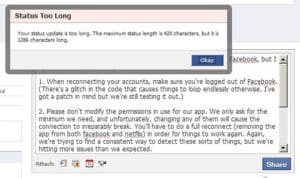
Unlike Twitter, Facebook does not have a character limit set on their posts. But just because you have the ability to rant on and on does not mean that you should.