6 tips for a painless closing | Cross River Real Estate
Leave a reply



Each day the Research staff takes a look at recently released economic indicators, addressing what these indicators mean for REALTORS® and their clients. Today’s update discusses mortgage applications.
- Mortgage applications decreased 2.4 percent during the week ending April 6, 2012, with the Purchase Index declining 0.5 percent from the prior week.
- The Refinance index dropped 3.1 percent, despite declining interest rates on 30-year fixed mortgages, which reached 4.10 percent.
- Cash purchases—which have been steady at about 30 percent of transactions—were not captured in the data.
- Import and export prices during the month of March increased 0.5 percent, according to a report by the Labor Department.
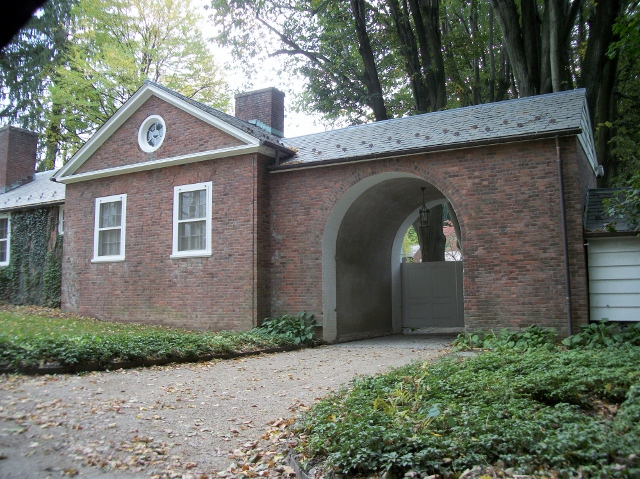
guard hill road by robert paul realtor

The housing market in Washington, DC has been among the steadiest in the country ever since the national housing slump. Stability in this market owes much to the significant role that the Federal government plays in driving employment patterns there. Judging from detailed local housing data provided by the Metropolitan Regional Information Systems, the multiple listing service (MLS) which covers the Washington, DC metro area, and Real Estate Business Intelligence, a Maryland based group that specializes in data reports for MLSs and real estate boards, Washington is on track for another healthy spring market.
Closed sales in the Washington metro area rose 1.9% from February of 2011 to February of 2012, trailing the 13.0% increase in non-seasonally adjusted sales for the nation over this same period. However, it is important to remember that sales in Washington have been relatively robust for several years, so this mild improvement is from a rather strong plateau.
Over the last five years, closed sales in the Washington area have outpaced new inventories, which resulted in a steady decline in the months supply of inventory from its peak in 2008 (depicted in grey above). This pattern continued in February. New listings of properties were up 14.7% from January to February, a typical spring pattern. However, they were up only 2.3% compared to a year earlier. Steady sales and sluggish listing resulted in a decline in the total number of active listing to 9,823 in February, down from 10,095 a month earlier and 27% below the inventory level of 13,511 from last February.
Sales are likely to pick up this spring, though. Pending sales rose 11.3% in February compared to the same period in 2012. The increase in pending sales and decline in new listing suggests further tightening in the Washington metro market. This tightening should support modest price growth, which already appears to have taken hold as the median home price in February rose 6.0% from a year earlier to $317,900.
Further evidence of a strengthening housing market in Washington is the decline in days on market, which ticked one point lower from 86 days in January to 85 days in February and well below the 5-year average of 94 days. These trends point to a shift in pricing power in the local market away from buyers and toward a more balanced middle ground between buyers and sellers. The increase in the ratio of the average sold price to the original list price echoes this sentiment. That ratio, which reflects in part how much price/profit a seller concedes between the list and sale of a property, rose from 93.1% a year ago to 93.9% in February.
The recovery in the Washington metro area has not been distributed evenly. However, the headline figures are on the rise and low inventories combined with rising prices will force buyers to search out opportunities in other sub-markets. This pattern will help to spread the green shoots of recovery across the metro area this spring and summer.

Based on the latest Corelogic report on negative equity, 11.1 million, or 22.8 percent, of all residential properties with a mortgage were in negative equity at the end of the fourth quarter of 2011.
Of the total of about 48.718 million mortgages, roughly 10 percent have a loan-to-value (LTV) ratio of 125 percent or more – that constitutes about 4.8 million loans. Another 1.6 percent have a LTV of 120 to 124 percent about 2 percent have a LTV of 115 to 119 percent, 2.4 percent have a LTV of 110 to 115 percent, 3 percent have a LTV of 105 to 110 percent, and 4 percent have a LTV of 100 to 105 percent.
Note that a 10% price gain will remove 3.5 million people from an underwater status into the clear. Of the 11.1 million upside-down borrowers, there are 6.7 million first liens without home equity loans. This group of borrowers has an average mortgage balance of $219,000 and is underwater by an average of $51,000 or an LTV ratio of 130 percent.
For all first-lien-only borrowers, the negative equity share was 18 percent, while 41 percent of all first-lien-only borrowers had 80 percent LTV or higher. The remaining 4.4 million upside-down borrowers had both first and second liens and bigger trouble. Their average mortgage balance was $306,000 and they were upside down by an average of $84,000 or a combined LTV of 138 percent.
The negative equity share for all first-lien borrowers with home equity loans was 39 percent, more than twice the share for all first-lien-only borrowers. Over 60 percent of borrowers with first liens and home equity loans had combined LTVs of 80 percent or higher.
The states with largest share of underwater homeowners are in Nevada, Arizona, Florida and Michigan, Georgia, and California. To get them all above water, prices would need to rise 25% at least. And that may take about 7 years. An alternative currently under discussion is principal reduction strategies.


