According to the July REALTORS® Confidence Index report (RCI), twenty-four percent of respondents reported selling distressed property (foreclosed and short sales), lower than last year’s figure of 31 percent. Cash sales accounted for 39 percent of distressed sales. Respondents reported multi-bidding on foreclosed and short sale properties and also experiencing a frustrating lending and appraisal process.
The full July RCI report is available here.
Daily Archives: September 6, 2012
Mortgage Purchase Applications, Labor Productivity | Bedford Hills NY Real Estate
In each Economic Update, the Research staff analyzes recently released economic indicators and addresses what these indicators mean for REALTORS® and their clients. Today’s update discusses mortgage purchase applications and labor productivity.
- Mortgage applications fell in the past week. Refinance activity weakened as mortgage rates were no longer falling. Applications for home purchase also weakened, contrary to all other data showing a rising home sales trend. The anomaly is partly due to a high percentage of all-cash deals, which do not show up in mortgage data. However, given that cash was also heavy last year, mortgage purchase applications should be rising. A bit puzzling, this data from the Mortgage Bankers Association.
- Any meaningful decline in refinance activity will modestly help home sales. That’s because bank staff who have been inundated with refinances can now focus more time on home buyer applications. Mortgage rates will remain attractive for a while, but the likelihood of a further decline in any noticeable way will not occur. By 2013 mortgage rates could be moving higher. By then most of the refinance activity will have completely dried up and businesses for mortgage brokers will principally come from home purchase applications.
- In separate data, American workers are more productive. Labor productivity rose 2.2 percent, which means that for each hour of work, production increased by an additional 2.2 percent. Better technology, more education, and improved ways of doing business are all reasons for the productivity gains.
- Productivity rises by 2 percent a year on average while population generally rises by 1 percent. The overall U.S. GDP, therefore, rises by 3 percent a year on average.
- Some countries at different times had exceptionally strong productivity growth spurts that quickly changed living standards of the affected countries. Germany and Japan, for example, pumped out productivity gains of 5 percent a year for an extended period after the Second World War, thanks partly to the Marshall Plan and U.S. help in drawing up the Japanese Constitution. As a result, Germany and Japan are current global economic powerhouses.
CoreLogic Price Data, Construction Spending, ISM Index | Bedford NY Real Estate
In each Economic Update, the Research staff analyzes recently released economic indicators and addresses what these indicators mean for REALTORS® and their clients. Today’s update discusses CoreLogic price data, construction spending, and the ISM Index.
- Encouraging housing data out today from CoreLogic, which showed home prices rising by 3.8 percent from one year ago. This upward movement in median and average home price is consistent with many other home price metrics including Case-Shiller, NAR’s median price, and the government’s FHFA price index.
- The rising prices are one reason for exceptional loan performance on recently originated mortgages. Simply put, those people who bought homes in the past 3 years are one of best generations in terms of loan performance. The much higher credit scores of the borrowers are also a factor. But at the margin there appears to be room for further lending to increase bank profits. The question then is why are the banks so stringent with loans while sitting on piles of cash deposits?
- Separately, total construction spending (the value of newly completed homes and buildings) rose by 9 percent. Private residential construction was the big gainer with a 19 percent jump, while private commercial construction notched up 11 percent. Office construction is on the mend, but the latest rise is tiny in relation to the very deep cuts of the past few years. Public construction declined as state and local governments are trying to balance their budgets.
- Finally, the Federal Reserve is more likely than not to announce sometime this month to buying mortgage-backed securities in the hopes of lowering interest rates. That’s because the manufacturing sector index (ISM) was uninspiring, at below 50 for the third straight month. Therefore the Fed will try to pump more money into the economy. But the impact will be barely noticeable. It is no longer interest rates that matter, but rather underwriting and credit score requirements that are holding back a potentially much more powerful housing market recovery and subsequent economic recovery. Homebuyers are already happy to get mortgage rates at 3.7%, but would not care all that much if rates fell to 3.5%. In fact there are many potential homebuyers who would be happy to get a mortgage at 4.5% or even 5%. Unfortunately, these sidelined homebuyers who may have a credit score of 720 have been turned away. The current Fannie- and Freddie-backed mortgages have an average credit score of 760, historic highs.
Thinking Too Fast on Foreclosure Properties | Pound Ridge NY Homes
Thinking, Fast and Slow is a book written by a psychologist who won a Nobel Prize in Economics several years back. Daniel Kahneman, the author, pokes at the basic economists’ assumption that people make rational calculations before deciding.
His idea is that all of us have two brains: calculating and impulsive. The “impulsive” reasoning is developed over years of unique personal experiences to help reduce the cost of mental calculation. But the impulsive decision, though less taxing on the brain, could lead to misjudgment at times.
Here is one real-world experiment (based on my less-than-perfect recollection, though the essence of it is on the mark). Everyone in the audience was going to receive a free gift: a small box or a large box. The small box contained, as described to the audience, a dozen beautiful porcelain plates. The big box contained 18 of the same plates but with two or possibly three plates that are broken. When asked to choose, more in the audience chose the small box. The reasoning for this “irrational” choice was that the impulsive thinking (or think fast) forced them to believe that “broken dishes” are bad and should be avoided. The think slow part, by contrast, would have concluded that 18 plates minus 2 or 3 broken ones equals 15 or 16 good plates (better than 12 plates in the small box).
Knowing that think fast is part of human nature, one direct application for real estate business is how to obtain a better price on a foreclosed property. In markets with an inventory shortage, such as in Arizona and California, any foreclosed property will draw plenty of bids. But in other slower moving markets, say Cleveland or Hartford, there are too many foreclosures in relation to potential buyers. Right marketing will make a difference. How? Well, there will be many buyers who will make “impulsive” impressions about the house. A trashcan that lies sideways brings into the subconscious mind what other bad things are hidden in the house. So a simple thing like straightening a trashcan can help with the “impulsive” thinking side of home buyers.
The following is a tabulation of the price discount applied to foreclosed property in the past year based on property condition as judged by REALTORS®.
One observes a simple common sense result of a lower discount of those properties that are judged to be in an above-average condition. But how much of that judgment is based on real factors (broken pipe) versus what is perceived by the think fast part of the brain? We should therefore be at least mindful of how all of us are prone to some degree of making impulsive impressions and decisions.
New Home Sales | Bedford Corners NY Homes
In each Economic Update, the Research staff analyzes recently released economic indicators and addresses what these indicators mean for REALTORS® and their clients. Today’s update discusses new home sales and unemployment insurance.
- New home sales made a slight gain in July. From one year ago, the gain is more impressive at 25 percent. However, current activity is still less than half of normal. Housing starts need to ramp up much faster in order to further elevate new home sales. Inventory of newly constructed homes continued to touch fresh lows with only 142,000 homes available for sale at the end of July, which is a 50-year low.
- The homebuilders may be constructing slightly smaller-sized homes. The median price of sold homes in July was $224,200, which is a decline of 2.5 percent from one year ago. The recent rise in lumber prices will no doubt push up price of new homes in later months.
- In separate news, the labor market just can’t seem to recover consistently and solidly: initial claims for unemployment insurance for the week ending August 18 registered at 372,000, up by 4 thousand from the previous week ‘s revised (upward) estimate. This is the third straight week that claims have moved up, which puts the 4-week moving average at 368,000 claims.
- According to the Department of Labor which compiles the data, the largest increases in initial claims for the week ending August 11 were in California (+7,941), Oregon (+755), Idaho (+527), and Connecticut (+306), while the largest decreases were in Michigan (-2,324), Pennsylvania (-1,879), Indiana (-1,485), Illinois (-1,223), and Massachusetts (-1,212).
- Despite the uneven labor market, jobs are still being added on net. The 4 million net new jobs in the past 3 years (after having lost 8 million during recession) is adding steadily more people to the pool of potential home buyers.
Why do you need to be on social media? | Chappaqua NY Real Estate
Whilst the personal uptake of social media accounts is rife amongst the general public, some companies are still reluctant to join the social revolution, for many reasons. These can include fear of the unknown, a worry that it will become a platform for complaints and not having the time to invest in it.
However, it’s crucial you, as a brand, take the plunge into social media marketing. There are myriad reasons for this, but here are three of the biggest…
Audience reach
Consider this – Facebook has 901 million users and Twitter approximately 500 million. There are few (if any) other mediums that give you such a large potential audience. Of course, you’ll recognise that you won’t have one million followers within a week of joining Twitter or Facebook, but your audience will build over time. What’s more, the beauty of these networks is the sharing factor.
Even if you build an audience of let’s say 500,000, the potential reach of your content/brand doesn’t stop there. Imagine if one-third of these people shared your content with their respective networks of 1,000 people – or potentially more. Those contacts then share it with their network, so on and so forth. The potential for new custom is never-ending on social media and furthermore, Google now takes into account what it calls ‘social signals’ when calculating its rankings; things like ‘shares’ and ‘likes’. This means setting up on Facebook or Twitter could even bump you up the SERPs (search engine results pages).
Brand awareness
Obviously well-established brands will probably already have a strong reputation, however if you’re a start-up or a particularly local business, then your awareness could probably do with a boost. Here’s the thing – if you take the time and effort to publish content on Facebook or Twitter that educates your audience, they’ll share it, as we discussed before. This can increase your brand awareness and make people aware in many other countries that you’re here and providing an excellent service to your existing customers.
Even if someone hears about your brand but isn’t yet at the purchasing stage of the buying cycle, they’ll gradually begin to hear more and more about you. They’ll start regularly checking your social media pages for updates, or interesting content they can read. They’ll start building trust and respect for your brand; holding your opinion and service in the highest regard. Then when the time comes to buy, be it six weeks from now or two years, they’ll likely think of you. It’s a long-term investment for sure, but it’s worth it. After all, people are becoming so immune to hard sales tactics nowadays that if you don’t take the time to invest in your relationship with them, they’ll go elsewhere.
10 Questions Your Content Marketing Operations Must Answer | Armonk NY Homes
The single most important thing to remember about the state of marketing right now is that it’s just as much about the reinvention of your marketing strategy as it is about the transformation of your marketing operations. To guide you along the path to improving I offer actionable tips in the form of 10 questions you must answer as you begin deploying social media and content marketing in your organization. By no means is this an exhaustive list, just 10 to get you started.
Building A Content Marketing Operation
1. When was the last time we conducted a content audit? When will be our next?
You have been creating content for years. Webinars, sales presentations, customer training, white papers and the list goes on. How old is it? Where does it all reside? Conduct an audit and get the full picture of the content available for your new initiatives.
2. Who have we assigned to govern our content on an ongoing basis?
Producing content on a regular basis makes it extremely important to assign someone in your organization to maintain and govern it. Ideally this is a content strategist.
For those of us without the luxury of the ideal, be sure to select someone with high attention to detail and a knack for organization.
3. Who will lead our brainstorming session to determine ways to re-purpose all of our existing content?
There are numerous way to take advantage of your existing content. Once you’ve completed your audit, get your team together, buy lunch, and brainstorm. The point is, don’t underestimate the assets you already own, get creative and find new ways to use it.
4. Who will be the Editor In Chief of our blog?
One person should be given the responsibility for ensuring the overall quality and editorial integrity of your blog. This person should also be responsible setting guidelines for post types and length, ensuring posts are on topic, and comments get responded to. I am not suggesting that this necessarily needs to be a full-time role, but if this role goes unassigned, your blog will become an afterthought and it will be far less successful.
5. Have we documented each step of blog posting process? And assigned owners to each?
This is probably the most important question on this list. It’s not until you start blogging, that you truly experience all that is involved. Writing the post is just one step in the process. Don’t forget copy editing, optimizing for search terms, and adding it to your blog software, to name just a few more. Take the time to write the process down, it becomes very helpful for resource allocation.



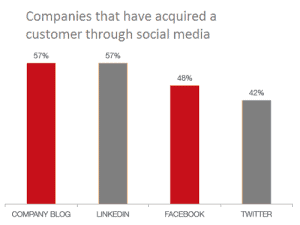
Consider this – Facebook has 901 million users and Twitter approximately 500 million. There are few (if any) other mediums that give you such a large potential audience. Of course, you’ll recognise that you won’t have one million followers within a week of joining Twitter or Facebook, but your audience will build over time. What’s more, the beauty of these networks is the sharing factor.
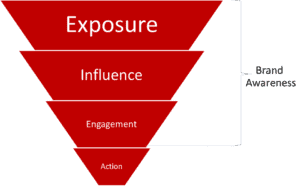
Obviously well-established brands will probably already have a strong reputation, however if you’re a start-up or a particularly local business, then your awareness could probably do with a boost. Here’s the thing – if you take the time and effort to publish content on Facebook or Twitter that educates your audience, they’ll share it, as we discussed before. This can increase your brand awareness and make people aware in many other countries that you’re here and providing an excellent service to your existing customers.