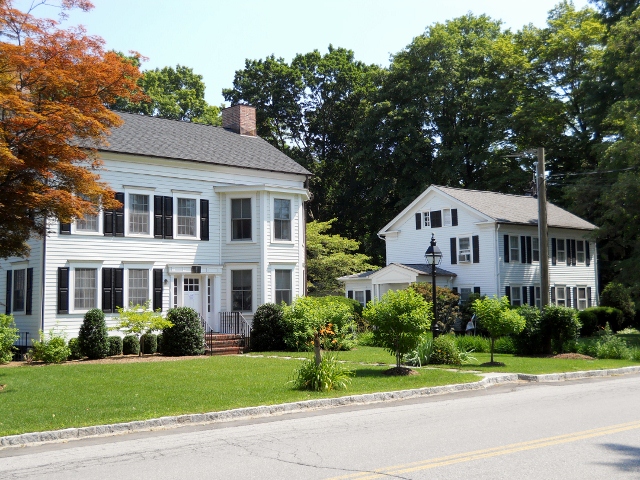
Armonk NY Homes for Sale | Robert Paul Realtor
via acorn-online.com

Armonk NY Homes for Sale | Robert Paul Realtor
The federal Administration on Aging predicts that the population of individuals aged 65 and older will double between 2000 to 2030, but a six-year-old survey of cities by the National Association of Area Agencies on Aging found that fewer than 50 percent are ready to meet the needs of an aging population.
Five years after the survey, the group still found a need for access to better transportation and housing for seniors. Lawmakers in Ohio — where 25 percent of residents in half of its counties will be 60 or older in a matter of eight years — want to make homes more accessible and save money on fall-related hospitalizations, proposing a tax credit for the installation of bar handles, light switches, and ramps.
Meanwhile, CityView Executive Chairman Henry Cisneros, a former HUD secretary, says communities should permit denser housing and allow “granny flats” to be built next to homes. Baby boomers are seeking affordable and accessible dwellings, transportation, recreational activities, and in-home care and services.
In Boston, Washington, D.C., and other cities, nonprofit corporations are helping boomers age in place, charging annual membership fees to handle transportation, landscaping, and maintenance tasks.
Source: “Few U.S. Cities Are Ready for Aging Baby Boomer Population,” USA Today (03/25/12)
Your Web site may be a critical part of your outreach effort to customers, so are you putting your best site forward? Forbes.com recently highlighted some of the biggest mistakes small businesses make with their web design. Make sure you don’t fall for any of these traps, which may send potential customers clicking away:
Failing to target your market.
Research your target audience and design your site around that audience. Make sure the content addresses the needs of your target audience. Also, ensure the presentation of your web site fits your audience too. For example, if you tend to work with younger buyers, is your site smartphone-compatible?
Missing a call to action.
So you have visitors coming to your site, what do you want them to do? If it’s to contact you or subscribe to your e-newsletter, you need to make that clear and highlight it.
Getting too flashy.
“Flashy web sites don’t look good on mobile phones or tablets, and a large majority of Internet users now visit Web sites from these wireless devices,” the article notes. You have about three seconds when someone visits your Web site to give them what they want. As such, make sure you know why they are likely coming to your site, and cater your site to fulfilling that need.
Falling behind.
If your site looks out of date, customers may assume that you are no longer active in the business or that you aren’t as up-to-date as your competition. Be sure to update your site as things in the business change too. If you blog, update it at least once a week, which can help drive visitors to your site and boost your SEO.
“Also, avoid putting links to your Facebook or Twitter pages if you only have a small following,” the article notes. “People may think your business is too small and end up not hiring you.”
Read more Web site blunders at Forbes.com.
Source: “Top 7 Web Design Mistakes Small Businesses Make,” Forbes (March 27, 2012)
Scammers are increasingly taking actual online listing ads of homes for sale from real estate agents’ sites and reposting them on sites such as CraigsList as rentals, duping a growing number of renters.
Tug Pierson, a RE/MAX real estate professional in Indiana, says he learned of one of his for-sale listings being used in a rental scam, reposted online several times throughout the Internet.
Another real estate agent, whose listing was also reposted as a rental, says he learned of it when an unsuspecting renter contacted him to say he was at the house with a truck of furniture ready to move in.
Usually scammers repost the for-sale listing as a rental and ask would-be renters to wire a deposit and advance rent to secure the rental. The scammers usually claim they can’t be met in person because they are out of the country working as missionaries. They also sometimes tell the would-be renters that the real estate agent who was handling the property was fired so they should disregard any signs posted in front of the house with the agent’s information.
Real estate agents who have learned of their postings being used in rental scams say they have contacted the police once they learned of the fraudulent repostings. But scammers can be tough to trace. The agents say it’s important for real estate professionals to educate the public about such online scams and teach them how not to rent a property so renters can guard against such scams online.
Source: “Rental Scams Continue to Grow Online,” The Journal Gazette (Fort Wayne, Ind.) (March 27, 2012)
A new wave of foreclosures is expected to be coming as banks work through huge backlogs of distressed properties on their books. So what does this mean for buyers and sellers this year?
An article at Bankrate.com recently highlighted how foreclosures may be impacting your customers, including:
1. Confusing the perception over price.
As Louis Cammarosano, general manager at HomeGain, says in the article, “Sellers think their home is worth more than it really is, and buyers think the prices are too high.” Distressed properties are widening the gap between seller and buyers’ perceptions over price. Why the discrepancy? Sometimes real estate professionals don’t include foreclosures and short sales when showing comparable sales data to home sellers but that might skew the picture.
2. Questioning locations.
Buyers might see a home they like in a neighborhood with several foreclosures and short sales nearby, which may then make them reluctant. However, if investors are snagging up properties in the area, buyers might get more confident about their purchase.
“Investors are interested in neighborhoods that were beat up by foreclosures and that have other redeeming features that they then believe will be the first to bounce back,” says Stephen Israel, president of Buyer’s of Edge Co. in Bethesda, Md. Homes near public transportation, highly ranked schools, and shopping and amenities could offer good “bounce-back” values, he adds.
3. Removing urgency.
The Federal Reserve has taken the rare step of vowing to keep key interest rates low through late 2014. The result? Many buyers are waiting on the sidelines, believing they’ll be able to snag homes at an even lower price and still take advantage of a historically low interest rate.
“The perception that prices could go lower, a lot of foreclosures in the pipeline and (the expectation) that rates will remain low — that’s certainly keeping some people on the sidelines,” Cammarosano says. But interest rates and prices can change quickly.
Source: “How Foreclosures Affect Buyers and Sellers,” Bankrate.com (March 27, 2012)
Americans still believe in home ownership, but they’re spooked about the mortgage process, a survey finds.
Two-thirds of renters — across educational and demographic levels — say they want to purchase a home in the future, according to a quarterly national housing survey of 3,000 Americans conducted by Fannie Mae.
“In spite of the impact of the housing crisis on home values and home ownership rates across the country, Americans by and large still hope to become home owners,” says Doug Duncan, Fannie Mae’s chief economist. “Some may not be financially positioned to own a home in the near future, but Americans may begin to revisit that aspiration as employment and household balance sheets improve over the coming years.”
However, Duncan says many renters are expressing caution about the homebuying process when it comes to qualifying for a mortgage and navigating the mortgage process.
“If potential home owners avoid the process because they believe it to be too complex, we will likely see a continued impact on home ownership rates,” Duncan says.
Source: “Fannie Mae Finds Americans Remain Committed to Homeownership,” HousingWire (March 27, 2012)
About one in three real estate contracts were canceled in January, up from 9 percent the previous year. Lowball appraisals are most to blame, agents say.
A recent article at Zillow points out how home owners may be able to improve their appraisal:
Gather about six comps ahead of time. Appraisers will pull their own comparables of recent sale prices to help determine the home’s value, but real estate professionals can walk sellers through at least six comparables beforehand in educating the seller about pricing the home. This can help prepare them for what an appraisal might show later too.
Show off upgrades. The appraiser will inspect the property and sellers and their agents should carefully consider what separate the homes that are similar from theirs. This may include a finished basement, the biggest yard on the block, or maybe its location in a scenic area. Sellers should “respectfully tell [the appraiser] what you know,” treating them as a member of your team, says Sara Stephens, president of the Appraisal Institute. “It will increase the odds of your getting a fair and accurate assessment.”
You can appeal an appraiser. Believe the appraisal was unfair? Most lenders allow home owners to challenge an appraisal they feel wasn’t done correctly, but home owners can just say their home is worth more as their sole justification. Home owners will need to prove an error or omission, such as comps that should have been taken into consideration but weren’t (another reason to review those comps before). Home owners can also take their complaints to the state’s appraisal board if they feel their case isn’t being properly reviewed.
Out With The Old & In With The New!
The SEO market is changing. As I mentioned in “3 SEO Changes Rattle SEOs and Bloggers Alike“, these changes are for the better but not necessarily easy!
When SEO first started, you could rank just by keyword-stuffing your meta tags. Once that was phased out, there was a period when you could easily get ranked by link spamming. Those days are over as well. Both of those practices will now get you penalized not rewarded!
Today, SEO is rapidly moving in a new direction. Here are some of the many trends active in today’s world of SEO.
==> Moving Away: Keyword Density, Keyword Strategies
There were a few strategies that were popular a few years ago that simply don’t matter today.
Keyword density more or less doesn’t matter anymore. A few years ago, experts recommended trying to keep your keyword density somewhere around 3% to 6%. Today, it truly doesn’t matter so much.
In the past experts also recommended bolding your keywords in places or using your keywords in your subheads. Again, this doesn’t play as much of a role as it did in the past.
Like keyword stuffing of old, today severe “over-optimization” can actually hurt you!
Keywords still matter however and being smart about them will help you in many ways.
==> Moving Towards: Multimedia
Using videos, audio and web presentations is becoming an increasingly effective way to gain rankings in the search engines.
Building a strong reputation using multimedia takes time. The idea isn’t to try and launch one viral video and be set for life. Instead, the idea is to do a podcast every week, or a video every week until you have a solid reputation built.
The more often you can publish, the better. High quality videos and audios generate a lot of backlinks, especially once you have a strong reputation.
Not only is YouTube’s voice recognition technology leading to increased SEO relevance for videos… but the ability to upload a “closed caption” text script gives Google everything it needs!
==> Moving Away: Low Quality Links
Many of the low quality link tactics that worked even just a year ago are weighed very lowly today.
For example, links from article marketing are weighed very lowly today. Writing a bunch of articles and sending them to EzineArticles or GoArticles simply won’t do all that much for your rankings. In fact, EzineArticles itself was hit very hard by Panda in 2011 (though it is starting to recover).
Another example is social media profile links. Links from easy-to-create profiles no longer send much link juice. The same goes for comment links when compared to editorial links.
Many people think link building is dead which is far from the truth. Plentiful, high quality backlinks remain a leading factor in SEO but the old methods of attaining them such as link farms and purchased links are dead.
==> Moving Towards: Quality Indicator Metrics
Google is using more and more metrics to try and determine whether or not your site is a high quality website.
How does Google do this?
One metric it looks at is how often people come back to your site. It looks at how often people stay on your website. It looks at the ratio of content to advertisement on your site.
Another way is to look at social indicators such as number of tweets, number of Google+ shares, number of Likes…. and in particular if any of those came from “influencers” in your industry.
Google looks at literally hundreds of different factors and tries to determine whether or not your site is high quality.
As I mentioned here, there are a number of ways to improve the way Google views you and it important to keep this in mind!
It’s very hard to fool Google’s artificial intelligence, especially since so little is known about it today. The best way to rank in the new world of SEO is to just give Google what it wants: high quality content and real relationship connections.
This article originally appeared on Just Ask Kim and has been republished with permission.
Find out how to syndicate your content with Business 2 Community.
Image courtesy of Shoot
There was a time (not too long ago) when brands were learning the value of considering how customers are behaving online – learning from them, listening to what they are saying and engaging with them. Now we have reached a stage where this kind of benefit and learning is commonplace. In different ways and for different reasons, brands are listening to, learning from and engaging with people online. And they are getting huge benefits from this.
But with these changes and benefits comes a word of caution – just because it is often easier to find, identify and engage with people online we shouldn’t forget the offline. In fact the real benefit comes from when these two work together.
Social tools allow us to find people, sites and conversations that are influential – on a particular topic or with a particular audience. They allow us to get a more nuanced view about things (people might be influential on a very specific issue only, or for a limited time). And to some extent the automate this process. We can debate the concept of ‘influence’ and the way tools from Kred to PeerIndex and Klout measure it another time (and there is a debate to be had). But what is clear to anybody is that when it comes to the influence somebody has over others the lines between the offline and the online worlds are not just blurred, they overlap.
Let’s look at just two stories (based on work we have done with clients at FreshNetworks) that show the importance of offline to your social media influencer programmes.
1. The critical friend online; influencer offline
We had a community of influencers – a private space where these key customers were being talked to and asked their opinions on new products and services, potential changes to these and about the brand. A small tight-knit community of people chosen specifically on their propensity to recommend or influence others to buy from the brand.
In this mix was one customer who was usually only ever critical – they would be negative about ideas, critical of developments and were not evidently engaging in conversations about the brand externally. We thought this person might have made it into the group by mistake – they were not acting as we expected an influencer or brand advocate to act. It was when we brought these influencers together for an offline event that it became clear what was happening.
This influencer was acting as a critical friend online – they were in fact a huge brand advocate and were critical for this very reason (there is some good academic work on this behaviour). But offline their behaviour was very different. From what they were learning online they had converted people across the town they lived in to our client’s services and were even continuing to support them after they had purchased the product – providing support and advice on upgrades and other things to buy.
So this influencer was not exhibiting the behaviours we expected to see online. But by treating them as an influencer and engaging them online we were seeing huge offline impact.
2. How offline events power online influencer
Many influencer engagement programmes rely on engaging people online so that they carry out an action online. Brands talk to them via their blog or Twitter; from time-to-time they might email or call them so they can speak to them directly. But all these communications are one-to-one and don’t really help us bond or get to know each other.
The value of getting your influencers together offline can help to really kick-start their online activity. In one case we had a group of professionals who we knew had the right connections and were leaders in their own fields online but that were not sharing and talking as much as we might expect. One evening in a pub they could all get to changed that. We talked, exchanged ideas, got to know each other as people. We didn’t sell to them, or use nay gimmicks. We just got to know them, and they us. And when they left that evening their behaviour online changed.
That one evening in the pub had helped us to understand them more and helped them to understand us. Not only did just have the connections and respect online, they also had a real bond with us and would grow into useful influencers for the client online.
This article originally appeared on FreshNetworks Blog and has been republished with permission.
Find out how to syndicate your content with Business 2 Community.


