Home Prices Climb by Most in Six YearsHome prices in 20 U.S. cities rose in November from a year earlier by the most in more than six years, indicating the U.S. housing rebound is gaining ground.
Jan. 29 (Bloomberg) — Karl Case, co-creator of the S&P/Case-Shiller index of property values in 20 U.S. cities, talks about the housing market. The S&P/Case-Shiller index increased 5.5 percent in November from a year ago, the biggest year-over-year gain since August 2006. Case speaks with Tom Keene and Michael McKee on Bloomberg Radio’s “Surveillance.” (Source: Bloomberg)
Jan. 25 (Bloomberg) — Susan Wachter, a professor at the University of Pennsylvania’s Wharton School, and Keith Jurow, author of a report on the U.S. housing market for Minyanville, discuss the outlook for the housing market. They speak with Mark Crumpton on Bloomberg Television’s “Bottom Line.” (Source: Bloomberg)
Jan. 24 (Bloomberg) — Robert Shiller, a professor at Yale University and co-creator of the S&P/Case-Shiller index of property values, talks about the global economy and the U.S. housing market. He speaks with Tom Keene on Bloomberg Television’s “Surveillance” on the sidelines of the World Economic Forum in Davos, Switzerland. (Source: Bloomberg)
The S&P/Case-Shiller index of property values increased 5.5 percent from November 2011, the biggest year-over-year gain since August 2006, a report showed today in New York. The median projection of 30 economists surveyed by Bloomberg called for a 5.6 percent advance.
Mortgage rates near a record low are propelling demand for real estate that’s outpacing the available supply, a sign prices will keep strengthening. Home-equity gains and an improving job market may help to put a floor under Americans’ confidence and spending, the biggest part of the economy, cushioning the hit from a higher payroll tax that began in January.
“With inventory of both new and existing homes still very low, prices will likely continue to rise,” Ian Shepherdson, chief economist at Pantheon Macroeconomics Advisors Inc. in White Plains, New York, said in a note to clients. “Each successive price increase adds more weight to the idea that the housing market is recovering, and nothing pulls people into the market faster than the thought that prices will rise further.
Consumer confidence slumped more than forecast in January, reaching the lowest level in more than a year, as higher payroll taxes took a bigger bite out of Americans’ paychecks, another report today showed.
Confidence Wanes
The Conference Board’s sentiment index decreased to 58.6, the weakest since November 2011, from a revised 66.7 in December. The January reading was lower than the most pessimistic forecast in a Bloomberg survey, which had a median estimate of 64.
Stocks dropped after the confidence data, erasing earlier gains. The Standard & Poor’s 500 Index fell less than 0.1 percent to 1,499.75 at 10:03 a.m. in New York.
Bloomberg survey estimates ranged from 3.4 percent to 6.4 percent. The S&P/Case-Shiller index is based on a three-month average, which means the November data were influenced by transactions in October and September.
The October reading was revised to show a 4.2 percent year- to-year advance from a previously reported 4.3 percent gain.
Home prices adjusted for seasonal variations climbed 0.6 percent in November from the prior month, matching October’s increase. That compares with the Bloomberg survey median of a 0.7 percent rise.
San Francisco
The month-over-month gain was led by San Francisco, followed by Minneapolis.
Unadjusted prices in the 20 cities fell 0.1 percent in November from the previous month. Property values typically fall during this time of year.
The year-over-year gauge provides better indications of trends in prices, the group has said. The panel includes Karl Case and Robert Shiller, the economists who created the index. Year-over-year records began in 2001.
“There are a lot of good signs,” Case said in an interview on Bloomberg Radio with Tom Keene. Nonetheless, “there’s a long way to go before we would declare victory over this housing market.”
Nineteen of the 20 cities in the index showed a year-over- year gain, led by a 22.8 percent jump in Phoenix and a 12.7 percent increase in San Francisco.
New York
New York was the only city to show decreases both month to month and year to year. Over the 12-month period, values in the city decreased 1.2 percent.
“Housing is clearly recovering,” David Blitzer, chairman of the S&P index committee, said in a statement. “These figures confirm that housing is contributing to economic growth.”
Combined sales of new and previously owned properties last year rose 9.9 percent, the biggest annual gain since 1998, data showed last week.
Purchases of previously-owned homes, which unexpectedly fell in December, were constrained by a lack of houses available for sale, the National Association of Realtors reported. Some 1.82 million existing homes were on the market last month, the fewest since January 2001, according to the group.
Lennar Corp. (LEN), the largest U.S. homebuilder by market value, reported fiscal fourth-quarter earnings that beat analysts’ estimates as revenue jumped 42 percent. Stuart Miller, chief executive officer of the Miami-based company, said “a long-term demographic need for housing” is driving the housing recovery, which also is bolstering prices.
‘Pent-Up Demand’
As “pent-up demand unwinds, homebuilders are gaining pricing power,” Miller said on a Jan. 15 earnings conference call. “After years of home prices falling, in 2012 the trend turned positive, initially stabilizing and then allowing for price increases across the country.”
D.R. Horton Inc. (DHI), the largest U.S. homebuilder by volume, said today that fiscal first-quarter profit more than doubled as demand for new houses climbed. Orders jumped 39 percent to 5,259 homes. The company’s contract backlog, an indication of future sales, rose 80 percent to $1.76 billion.
“We experienced broad improvement in demand in most of our markets this quarter, and we significantly increased our investments in homes under construction, finished lots, land and land development to capture this increasing demand,” Chairman Donald R. Horton said in a statement.
Low borrowing costs are helping buyers who qualify for financing. The average rate on a 30-year fixed mortgage was at 3.42 percent last week, close to the 3.31 percent in November that was the lowest in data going back to 1972, according to McLean, Virginia-based Freddie Mac.
The fiscal pact passed by Congress on Jan. 1, while avoiding sweeping tax increases, let the payroll tax used to pay for Social Security benefits return to the 2010 level of 6.2 percent from 4.2 percent. That reduces the paycheck by about $83 a month for someone who earns $50,000.
Tag Archives: Bedford Corners NY
Americans now love 15-year fixed mortgages | Bedford Corners Homes
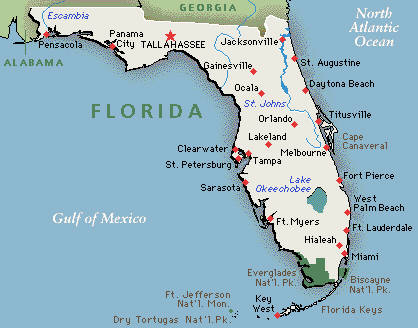
Florida Real Estate Heating Up | Bedford Corners Real Estate
Don’t Count on a New Housing Boom | Bedford Corners Real Estate
Shiller: Don’t Count on a New Housing Boom
Robert Shiller says caution is in order in housing markets:
A New Housing Boom? Don’t Count on It, by Robert Shiller, Commentary, NY Times: We’re beginning to hear noises that we’ve reached a major turning point in the housing market — and that, with interest rates so low, this is a rare opportunity to buy. But are such observations on target?
It would be comforting if they were. Yet the unfortunate truth is that the tea leaves don’t clearly suggest any particular path for prices, either up or down…, any short-run increase in inflation-adjusted home prices has been virtually worthless as an indicator of where home prices will be going over the next five or more years. …
The bottom line for potential home buyers or sellers is probably this: Don’t do anything dramatic or difficult. There is too much uncertainty… If you have personal reasons for getting into or out of the housing market, go ahead. Otherwise, don’t stay up worrying about home prices any more than you do about stock prices. …
How to Use Video Content as Link Bait for SEO | Bedford Corners Homes
From 10 Links to 1 Answer: The Coming Trend of Discovery Marketing and What It Means for SEO | Bedford Corners NY Realtor
When I was in the fourth grade, I had to do a report about the moon. My dad handed me the Encarta CD-ROM to do my research, and immediately, I wanted to talk to it. I needed to find information about the moon and specifically how it affects tide cycles, so I wanted to just ask like I saw them do on Star Trek, e.g., “Computer, cross reference X and Y…”
Of course, I couldn’t do that. The technology simply wasn’t advanced enough yet for Encarta to be spoken to, or even, proficiently recognize natural language queries such as “How does the moon effect the tide cycle?”
To find what I needed, I had to type “moon” and wade through the article looking for the relevant parts.
Fifteen years later, technology—led by Apple’s virtual assistant Siri and Google’s predictive search program Google Now—are helping us realize a world in which computers not only understand natural language queries but predict what you may be searching for and present it to you before you actually search for it.
Other than creating epic science projects for today’s fourth graders, these developments will likely have a very significant impact on the process of SEO, and on how companies will have to position themselves in order to remain relevant in a world of “answers, not links.”
The Biggest Players in Discovery Marketing: Google, Apple (& Facebook?)
Apple and Google have been carefully positioning themselves to be the biggest players in the new discovery marketing playground—both technologies let searchers receive information in new and intuitive ways. The major disruption to the current search market is the keyword in the last sentence—receive.
Instead of making users search for information by typing it in with keystrokes, Siri is a virtual assistant that delivers information to users that verbally ask questions whereas Google Now actually anticipates users’ needs.
While there certainly are differences between Siri and Google Now, they have a commonality in that Apple and Google both want searchers to be immersed in their platforms—and their platforms only. They don’t want consumers to access their tool for one thing and another tool for something else. They strive to be a one-stop shop for all consumers’ needs—search, calendar, email, contacts, etc.
This means that the more accurately and effortlessly the two can deliver relevant data to users, the more engaged their users will become. In fact, it was reported this week that Apple is in talks with FourSquare about a data-sharing deal that will integrate local data from FourSquare into Apple’s mapping application. If this partnership pans out, it will be a huge step in making Apple (and Siri) into a seamless app that users never have to leave when they’re making plans for a night out.
Users that do not buy in to these kinds of all-encompassing systems, which use information they learn about a user to make recommendations or deliver better results, will likely find that mainstream and non-personalized search results are becoming increasingly rare. Brands will also find a point of diminishing returns; they won’t be able to effectively advertise to those consumers that don’t opt in to all that the technology platform offers.
Facebook is very relevant here as well. Even though it does not yet have a category-killer search app like Apple and Google, it already knows the most about its users and has the most user buy-in into its ecosystem; therefore, the platform has the most relevant user information to leverage.
Although Facebook’s brand new Graph Search is not a category-killer in search, or even a direct competitor to Google’s brand of Web search, it is a definite indication that allowing its users to discover as well as be “discoverable” is a major priority of the company.
In fact, Facebook CEO Mark Zuckerberg tellingly called out that the new feature is designed to “return to you the answer, not the links…”Facebook also rolled out a local search service just last month, which seems to be another step in that direction, as well as a major play in local.
Imagine the following scenario: I enter the location “Dallas, TX” on my Google calendar and Google serves up ads for car rental and hotel deals in the area. Furthermore, what if I were served ads and offers based not only on my location but also on search history and geographic region?
While the above scenario is still speculative, it’s a good hypothetical example of discovery marketing: A world in which brands must work to make themselves known and “discoverable” to their users.
Here are the key takeaways for marketers ready to be “discovered”in this new search environment:
More than ever, you need to really know your customer.
In a world where not showing up via a virtual assistant or predictive search is the equivalent of showing up on page 2 or below of Google, local businesses must work to engage their customers, specifically encouraging user-generated content such as reviews which will create the kind of natural language relevance that will help their site stand out.
This new kind of search relies on the mobile device “knowing” the spoken language of its users, which would not include the typical marketing jargon one would find on a website. Businesses have to know about their customers. What is important to them when they search for businesses in your category? Whatever it is, it may be beyond the scope of traditional keyword research, but will be more important than ever.
Beyond just mastering the art of being found, you need to master the art of being useful.
In-store maps and inventories are going to become more important than ever before, because people are going to be presented with buying options predictively. Brands need to truly think about the opportunities to share more “real time feed” data into these ecosystems, so the real-time answers that we demand are always in our pockets.
When all else fails, standard links results are still going to be relevant.
Traditional links on Google search results pages aren’t going anywhere for a long time. After all, it has always been and will continue to be the backbone of their core offering. However, Google is providing layers upon layers of information and possibilities in addition to these links.
When, for example, and iPhone user asks Siri a question, Siri then pings one of its many data sources as it looks for an immediate answer to the query. If, and only if, Siri cannot answer the question by pinging Wolfram Alpha, Yelp, or something else, she will then apologize and ask the user if he/she would like to use Google to find the answer. In this way, Google will remain crucial as the backfill to users when nothing else is adequate.
To stay relevant, marketers must position themselves in these new channels by encouraging user interaction and reviews and working to remain top-of-their-class in local and mobile—even as the landscape is shifting all around them.
Economist’s View: The Evolution of Household Income Volatility | Bedford Corners Real Estate
U.S. Home Prices Rose 5.6% in 12 Months Through November | Bedford Corners NY Real Estate
U.S. home prices climbed 5.6 percent in the 12 months through November as buyers competed for a dwindling inventory of properties, according to the Federal Housing Finance Agency.
Prices rose 0.6 percent from October on a seasonally adjusted basis, the FHFA said today in a report from Washington. The average estimate of 15 economists in a Bloomberg survey was for a 0.7 percent advance. The index is 15 percent below its April 2007 peak and about the same as the August 2004 level.
Home Prices Jumped 5.6% in 12 Months Through November
Sam Hodgson/Bloomberg
U.S. home prices climbed 5.6 percent in the 12 months through November as buyers competed for a dwindling inventory of properties, according to the Federal Housing Finance Agency.
Jan. 23 (Bloomberg) — Nobel Prize-winning economist and Columbia University professor Joseph Stiglitz talks about U.S. economic growth, tax policy and the European sovereign-debt crisis. He speaks with Bloomberg Television’s Tom Keene on the sidelines of the World Economic Forum’s annual meeting in Davos, Switzerland. (Source: Bloomberg)
Home prices have been climbing as growing employment and low borrowing costs fuel demand. Sales of existing homes fell 1 percent in December to a 4.94 million annual rate, restrained by the tight supply of available properties, figures from the National Association of Realtors showed yesterday.
“Rising prices are good news at this point and they are making the difference,” Patrick Newport, an economist at IHS Global Insight in Lexington, Massachusetts, said in a telephone interview. “It brings in more buyers and sellers and lubricates the housing market. It’s going to stimulate sales.”
The 12-month advance was led by a 15 percent jump in the region that includes Arizona, Nevada and Colorado. Prices increased 11 percent in the area that includes California, Washington and Oregon.
The smallest gain was in the region that includes New York, New Jersey and Pennsylvania, where values rose 0.5 percent.
The FHFA data, which is based on single-family houses with mortgages backed by Fannie Mae or Freddie Mac, doesn’t provide a specific price. The median price of an existing single-family home, as measured by the National Association of Realtors, was $180,800 last month, up 12 percent from a year earlier.
The real-estate agents’ report yesterday showed a total of 4.65 million homes were sold last year, up 9.2 percent from 4.26 million in 2011 and the most since 2007. The annual advance was the biggest since 2004.
Treasury 10-Year Yields Fall Amid Decline in Home Sales | Bedford Corners Realtor
Treasuries rose, pushing 10-year note yields down from almost the highest level in a week, after sales of U.S. existing homes unexpectedly dropped in December to cast doubts on the strength of the real-estate recovery.
The benchmark yield dropped as home sales were restrained by the lowest supply of properties in more than a decade. Yields rose earlier as inflation expectations increased to the highest in almost three months before the U.S. sells $15 billion in inflation-indexed debt this week.
“The housing figure was disappointing,” said Ray Remy, head of fixed income in New York at Daiwa Capital Markets America Inc. “People are starting to spend much more time wondering and worrying about the U.S. economy. That’s why we’ve had an uptrade.”
The 10-year yield fell one basis point, or 0.01 percentage point, to 1.83 percent at 3:04 p.m. New York time, according to Bloomberg Bond Trader prices. It rose earlier four basis points to 1.88 percent after touching 1.89 percent on Jan. 18, the highest since Jan. 11. The 1.625 percent note due in November 2022 rose 2/32, or 63 cents per $1,000 face value, 98 4/32.
Treasuries handed investors a 0.4 percent loss this month through yesterday, while bonds in an index of sovereign debt around the world declined 0.2 percent, according to Bank of America Merrill Lynch data.
Home Sales
Purchases of existing U.S. homes fell 1 percent to a 4.94 million annual rate last month, figures from the National Association of Realtors showed today in Washington. The median forecast was for an increase to a 5.10 million annual rate last month, according to the estimate of 69 economists surveyed by Bloomberg.
A weaker existing-home-sales report “puts a little curve ball into the mix, given how the data have been decent,” said Justin Lederer, an interest-rate strategist in New York at Cantor Fitzgerald LP, one of 21 primary dealers that trade with the Federal Reserve. Yields have been “at the top end of a tight range.”
Yields show inflation expectations in the U.S. are rising before the U.S. auctions the Treasury Inflation Protected Securities on Jan. 24.
The U.S. previously sold $13 billion of the securities on Nov. 21 at a yield of negative 0.72 percent, compared with the record-low yield of negative 0.75 percent at the September auction. The last six note sales since January 2012 have drawn negative yields.
Fed Buying
The difference between rates on 10-year notes and similar- maturity TIPS, a gauge of expectations for consumer prices over the life of the securities, widened to as much as 2.55 percentage points today, the most since Nov. 2. The average over the past decade is 2.19 percentage points.
The Fed is purchasing $85 billion of government and mortgage debt each month to spur the economy by putting downward pressure on bond yields. It bought $1.39 billion of TIPS maturing from April 2017 to February 2042 today as part of the program.
Yields on the 10-year note are forecast to rise to 2.2 percent by year-end, according to economists in a Bloomberg News survey.
“This 1.89 percent level will be tested, but should hold today,” said Thomas di Galoma, a managing director at Navigate Advisors LLC, a brokerage for institutional investors in Stamford, Connecticut. “However, if we test it again, we could break to higher yields. That’s the pivotal level.”
Bonds in an index of riskier debt yielded 4.88 percentage points more than Treasuries on average, the smallest spread since May 2011, Bank of America Merrill Lynch data show.
The MSCI All-Country World Index (MXWD) of shares gained 17 percent last year including reinvested dividends, according to data compiled by Bloomberg. Treasuries returned 2.2 percent and investment-grade corporate bonds gained 10 percent, Bank of America data show.
Hurricane Sandy to spawn storm of insurance lawsuits | Bedford Corners Real Estate
Susan Sharif and her husband are suing their insurance company and broker, claiming they told the broker they wanted complete insurance coverage on their now-ruined Brick home, but were not notified their policy did not cover flooding. Andrew Mills/The Star-Ledger
For years, Susan and Ahmad Sharif thought of their little beachfront cottage in Brick as the home they’d retire to one day. When Hurricane Sandy’s monster storm surge pushed the house off its foundation and collapsed the garage, they felt reassured by one thought: Their insurance company would cover the loss.
They were wrong.
Despite taking out a policy that covered the house for $175,000 and its contents for $50,000, all the Sharifs got from Paramount Insurance Co. was $6,343.68. The money wasn’t for the hole the storm tore in the back of the house or the furniture inside. It was for siding torn from the outside of the house by Sandy’s gale-force winds. Paramount told the Chatham couple, who had been renting out their Brick house, that they were covered only for wind damage, not flood damage, although the Sharifs say they thought they were covered for both.
All over the barrier islands and the Bayshore, homeowners are learning from their insurance carriers about to what extent their losses are covered. Some who have been disappointed, such as the Sharifs, have decided to take their cases to court.
Hundreds, perhaps thousands, of lawsuits, may eventually be filed over Sandy insurance claims that were denied or paid out too little in the eyes of the policyholder, according to plaintiffs’ attorneys and lawyers for the insurers.Legal experts, however, believe these lawsuits will be anything but slam dunks. They also note that lawsuits account for only a small percentage of the total number of Sandy insurance claims filed in New Jersey, which to date total about half a million.
Litigation will be centered on a few types of disputes, say experts, from wind-versus-flood determinations to business interruption claims to alleged negligence by insurance brokers.
The Sharifs are suing both Paramount and their insurance broker, Tri-County Agency of Brick, claiming that at the time they purchased their home, they told the broker they wanted complete insurance coverage. They weren’t notified that their policy didn’t cover flooding and weren’t advised to buy flood insurance, they said.
“I 100 percent thought that I had flood insurance,” Susan Sharif said, recalling the disbelief she felt when her claim was largely denied. “My house is 20 feet from the water. Why would I not have flood insurance?”
Standard homeowners and commercial policies do not cover flood losses. To be covered for flooding, a separate policy must be acquired through the National Flood Insurance Program. Only home and business owners in high-risk flood zones who have mortgages through a federally backed lender, like a bank, are required by law to purchase federal flood insurance. Part of the problem for the Sharifs is that when they bought their beach cottage in 2005, they paid for it all in cash, according to property records as well as their attorney, Tom Maloney of Morristown. Without a mortgage, there was no bank-mandated requirement that they purchase flood insurance.
In a lawsuit filed last month in Superior Court in Morris County, the Sharifs allege that Paramount, a unit of the New York-based Magna Carta Cos., failed to send annual notices, required under New Jersey law, that their homeowners policy did not cover losses due to flooding. They also claim Paramount acknowledged it had no record of sending them the required notice about flood insurance, and allege the company continued to deny them any additional coverage for their loss.
Gary Stewart, a vice president of human resources at Paramount, declined to comment on the litigation, but said the company is “proud of our excellent record of superior service and customer satisfaction.”
Marshall Bilder, an attorney for Tri-County Agency, also declined to comment on the specifics of the case, but noted in an e-mail that the firm has a record of professionalism and community service, and that its own employees had homes that were devastated by Sandy.
“Unfortunately, tragedies like this spawn litigation which could take years to resolve,” Bilder wrote.
Attorneys said it is difficult to speculate on rates of success, but policyholders face a number of hurdles. The terms of flood insurance policies, for one, tend to be inflexible, they said. Litigation is also costly and time-consuming at a time when homeowners and businesses are trying to rebuild.
Robert Hartwig, president and economist with the Insurance Information Institute, an industry-funded group, said courts have not looked kindly upon attempts to “sue for coverage that didn’t exist in the policy.”
TWO WAVES
Harry Baumgartner, an attorney with Bressler Amery & Ross who represents insurers, said he expects two waves of lawsuits: the first arriving in the three-to-six month period after Sandy are just rolling in now. The second wave will come when the time to file is nearing expiration under the statutes of limitations. The disputes can take different forms, according to Gene Killian, an Iselin-based attorney who will likely represent commercial and residential policyholders in Sandy-related lawsuits. Chief among the insurance disputes is determining the cause of the damage. And the more complex the calamity, the harder that can be. Was it wind? Water? Was it wind-driven water?
While standard homeowners and commercial policies do not cover floods, they do cover wind-driven rain. Some policyholders will attempt to argue that wind sheared off their roof, allowing damaging rainwater to pour into their home or business, Killian said.
Paramount Insurance Co. told the Susan Sharif and her husband, who had been renting out their Brick house, that they were covered only for wind damage, not flood damage, although the Sharifs say they thought they were covered for both. Andrew Mills/The Star-Ledger
This is what Susanne Bannon believes happened to her. She evacuated her Union Beach townhouse before Sandy struck, only to return to find it reduced to rubble.
Based on the debris and accounts from neighbors who stayed behind during the storm and later told her of wind gusts that sounded like trains overhead, Bannon believes high winds contributed to the collapse.
But her insurer, Allstate, disagreed. Days after an adjuster’s visit, Bannon said, an Allstate representative called to tell her that floodwaters were to blame. As a result, she’d only be covered by her flood insurance policy, which Bannon, who is in her mid-60s, said wouldn’t come close to covering the cost of rebuilding or replacing everything that was lost.
An Allstate spokesman, Danny Jovic, declined to comment on Bannon’s situation, saying the insurer does not discuss individual claims. But in an e-mailed statement, he said, “Adjusters determine whether damage was caused by flood or by wind by examining the facts of each individual claim.
“Generally speaking, claim adjusters are able to determine the cause of damage based on evidence gathered at the property, or as necessary, neighboring properties. This evidence may include reports of engineers and other experts.”
Bannon said as far as she knows, her claim is still under review, although she said she hasn’t been able to get through to her adjuster. But if she gets notice that her claim is denied, she said she will consider suing.
“It’s traumatic to lose your house and everything you own,” she said. “On top of this, you find out your insurance is not helping you at all, that you’re totally on your own after years of paying them.”
WAR OF WORDS
Others will challenge the integrity of policy language that was written to limit their coverage. Many insurance contracts feature what are known as anti-concurrent causation clauses, which means they cover damage caused by a peril such as hurricane-force winds, but not if it occurs at the same time as a peril that is not covered, for example a tidal surge. In these cases, even if a policyholder is insured for wind damage, the insurance company can deny coverage if it occurred at the same time as a second, non-covered peril, such as flooding. Enterprising attorneys will scour individual policies for language that a judge would find exceedingly vague, Bressler Amery’s Baumgartner said.
“If a court were to find sufficient ambiguity, it might negate the exclusion and find for coverage,” he said.
Another fight is brewing over the liability of brokers who sell policies to customers like the Sharifs.
“There is a cottage industry of plaintiff’s attorneys that is forming around the notion that brokers or agents are liable to the extent that they didn’t adequately inform policyholders around the absence of coverage,” Baumgartner said. “Whether or not there’s viability to these cases depends on the facts of the case.”
One such case is under way in Newark.
Cardolite Corp., which turns cashew nut liquids into industrial adhesives and coatings, is suing its insurance broker, Willis of New Jersey, on claims that the broker failed to purchase proper flood coverage for the company’s Newark plant, which is located near the Passaic River. Cardolite’s president is Anthony Stonis, who happens to be a past chairman of New Jersey Manufacturers Insurance Co.’s board of directors.
The policy that Willis bought excluded flood coverage in the high-risk flood zone that the Cardolite’s facility is located in, according to a Superior Court lawsuit filed last month in Essex County. As a result, the company suffered a $2 million uninsured flood and wind loss during Sandy, Cardolite’s attorneys wrote.
In an e-mail, a Willis spokeswoman said, “Willis always puts our clients’ interests first and adheres to the highest standards in insurance placement. We will address the merits of the case in the proper forum.”
DOWN TO SPECIFICS
In the case of agent liability, cases will turn on the specific discussions between the agent and the client, noted Jay Feinman, a professor of insurance law with Rutgers University in Camden. For example, a customer could have a valid claim if he or she asked for a specific policy that wasn’t bought or voiced specific concerns that weren’t addressed by the agent.
“The agent is not obligated to give you everything,” said Feinman, who has written on insurer tactics to deny and defend claims.
But other attorneys note that New Jersey courts have ruled that policyholders can rely on their brokers’ expertise in certain circumstances, and that they don’t even need to have read their policy to be protected.
“Fairly or unfairly, people are going to say we thought we had this coverage,” Killian, the Iselin attorney, said.
That is the case of the Sharifs, who claim Tri-County Agency breached its duty by allegedly failing to advise them to buy flood insurance or offer it to them. They also accuse the agency of negligence because the person who sold them their initial policy, identified in the complaint only by the name of Ernie, allegedly assured the Sharifs that he was familiar with the property and that he would secure for them full coverage.
“I told him what I needed,” Susan Sharif said of the Tri-County representative, whom she said has since left the brokerage and who is not named as a defendant in their case. “I told him all the details of my home, and I told them I needed the appropriate insurance policy.”
With the house slated for demolition, Susan Sharif said she and her husband, who are in their late 50s and early 60s, don’t have the ability to rebuild from scratch. “It’s a huge loss in our state, our age to have our security taken away because some company didn’t do their job,” she said.